
Thai voters to shun parties without anti-corruption policies: survey
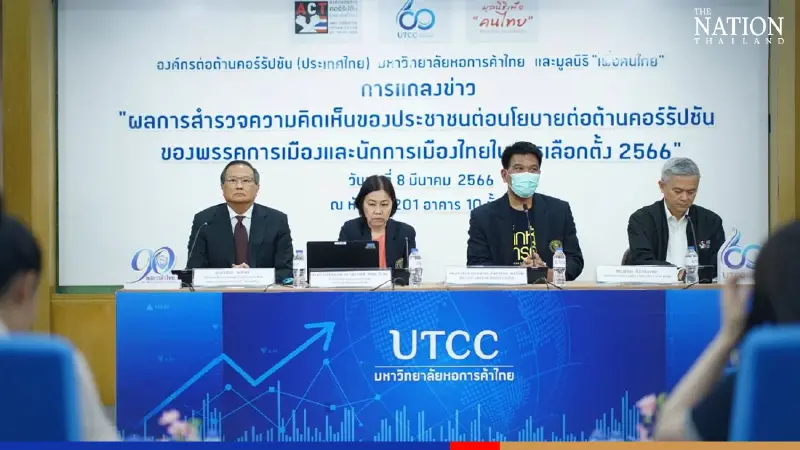


Most Thai voters will shun parties that have no campaign policies against corruption at the upcoming election, a recent nationwide survey found.
The survey was conducted from January 5 to 25 among 2,255 respondents by the University of the Thai Chamber of Commerce and the Anti-Corruption Organisation of Thailand.
Asked whether they would vote for a party that has no policy to fight corruption, 83.6% of the respondents said no.
When asked to explain their answer, 72.2% said they could not trust a party without anti-graft policies as it lacked transparency from the beginning.
Respondents were also asked whether they would vote for a candidate who offered money in exchange for their vote. The overwhelming majority (86.2%) said no. However, 13.8% of respondents affirmed that they would vote for a candidate in exchange for payment.
Of those who said no, 70.9% reasoned that vote-buying candidates proved themselves to be dishonest in the first place. They also pointed out that vote-buying was unlawful.
Asked whether the anti-corruption policies of parties and candidates would affect their voting decisions, respondents replied as follows:
- 67% strongly affect
- 28% moderately affect
- 3% not affect
- 2% slightly affect

- 25% said corruption
- 14% said education
- 13% said economic disparity
Asked to list the types of corruption they want the next government to combat urgently:
- 23.9% said corruption in government agencies
- 21.6% said corruption in the judicial system
- 11.8% said corruption in donations for religious institutions.

- 19.1% said offer transparent access to information in the public interest
- 17.9% said heed opinions on corruption prevention and allow public participation
- 17.8% said independent watchdogs, such as the National Anti-Corruption Commission, must be allowed to work freely.
