
Scenarios and implications if the World Court rules against Myanmar in the Rohingya case
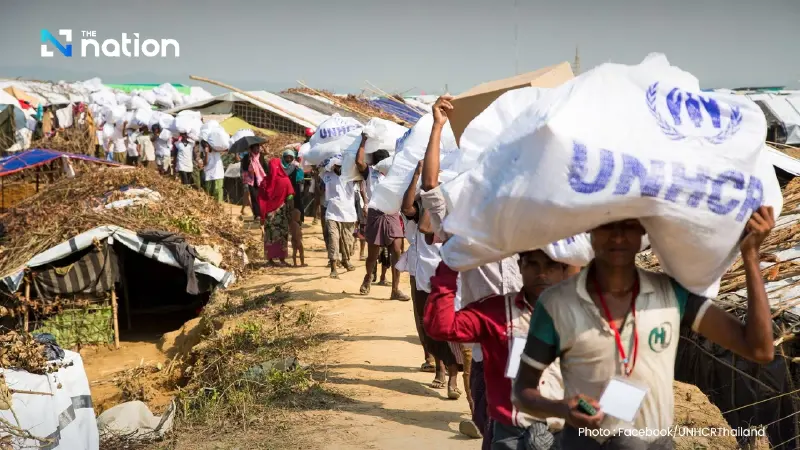


A Thammasat scholar says Gambia’s Rohingya genocide case at the World Court has legal weight, but enforcement would face major political limits
A Thammasat University academic believes that Gambia’s legal arguments in the Rohingya genocide case before the International Court of Justice (ICJ) carry sufficient weight to hold Myanmar accountable.
However, even if the World Court rules that Myanmar is guilty and orders compensation, restoration of citizenship rights, and the repatriation of Rohingya refugees, actual enforcement would face serious limitations.
Pressure could shift to ASEAN and Thailand as neighbouring states, while companies trading with or investing in Myanmar may face sanctions that block exports to destination markets.
Assoc. Prof. Dr. M.L.Pinitbhand Paribatra, from the Department of International Relations, Faculty of Political Science, Thammasat University, said Gambia’s case—filed in 2019—argues that Rohingya suffered severe violence and systematic human rights violations. The case has received support from countries such as the UK, Canada, Germany and France, strengthening its standing under international law and increasing the likelihood that Myanmar’s military government could be found guilty.
Whether the ICJ concludes that Myanmar acted with genocidal intent depends heavily on testimony from Rohingya witnesses. If the court rules against Myanmar, possible outcomes include orders to restore Rohingya citizenship, allow their return, provide compensation, and amend laws that enabled rights abuses by the military.

However, the World Court has no direct enforcement mechanism. If Myanmar fails to comply, the case would be referred to the UN Security Council (UNSC), since genocide is considered a grave violation of international norms that no state should breach. This would place pressure on the UNSC to act.
In practice, UNSC enforcement is highly constrained by the veto power of its five permanent members—China, Russia, the US, the UK and France. China and Russia, which maintain close ties with Myanmar, are expected to veto any resolution that could lead to sanctions or the deployment of peacekeeping forces, as both oppose increased Western influence in Myanmar.
Beyond the ICJ and UNSC, another legal avenue is the International Criminal Court (ICC), which allows cases to be brought against individuals for crimes against humanity or genocide. An ICJ ruling would significantly strengthen ICC proceedings, although investigations would take time. The ICC can issue rulings against political and military leaders, and several world leaders are already facing ICC cases.
A World Court ruling would also strengthen the ICC prosecutor’s request—filed in late 2024—for arrest warrants against Min Aung Hlaing, leader of Myanmar’s military government, on charges of crimes against humanity.

Even if Myanmar agreed to repatriate the Rohingya, major challenges would remain. More than 10 years have passed since Rohingya communities were destroyed and displaced. The military government has since resettled other populations in Rakhine State, the Rohingya’s original homeland. Ongoing armed conflict between the military and ethnic armed groups—particularly intense in Rakhine—raises serious questions about safety, land ownership, and livelihoods for returning refugees.
Around 800,000–900,000 Rohingya, most currently living in Cox’s Bazar, Bangladesh, would face uncertainty over where they could live and whether conditions would be safe enough for return.
Resettlement to third countries, such as the US or European states, is also limited by increasingly restrictive refugee policies in those regions.
The scholar added that if the World Court rules Myanmar guilty of genocide, pressure would extend beyond Thailand to all ASEAN members. ASEAN’s existing Five-Point Consensus has already failed to halt violence in Myanmar. A genocide ruling would represent a far more serious crisis.
“The question is whether ASEAN will push Thailand to act more forcefully as a neighbouring country,” he said. “Trade and investment by ASEAN companies or other foreign firms in a state found guilty of genocide could face export bans or economic sanctions from destination markets such as the EU. This scenario is possible if ICJ and ICC rulings cannot be effectively enforced.”
