
Xi, Putin to flex their muscles against US, Europe in meeting this week
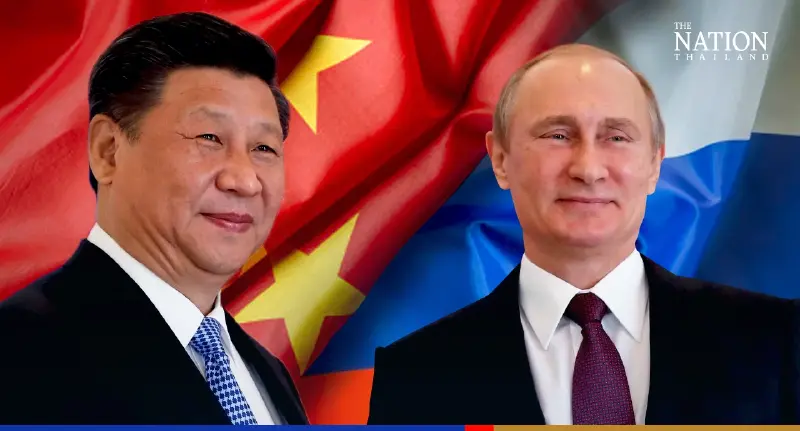


The world will closely watch Russia’s next move after President Vladimir Putin meets his Chinese counterpart this week, especially in the wake of Moscow’s worst war defeat last week.
The Russian army was forced to abandon its main bastion in northeast Ukraine.
President Xi Jinping will leave China for the first time in more than two years for a trip this week to Central Asia, where he will meet Putin, Reuters reported on Sunday.
Against a backdrop of Russia's confrontation with the West over Ukraine, the crisis over Taiwan and a stuttering global economy, Xi is due on a state visit to Kazakhstan on Wednesday, Reuters added.
Xi will then meet Putin at the Shanghai Cooperation Organisation's summit in the ancient Silk Road city of Samarkand in Uzbekistan, the Kremlin said.

Both Chinese and Russian authorities have declined to say what is on the agenda for the talks, though analysts believe Xi will use the meeting to underscore his clout, while Putin can demonstrate Russia’s tilt towards Asia. Both leaders will probably use the meeting to show their opposition to the United States, just as the West seeks to punish Russia over the Ukraine war.
Xi has met Putin in person 38 times since becoming China's president in 2013. Their last meeting was in February this year, just weeks before Putin ordered the invasion of Ukraine on February 24.
At that meeting during the opening of the Winter Olympics, Xi and Putin declared a "no limits" partnership, backing each other over standoffs on Ukraine and Taiwan with a promise to collaborate more against the West.
China has adhered to this partnership since and refrained from condemning Russia's operation against Ukraine or calling it an "invasion". Instead, China claimed that it is the West and the US who “provoked” Russia first.
As for Putin, he has made clear that Russia is turning towards Asia after the West imposed the most severe sanctions in modern history, especially a boycott on Russian oil and natural gas, their mainstream export products.

Putin said last week that Russia’s major gas exporter Gazprom has reached a deal to export natural gas to China via the new gas pipeline – the Power of Siberia 2.
The pipeline is capable of transporting gas to China at 50 billion cubic metres per year, around a third of what Russia usually sells to Europe.
The Shanghai Cooperation Organisation, which includes Russia, China, India, Pakistan and four Central Asian states namely Kazakhstan, Kyrgyzstan, Tajikistan and Uzbekistan, is due to admit Iran, one of Moscow's key allies in the Middle East.
