
Queen Elizabeth II and 7 decades on the throne
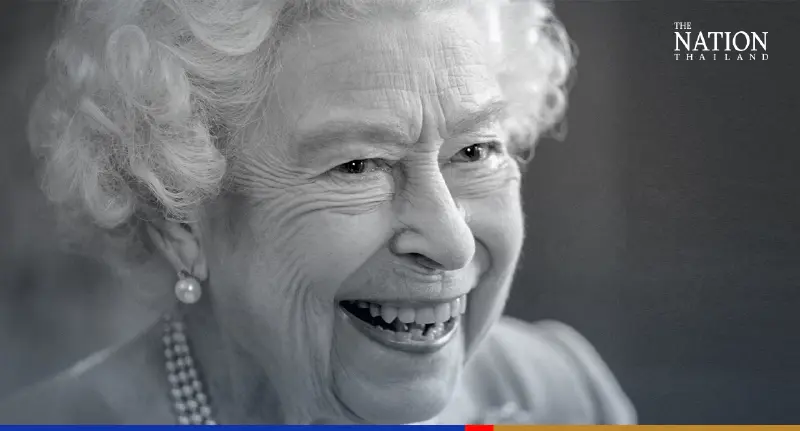


Queen Elizabeth II, Britain's 63rd monarch, has steered the monarchy through decades of social change while remaining a symbol of national stability in a shifting world.
The eldest child of the Duke and Duchess of York, Elizabeth Alexandra Mary would have been expected to play merely a supporting role in the monarchy.
At the time of her birth on April 21, 1926, her uncle was the Prince of Wales and heir apparent to George V, her father being only second in line to the throne.
Elizabeth's life changed abruptly on December 11th, 1936, when her uncle, now King Edward VIII, announced he was renouncing the throne to marry twice-divorced American socialite Wallis Simpson.
The crown passed to his brother, who became George VI, and Elizabeth became heir presumptive on the assumption that her father would have no sons to take precedence over her.
She moved with her parents and sister, Margaret, to Buckingham Palace to serve her apprenticeship in statecraft, growing up under strict parental guidance.
Princess Elizabeth's adolescence was overshadowed by the Second World War, which she and her sister largely spent in the relative safety of Windsor Castle, west of London, retreating during air raids to the cellars where the Crown Jewels were stored.
At the age of 16, she registered with the local labour exchange, or jobs office, and at her own request, she later joined the women's division of the British army, the Auxiliary Territorial Service (ATS), where she received training in driving and vehicle maintenance.
Two years after the end of the war, Elizabeth celebrated her 21st birthday while visiting South Africa.
Shortly after her return from South Africa came the announcement of the Princess's engagement to her distant cousin Lieutenant Philip Mountbatten, son of Prince Andrew of Greece and great-great-grandson of Britain's Queen Victoria.
They were married in Westminster Abbey on November 20, 1947, in a ceremony attended by statesmen and royalty from around the world. Philip's titles – His Royal Highness Prince Philip, Duke of Edinburgh, Earl of Merioneth, Baron of Greenwich -- were conferred on him by King George VI prior to the wedding ceremony.
The couple's first child, Prince Charles, was born in 1948, followed by Princess Anne in 1950, Prince Andrew in 1960 and Prince Edward in 1964.
In February 1952, Princess Elizabeth and her husband began a Commonwealth tour with a visit to Kenya. News of King George's death reached the royal couple six days after their departure and the princess returned to London as Queen Elizabeth II.
Her coronation, at the age of 27, took place in Westminster Abbey on June 2, 1953. The ceremony, attended by peers of the realm and international political, civic and business leaders, was transmitted by television and radio broadcasts throughout the world.
Queen Elizabeth's youth and gender caused some comment at the time but turned out to be an asset in a country keen to make a fresh start after the war and the years of austerity which followed.
Social divisions and respect for the old order began to wane but the queen was seen as an important symbol of unity and remained stoically true to the guidelines she set herself on her 21st birthday.
In July 1969, Prince Charles was invested as Prince of Wales at a ceremony in the 700-year-old Caernarfon Castle.
The queen's only daughter, Princess Anne, inaugurated an era of sumptuous royal weddings when she married commoner Captain Mark Phillips in November 1973. The 23-year-old princess broke with tradition during the marriage ceremony, omitting the customary vow to obey her husband.
In 1981, an annual event famed for its pageantry, the Trooping the Colour, was marred by an incident in which a man fired six blanks from a replica pistol as the queen rode along the route of the parade. Her horse shied but she was unhurt.
Later that year Prince Charles, at the age of 32, married 20-year-old Princess Diana in a ceremony watched by an estimated worldwide television audience of 700 million people.
Princess Diana gave birth to the couple's first son, William, in June 1982. Their second son, Harry, was born in 1984.
In March 1986 Prince Andrew announced his engagement to childhood playmate Sarah Ferguson, who brought with her what was initially seen as a breath of fresh air into a royal family hidebound by tradition.
The following decade saw the royal family under the public spotlight as never before. The queen referred to 1992 as an "annus horribilis", or horrible year.
During the year Princess Anne's 18-year marriage ended in divorce amid speculation about her relationship with her future second husband Royal Navy Commander Timothy Laurence; Prince Andrew and Sarah Ferguson announced their formal separation after six years of marriage; the queen's favourite royal home, Windsor Castle, was badly damaged by a fire; the perilous state of Prince Charles' and Princess Diana's marriage was revealed in the biography "Diana, Her True Story" and in December they announced their separation.
The years following the break-up of her marriage saw Princess Diana's popularity soar and thousands mourned her passing after she was killed in a car crash in Paris on August 31st, 1997. The queen came under unprecedented pressure to recognise the nation's grief and pay public tribute to the "people's princess".
During her reign, the queen has broken new ground for the British monarchy during many of her overseas visits. In 1975 she was the first British monarch to visit Japan. She met Chinese leader Deng Xiaoping and became the first British monarch to walk on the Great Wall of China when she visited the country in 1986.
In October 1994 the queen arrived in Moscow for a ground-breaking visit aimed at healing nearly five decades of Anglo-Russian Cold War enmity.
Some overseas visits have involved following local customs such as the Queen's visit to the Faisal Mosque in Islamabad where she was required to cover her hat with a veil and exchange her shoes for a pair of socks.
London marked another milestone in August 2000 when the queen joined her mother and her sister on the balcony at Buckingham Palace to cheers from the crowds gathered to celebrate the Queen Mother's 100th birthday.
The celebrations were soon to be followed by a period of loss and mourning for the queen. Princess Margaret died in February 2002 after suffering a number of strokes and two months later the Queen Mother died, at the age of 101.
After a tumultuous 35-year affair Prince Charles finally married the love of his life, Camilla Parker-Bowles, in April 2005.
During her reign, the queen has met all 12 serving U.S. presidents except Lyndon B Johnson.
The highly publicised wedding of the queen's grandson Prince William and Kate Middleton took place on April 29, 2011, in London's Westminster Abbey. The ceremony was watched by an estimated 2 billion people around the world.
In May 2011 the queen made an historic State visit to the Republic of Ireland, the first by a British monarch since Ireland won independence from London in 1921.
On the 60th anniversary of the queen's accession to the throne and the beginning of her Diamond Jubilee celebrations, February 6, 2012 was marked with a traditional 41-gun salute fired in London's Hyde Park. She is now the second-longest reigning British monarch in more than 1,000 years of history, surpassed only by Queen Victoria, who reigned for more than 63 years.
The queen and Prince Philip spent the next six months taking part in Jubilee events across the United Kingdom.
The following month the 86-year-old monarch became the unlikely star of the London Olympics opening ceremony, making her film debut with James Bond star Daniel Craig in a spoof video that ended with her appearing to jump from a helicopter and make a parachute landing in the Olympic stadium.
In December 2012 she attended her first cabinet meeting, the first time a British monarch had taken part in a cabinet meeting since King George III in 1781.
With the birth of the Duke and Duchess of Cambridge's son in July 2013, for the first time in over a hundred years, there were three generations of direct living heirs to the throne. Prince George, named after the queen's father, became third in line to the throne, after his father and grandfather.
Scotland took precedence during the summer of 2014, with Glasgow hosting the Commonwealth Games in July and Scotland's bid to become independent in a September referendum. In a serious breach of royal protocol Prime Minister David Cameron let it slip that the Queen had told him she was delighted Scottish National Party leader Alex Salmond's independence bid had failed and Scotland would remain part of the United Kingdom.
On September 9, 2015, the nation celebrated the queen becoming Britain's longest-serving British monarch. Elizabeth II surpassed the 63 years, 7 months, 2 days, 16 hours and 23 minutes that her great-great-grandmother Queen Victoria spent on the throne.
After the death of Thailand's King Bhumibol Adulyadej in October 2016, Queen Elizabeth became the longest-serving living monarch in the world.
Philip, the queen's husband of 73 years who had been at her side throughout her record-breaking 69-year reign, died at Windsor Castle on April 9, 2021, aged 99.
A funeral for Philip was held on April 17, 2021, in Windsor.
