
Finance Ministry to propose tax overhaul to new government, raise VAT to 8.5%
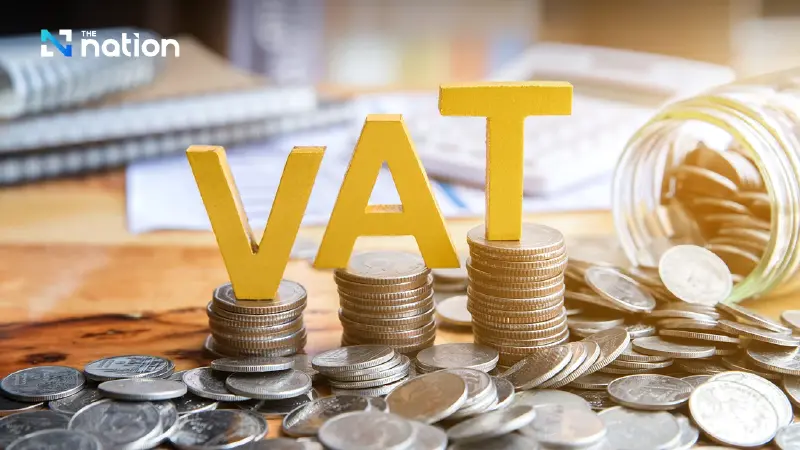


Plan would phase in a 1.5-point VAT increase from the current 7%, with part of the added revenue earmarked for welfare support for vulnerable groups.
- Thailand's Finance Ministry is preparing a tax structure reform plan to propose to the new government to build fiscal strength.
- The proposal includes a phased increase of the Value-Added Tax (VAT) from the current 7% to 8.5%.
- A longer-term goal within the plan is to further raise the VAT to 10% by the year 2030.
- To mitigate the impact on citizens, the ministry plans to use a portion of the new VAT revenue to support vulnerable groups, for example, by adding funds to the state welfare card.
Lavaron Sangsnit, Permanent Secretary of the Ministry of Finance, said Thailand’s economy in 2026 is expected to expand by 2%, though close attention is still needed on exchange-rate volatility and the preparation of the 2027 budget, which could be delayed by the dissolution of the House.
He acknowledged that the first quarter of 2026 is quite concerning because the dissolution has left a caretaker government, meaning many planned measures cannot be carried out.
However, there are still factors supporting the economy in the first quarter, including the election.
For 2026, the Ministry of Finance is preparing a plan to reform the tax structure as a revenue-raising plan for the country, to be submitted to a new government to build sustainable fiscal strength.
The ministry will also continue pushing ahead with a Data Lake, a large data repository linking information from multiple agencies, such as data from the three tax-collecting departments, to advance the Ari Score, which would give small borrowers a better chance of accessing formal credit.
“Ari Score (a government-backed alternative credit score that draws on linked public-sector data) will address informal debt by widening access to formal loans for small borrowers.”
There is then no reason for them to borrow from informal lenders.
Ari Score will be one way of building on existing databases to help small borrowers,” he said.
A source at the Ministry of Finance said the ministry is accelerating the finalisation of its new tax-structure reform plan, including the Medium-Term Fiscal Framework (MTFF) for 2027–2030, during the dissolution period and the election, to propose it to the new government that will take office.
“The Finance Ministry will propose that the new government reform the tax structure in line with the medium-term fiscal plan, including a VAT increase, which would be phased in by 1.5 percentage points from the current 7% to 8.5%, and to 10% by 2030,” the source said.
On conditions related to the economy, the source said VAT could still be raised because the ministry has prepared measures to support vulnerable groups.
Part of the VAT revenue would be added to the state welfare card, for example: if VAT revenue amounts to THB100 billion, the government would add THB20 billion to the state welfare card and use the rest to help reduce living costs in other areas.
“Although many countries have discussed raising VAT and people have suffered because they do not have mechanisms like Thailand’s, we confirm that the Ministry of Finance has plans that can take care of these groups,” the source said.
