
Thailand clarifies oil exports to Lao PDR and Myanmar amid crisis
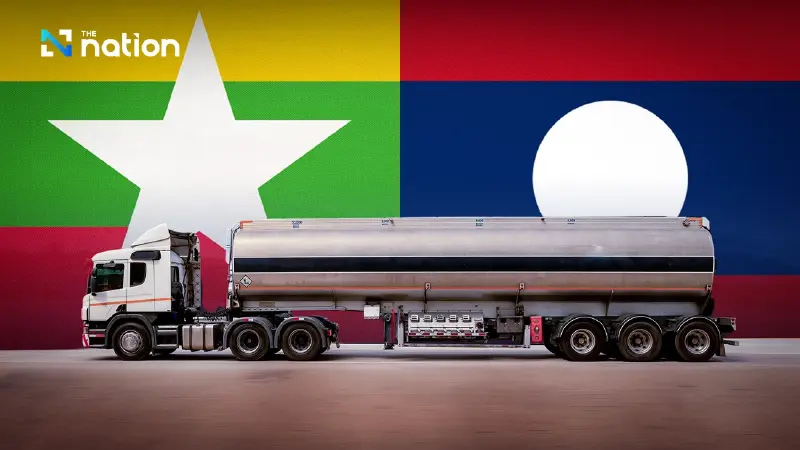


Officials say limited fuel shipments to Lao PDR and Myanmar are part of energy cooperation needed to cushion Thailand from soaring global LNG costs.
- Despite a potential domestic fuel crisis and a general export ban, Thailand continues to ship approximately 5 million liters of oil daily to Laos and Myanmar.
- The exports to Laos are part of an energy cooperation agreement to secure hydropower imports, which helps manage Thailand's electricity costs when other fuel prices rise.
- Oil shipments to Myanmar are maintained to ensure the continued import of natural gas, which is essential for generating electricity at a major power plant in Thailand.
As Thai people face fuel shortages at filling stations and the government tries to manage the crisis through a series of emergency measures and orders, attention has turned to how the country is handling the situation.
On the issue of oil shortages, which could arise if the war in the Middle East drags on and affects oil production and exports from the region through the Strait of Hormuz, Prime Minister Anutin Charnvirakul has signed an order banning oil exports to foreign countries, except for Lao PDR and Myanmar.
Even so, questions remain over why Thailand is still sending around 5 million litres of oil a day to Lao PDR and Myanmar during a crisis.
The issue became clearer after a briefing by the government centre monitoring the fighting in the Middle East, which said that, apart from Thailand’s contractual commitments to both countries, the move is also part of an energy management strategy, particularly as the cost of fuel for electricity generation could rise sharply after spot LNG prices increased from US$10 per million BTU to US$25 per million BTU.
Danucha Pichayanan, Secretary-General of the National Economic and Social Development Council (NESDC), speaking in his capacity as secretary of the centre, said Thailand has restricted oil exports to just two neighbouring countries, Lao PDR and Myanmar.
At present, the volume is capped at no more than around 5 million litres a day, with more than 4 million litres a day going to Lao PDR and about 300,000 litres a day to Myanmar.
He said Thailand still needs to send oil to Lao PDR because the two countries are linked through energy cooperation, particularly hydropower imports from Lao PDR.
If global LNG prices continue to rise, Thailand may need to adjust its electricity supply through an energy mix, relying on a combination of natural gas, hydropower and coal for power generation.
There is also a possibility that Thailand may need to import more hydropower in the period ahead so that the country’s average electricity price can be reduced when gas prices surge.
Thailand, therefore, needs to continue supporting its neighbour.
As for Myanmar, Thailand continues to send oil because it imports natural gas from Myanmar via pipeline, including gas produced there.
The gas is transported through pipelines on the western side and is then used to generate electricity at the Ratchaburi power plant for the central and southern regions.
Because Thailand and Myanmar cooperate in this area, oil shipments to Myanmar must continue.
“Oil shipments to Lao PDR and Myanmar are part of energy cooperation with both countries. Looking ahead, Thailand may adjust its power generation mix when LNG prices rise, in line with the energy mix plan already in place.”
