
Halal race heats up as Vietnam advances certification and trade plans
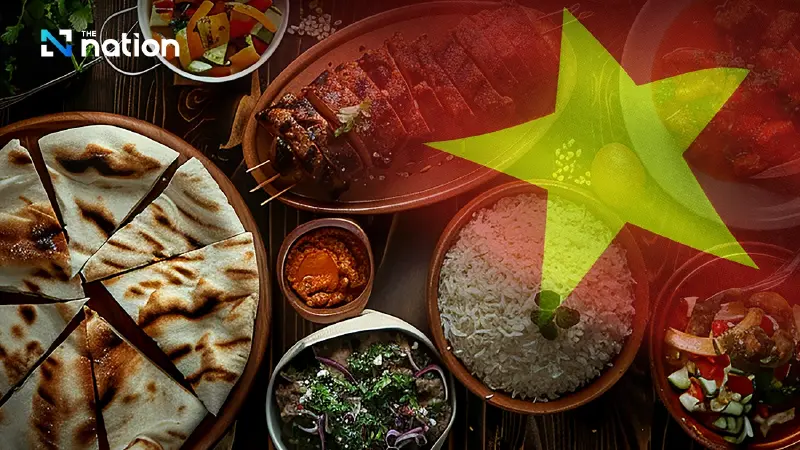


Vietnam is moving to formalise halal quality management, strengthen certification bodies and support businesses joining global halal events, aiming to boost its share of a market projected at US$10 trillion by 2028.
- Vietnam is developing a national decree to manage the quality of its halal products and services and to promote them internationally.
- The plan includes significant government support for Vietnamese certification bodies to achieve international recognition, making their certifications valid in key export markets.
- The government will offer financial support to entrepreneurs through aid for trade fairs, preferential interest rates for halal investments, and inclusion in national branding programs.
- This initiative is part of a long-term strategy to increase Vietnam's share of the global halal market, which is projected to be worth as much as $10 trillion by 2028.
It is well known that the halal economy is a key driver that can help sustain economic momentum and growth in many countries, because demand in the halal economy is clear, reliable, and high in value.
However, the premium nature of this market has also attracted major competitors seeking to capture market share.
Although Thailand has played a leading role in this arena, reflected in its halal food exports to member countries of the Organisation of Islamic Cooperation (OIC), valued at as much as THB250 billion, without further development and the pursuit of new opportunities, Thailand’s role could be pushed towards the back of the pack.
According to the Office of Commercial Affairs (Thai Trade Center) in Ho Chi Minh City, Vietnam, Vietnam plans to proactively negotiate and sign international agreements to promote and support entrepreneurs in developing and expanding markets for halal products and services, under a draft decree on halal products and services quality management (A draft decree on halal products and services quality management) prepared by the Ministry of Science and Technology (MoST).
The draft defines “halal products” as goods certified as correct and compliant with Islamic requirements, while “halal services” refer to all types of activities related to halal products, such as transportation, storage, packaging, product display, and goods handling.
The draft decree stipulates support for Vietnam’s halal certification bodies to enhance their capabilities until they are recognised at the international level, and to ensure certification results are accepted by many countries, especially target export markets.
In addition, Vietnam will integrate research, development, and market promotion for halal products and services into national trade promotion programmes and other related market development programmes, including providing financial support to entrepreneurs to participate in trade fairs, exhibitions, business matching forums, and international halal-related activities.
Entrepreneurs with high-quality and reputable halal products and services will be encouraged to join the Vietnam National Brand Programme to elevate halal products under the national brand onto the global trading stage.
The draft decree also stipulates that financial institutions, credit guarantee funds, and small and medium enterprise development funds should consider offering preferential interest rates for investment projects in halal production and halal technology.
It also prioritises the establishment of halal-standard quality management systems and supports the costs of inspections and assessments for first-time halal certification.
Such support will be incorporated into various programmes and measures, such as SME support programmes, industrial promotion programmes, and national and local science and technology development programmes.
In 2023, the government approved a programme to promote international cooperation to develop Vietnam’s halal industry through to 2030, which marked an important step in economic diplomacy.
The main goal is to increase Vietnam’s share of the global halal market, which is expected to be worth as much as US$10 trillion by 2028.
The programme is positioned as a long-term strategy to enable Vietnam to penetrate Muslim markets that continue to expand worldwide.
Although Vietnam is not a Muslim-majority country, its strategic location linking China, ASEAN, and the Pacific Ocean, as well as its free trade agreements with many countries, enables it to develop effectively into a hub for distributing halal products to global markets.
For Thailand, which has a halal certification system recognised internationally, it is well-positioned to share knowledge, inspection technology, and halal certification processes.
If Thailand takes Vietnam as a trade partner, combining the strengths of both countries, this would help promote ASEAN as a global hub of the halal economy.
That would mean breaking free from the trap of economic problems and various challenges threatening trade and investment, by driving a new economy known as The Global Halal Economy.
By The Global Halal Economy [[email protected]]
