
Thailand imported less gold in 2025, but values rose sharply
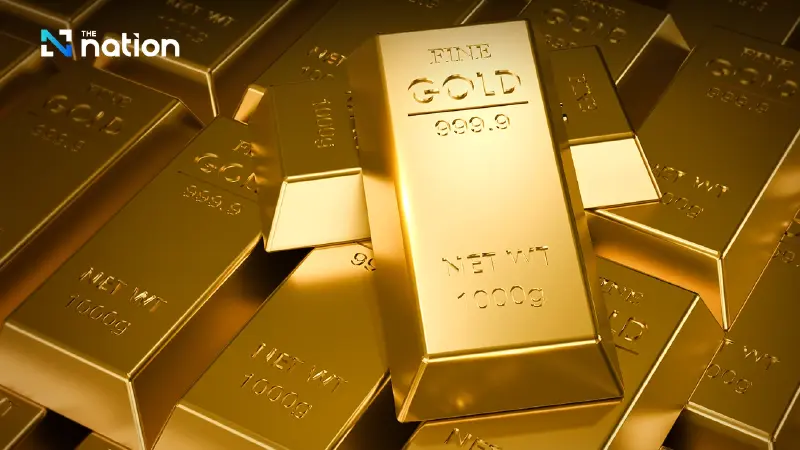


Higher world prices and cautious stock management meant Thailand brought in fewer tonnes of gold in 2025, while export shipments increased and values stayed elevated.
- In 2025, Thailand's gold import volume fell by 4.46% year-on-year to 190,560 kilograms.
- Despite the lower volume, the total import value surged by 27.25% to THB 691.96 billion.
- The rise in value was primarily driven by a sharp increase in global gold prices, which surpassed US$5,000 per ounce, and a weaker Thai baht.
- The lower import volume is attributed to traders managing inventories more cautiously and reducing stockpiling due to the high prices.
2025, continuing into 2026, has been one of the hottest gold markets in decades, with global prices breaking above US$5,000 per ounce for the first time.
In Thailand, domestic gold prices previously hit a record high of around THB81,000 per baht weight, supported by economic and geopolitical uncertainty that has drawn investors towards safe-haven assets.
Thailand’s 2025 gold trade overview (imports)
Data checked by the Information and Communication Technology Centre, in cooperation with the Customs Department, and compiled by Thansettakij, showed:
Total gold imports (2025): 190,560 kg (190.56 tonnes)
- Down from 199,472 kg (199.47 tonnes) in 2024
- -4.46% year-on-year
Import value (2025): THB691.96 billion
- Up from THB543.78 billion in 2024
- +27.25% year-on-year
Thailand’s 2025 gold trade overview (unwrought gold exports)
Total unwrought gold exports (2025): 123,621 kg (123.62 tonnes)
- Up from 114,057 kg (114.05 tonnes) in 2024
- +8.38% year-on-year
Export value (2025): THB427.29 billion
- Up from THB304.12 billion in 2024
- +40.50% year-on-year
Top 5 import sources (2025)
- Switzerland: THB185.58 billion (-2.44%)
- Hong Kong: THB140.68 billion (-24.28%)
- United Arab Emirates: THB127.66 billion (+336.89%)
- China: THB112.67 billion (+394.77%)
- Singapore: THB40.03 billion (+12.31%)
Top 5 export markets for unwrought gold (2025)
- Hong Kong: THB13.45 billion (-15.54%)
- Australia: THB11.35 billion (+100%)
- Indonesia: THB10.34 billion (+432.68%)
- United States: THB8.48 billion (+792.19%)
- United Arab Emirates: THB8.40 billion (+3,263.79%)
Analyst perspective on lower volume and higher value
A gold analyst said Thailand’s lower import volume in 2025, alongside a roughly 27% rise in import value, was not unusual given several key factors, led by a sharp increase in global gold prices, which were significantly higher than in 2024.
With global interest rates beginning to move into a “downward cycle”, gold regained appeal as an investment asset.
The analyst added that importers managed inventories more cautiously.
Gold traders and refineries reduced volume stockpiling and shifted to shorter buying cycles, purchasing only grades that could be resold or exported quickly.
This reduced overall import volume, but lifted unit value.
Exchange-rate volatility and bouts of baht weakness also pushed up the baht-denominated cost of imported gold.
Exports highlight Thailand’s trading-hub role
The increase in unwrought gold exports in 2025, both in volume and value, was said to underline Thailand’s role as a trading hub and re-exporter.
Operators took advantage of high prices by exporting accumulated or processed gold.
Exports rose 8.38% by volume and 40.50% by value, indicating exporters benefited fully from the price environment.
The analyst said 2025 was “not a year Thailand used more gold, but a year Thailand used gold more effectively, importing less but getting better value, and exporting more when prices were favourable.”
If gold prices remain high this year, volumes may stay steady while values remain elevated.
For 2026, global gold prices were expected to hold at high levels or make periodic new highs.
Supporting factors include further global monetary easing, high public debt levels in major economies, gold’s continued safe-haven status, and ongoing geopolitical risks, with multiple flashpoints that could escalate into conflict.
