
Border health under strain as foreign aid dries up
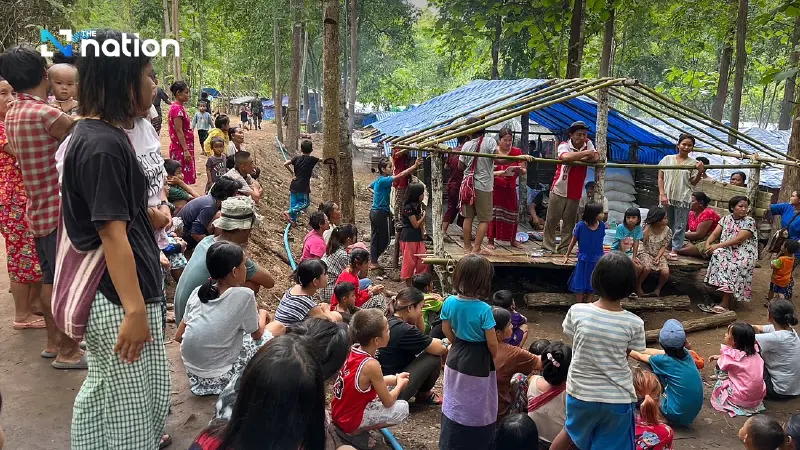


At Prince Mahidol Award Conference 2026, experts warn foreign aid for border health is fading, while Tak hosts 50,000+ displaced people
The Prince Mahidol Award Conference 2026 has spotlighted the worsening “border health” situation as international funding declines, with speakers warning that foreign aid could fall to zero in 2025. With more than 50,000 displaced people in Tak province, border-area healthcare providers are racing to adjust their plans.
A panel discussion titled “Geopolitical Shifts in International Development Assistance and Impact on Migrant Health” was held during PMAC 2026. Organised by the Health Systems Research Institute (HSRI) and the National Health Security Office (NHSO), the session exchanged views on how global geopolitical shifts are affecting international aid and access to healthcare for migrant workers, refugees and people fleeing conflict — particularly along the Thailand–Myanmar border.
Tak has more than 50,000 displaced people
Dr Cynthia Maung, founder of Mae Tao Clinic, said the reduction in international assistance since the start of 2025 has forced several clinics and medical facilities in border areas to close. Tak province, however, still has more than 50,000 displaced people living in the area.
Mae Tao Clinic, which has operated since 1988, still sees around 300–400 patients a day, she said, even as budget constraints intensify.
“Even as funding falls, maintaining standards of patient care remains essential, because what must be protected is the security of human life,” she said. As a result, Mae Tao Clinic has had to adjust its operating model by coordinating closely with Mae Sot Hospital and community hospitals — on referrals, disease information-sharing and long-term care — to ensure assistance is not disrupted.

Aid could drop to zero in 2025
Dr Ramate Wongwilairat, director of Mae Sot Hospital, said the healthcare system uses community hospitals as the frontline for screening and caring for patients in displaced-person camps. Cases beyond their capacity are then referred to Mae Sot Hospital, which supports four community hospitals with staff, medicines and medical supplies.
In the past, Mae Sot Hospital received about 30 million baht in foreign aid. In 2025, that fell to around 10 million baht, and this year the hospital expects it may receive no foreign assistance at all.
This has forced adjustments, he said, including expanding screening at community hospitals and positioning Mae Sot Hospital to provide back-up support afterwards — to use limited resources as efficiently as possible.

Mae Sot Hospital pilots hiring Myanmar doctors
Dr Rojanasak Thongkhamcharoen, deputy director of Mae Sot Hospital, said the number of migrant-worker patients has continued to rise, increasing the workload on medical staff. The hospital therefore piloted the recruitment of doctors from Myanmar, which proved successful, and has expanded the programme to a total of four Myanmar doctors.
This has enabled the hospital to separate general outpatient services into a dedicated “Friendly Clinic” for migrant workers. Patients can communicate directly with doctors in Burmese, helping to improve the effectiveness and accuracy of treatment.
Dr Khin Nyan Nyan, a doctor at the Friendly Clinic, said Mae Sot, as a diverse border town, faces major healthcare barriers due to language and cultural understanding. Having Myanmar doctors helps patients explain symptoms in detail, resulting in more targeted treatment and reducing errors or misunderstandings in care.
The forum also reflected cross-sector cooperation, with Mae Sot Hospital working with migrant health volunteers and civil society organisations to link healthcare support at the community level along the border.
Speakers also stressed that allowing people fleeing conflict to work legally would help migrant workers enter the health insurance system. Revenue from that system could be reinvested to develop staff and border medical facilities — benefiting Thailand’s overall health system.
