
Thailand warns of hand, foot and mouth disease outbreak
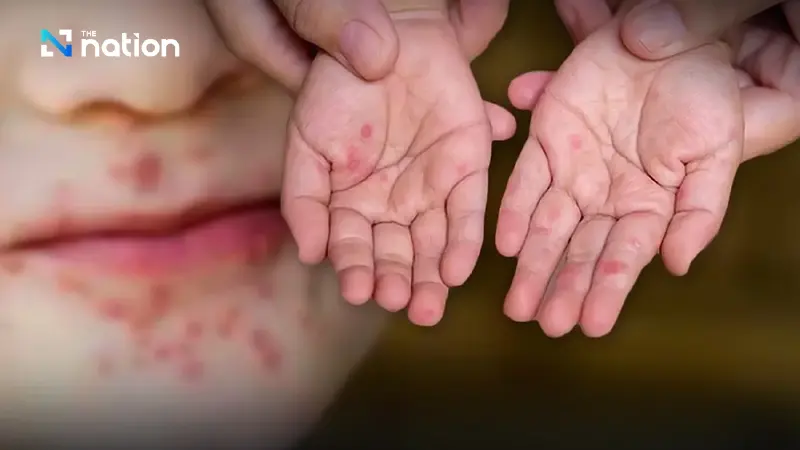


The Thai government has issued a public health advisory warning parents to be on alert for hand, foot and mouth disease (HFMD), a contagious illness that spreads rapidly among young children during the rainy season.
Deputy Government Spokesman Anukool Pruksanusak announced on Saturday (June 28) that the Department of Disease Control (DDC) under the Ministry of Public Health has detected a significant rise in HFMD cases as cool and humid conditions set in.
He stressed that parents must ensure proper hygiene and health monitoring for their children, particularly those under five, who are most vulnerable.
“As the rainy season begins, increased humidity creates ideal conditions for the spread of communicable diseases, especially among young children,” said Anukool.
Over 21,000 cases reported this year
Between January 1 and June 25, 2025, Thailand recorded 21,315 HFMD cases, broken down as follows:
- Children aged 0–4 years: 15,753 cases
- Aged 5–9 years: 4,658 cases
- Aged 10–14 years: 544 cases
The disease, caused by enteroviruses (most commonly coxsackievirus), often reappears in children even after previous infection. It spreads through contact with nasal secretions, saliva, fluid from blisters or sores, and contaminated objects or surfaces. The DDC notes that outbreaks are most common between June and August.

Common symptoms and when to seek medical help
Typical symptoms include low-grade fever, painful sores inside the mouth—particularly on the soft palate, cheeks, and tongue—making infants refuse milk or food, drooling, and complaining of mouth pain. Children may also develop red rashes or small fluid-filled blisters on the palms, soles, and torso.
Parents should seek medical attention immediately if their child shows worsening symptoms such as:
- High fever
- Difficulty eating or drinking
- Lethargy
- Seizures
- Rapid breathing or persistent vomiting
Public health guidance for parents and schools
For parents:
- Encourage frequent handwashing with soap, especially before and after meals, and after using the toilet or playing.
- Regularly clean toys, eating utensils, and surfaces.
- Avoid sharing personal items such as cups, spoons, and towels.
For teachers and schools:
- Strictly screen children each morning. Sick children should be sent home and kept out of school until fully recovered.
- If two or more students in the same classroom fall ill within a week, the classroom should be closed for at least one day for cleaning. Health screening should continue for another week to monitor for new cases.
Boosting immunity during the rainy season
Anukool concluded by urging parents to help strengthen their children’s immune systems.
“Children should eat a balanced diet, rich in fruits and vegetables, get 8–10 hours of sleep each night, maintain good hygiene, and receive appropriate vaccinations,” he said.
“If your child shows any concerning symptoms, seek medical care immediately. Early action is key to keeping our children safe, especially during the rainy season.”
