
Thailand’s 118 hot springs set for global wellness tourism push
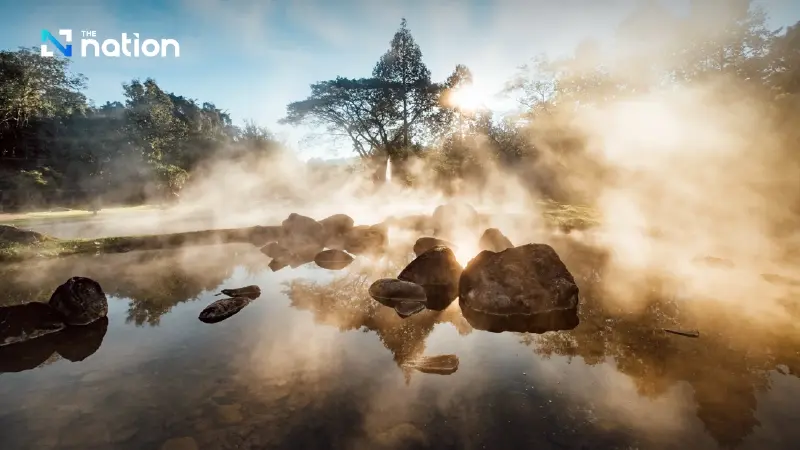


Thailand is using mineral-rich springs, Thai therapeutic services and new product development to support sustainable health tourism.
- Thailand is launching a major initiative to develop its 118 natural hot springs into global health and wellness tourism destinations.
- The plan focuses on the therapeutic and medicinal benefits of the mineral-rich waters, which vary by location and are believed to aid in pain relief, skin conditions, and improved circulation.
- Specific sites, like San Kamphaeng Hot Springs, are being upgraded into national models, which include developing commercial health products, setting international wellness standards, and training local personnel.
- Government bodies are leading the effort by creating structured wellness programs that integrate hydrotherapy with traditional Thai medicine and massage to attract international tourists.
Thailand is moving to develop its natural hot springs into global health and wellness tourism destinations, with about 118 hot spring sites spread from the North to the South of the country.
The number of hot springs is considered a distinctive strength for Thailand compared with other countries, prompting plans to develop and upgrade them into health tourism destinations for travellers from around the world.
The plan is seen as a major opportunity for Thailand, as the country’s hot springs offer not only places for physical and mental relaxation amid natural surroundings, but also mineral-rich waters that may help support health or relieve certain symptoms. Each hot spring differs in water temperature and key mineral composition.
Hot springs can be classified by chemical composition and the benefits of bathing into eight types: simple hot springs, carbonate hot springs, heavy carbon soil hot springs, saline hot springs, saline sodium hydrogen carbonate hot springs, mirabilite hot springs, mirabilite sodium chloride hot springs and gypsum hot springs.
According to the Department of Thai Traditional and Alternative Medicine under the Ministry of Public Health, Thai hot springs have potential for both scientific therapy and Thai traditional medicine.
The department said sulphur hot springs help reduce the build-up of impurities on the skin, saline hot springs help relieve pain and warm the body, sodium sulphate hot springs help promote blood circulation, and sodium bicarbonate hot springs help nourish the skin.
Research on the therapeutic use of hot springs has also found potential benefits, although people, especially those with underlying health conditions, should consult a doctor and strictly follow medical advice.

For the muscular and joint system, patients with knee osteoarthritis who soaked in water at 37-39 degrees Celsius reported reduced pain, better knee function and lower use of painkillers. For skin conditions, patients with psoriasis and other skin problems saw reduced disease severity and clearer improvement in skin lesions. For the cardiovascular system, regular hot spring bathing among elderly people was found to help reduce the rate of high blood pressure.
One of Thailand’s standout hot spring destinations is San Kamphaeng Hot Springs in Mae On district, Chiang Mai, under the royal initiative. The site is being promoted as a centre for hydrotherapy and health recovery through natural mineral water of international standard. Water from the source reaches temperatures of up to 105 degrees Celsius.
The mineral water is rich in key minerals beneficial to the body, including zinc, which helps renew skin cells; copper, which helps firm the skin and collagen fibres; manganese, which is involved in the body’s enzyme processes; and magnesium, which helps counter skin fatigue.
A memorandum of understanding has recently been signed between the San Kamphaeng Hot Springs management subcommittee, the Department of Thai Traditional and Alternative Medicine, and the Government Pharmaceutical Organisation to upgrade San Kamphaeng Hot Springs in Mae On district into a national model for thermal wellness and to create jobs and income for local communities.

The Department of Thai Traditional and Alternative Medicine will develop and train local personnel through a 450-hour “Pho-Lanna Thai massage” course, equipping them with advanced vocational skills so they can generate income from local resources. The department will also set standards for health hot spring destinations under the Thermal Wellness Standard to bring them in line with global standards.
The Government Pharmaceutical Organisation, meanwhile, will develop commercial products and innovations, focusing on research into mineral water and local herbs. The work will support the development of health products under the “SANN by GPO” brand, based on the Natural Mineral Therapy concept, as well as bottled mineral water to increase economic value. The official launch is scheduled for September 2026.
Dr Mingkwan Suphannaphong, Managing Director of the Government Pharmaceutical Organisation, said the GPO had taken an important role in developing health products by supporting research, production innovation under international standards, registration and distribution.
She said the GPO had developed the SANN by GPO skincare brand under the Natural Mineral Therapy concept, covering mineral water-based skincare and haircare products such as shampoo, conditioner, shower cream and bar soap.
The GPO has also developed a system to produce drinking mineral water, adding value and generating income for communities. The products’ key selling point is the use of natural mineral water from San Kamphaeng Hot Springs as a core ingredient, helping add value to local raw materials.
Another major site is Khlong Thom Saltwater Hot Spring in Krabi, cited as one of only five such hot springs in the world, alongside sites in Taiwan, Japan, Italy and Malaysia.
The Khlong Thom Saltwater Hot Spring contains key dissolved minerals, including sodium chloride, as well as silica, potassium, magnesium and carbonate at levels above general standard values. It is said to help stimulate blood circulation, lower blood pressure, reduce joint inflammation and support people with diabetes. It is also said to help stimulate the nervous and digestive systems and improve some skin conditions.
Hot spring bathing can bring both benefits and risks. Mineral bathing provides several useful minerals for the body, including calcium and magnesium, which help with venous diseases, bronchial inflammation and joint pain, while also helping strengthen bones.
Sodium, potassium and chlorine help maintain the balance of water inside and outside cells. If this balance is disrupted, the body may become unwell.
Sulphur helps slow the deterioration of joints, repair cartilage on joint surfaces and support recovery from spinal injuries.
Overall, hot spring bathing can help relax the body, refresh the mind, reduce physical and mental stress, increase vitality, relieve bodily aches and pains, ease degenerative joint conditions, expand blood vessels and improve circulation.
It can also support oxygen absorption and exchange in the body, improve metabolism, nourish the skin, make the skin appear brighter and cleaner, help treat skin diseases, promote sweating to clear blocked pores, help bruised injuries heal faster and support treatment for age-related skin degeneration.
However, there are also health risks. Medical information indicates that deaths linked to bathing or soaking in hot springs, very warm water or very hot water can occur when heat builds up rapidly inside the body, preventing the body from adjusting in time and causing blood pressure to rise.
This can cause blood vessels throughout the body to dilate, reducing blood supply to vital organs and potentially leading to organ failure and death. Heatstroke may also occur when body temperature rises to a dangerous level.
High-risk groups include people with high blood pressure, who should check their blood pressure every time before soaking in very warm or hot water. If high blood pressure is detected, they should not soak in hot or very warm water.
Even people without underlying diseases are advised to drink two glasses of water 15-20 minutes before soaking in very warm or hot water, and to continue drinking water every 15 minutes to ensure the body has enough fluid.
Raksawarin Hot Springs in Ranong province is another natural hot spring site. The hot mineral pools at Raksawarin Public Park occur naturally, and the mineral water is now used to produce drinking water for sale nationwide due to its nutritional qualities and benefits to the body.
The water contains calcium, iron, magnesium, sodium, chloride, bicarbonate, sulphate, nitrate and carbon dioxide, with certified quality. It is also used in health spa businesses.
Ranong’s natural hot spring water is usually about 42 degrees Celsius. Soaking for around eight to 10 minutes is said to help improve blood circulation throughout the body, cleanse the skin, help protect it from disease and make the complexion brighter. The heat from the mineral water also causes sweating, which helps clear blocked pores beneath the skin.
Public Health Minister Pattana Promphat said Thailand was driving sustainable international health tourism, noting that hot springs across the country have different strengths, mineral compositions and temperatures. The Department of Thai Traditional and Alternative Medicine has plans to build on these qualities to create sustainable health tourism destinations.
“The Ministry of Public Health has now surveyed several hot spring sites to examine important substances in the water and has coordinated with Japan to collect samples to identify what substances are present,” Pattana said. “There may be comparisons on how they can be used for skin care and health care in a more standardised way, so they can become practical guidelines to support tourism going forward.”
The Department of Thai Traditional and Alternative Medicine will also help develop health promotion programmes based on clearly structured wellness programmes suitable for service users. The focus will be on preventive health promotion, health rehabilitation and other health-promoting activities consistent with holistic healthcare principles.
These include hydrotherapy and physical wellness, such as hot spring bathing and physical rehabilitation; Thai traditional and alternative medical services for treatment, such as Thai massage, herbal compresses and actual local therapeutic procedures; herbal integration, including herbs, herbal steam and herbal products; and health promotion and health literacy, including advice and health care programmes.

