
Cambodian spokesperson highlights ‘irrational’ claims made by Thai leader
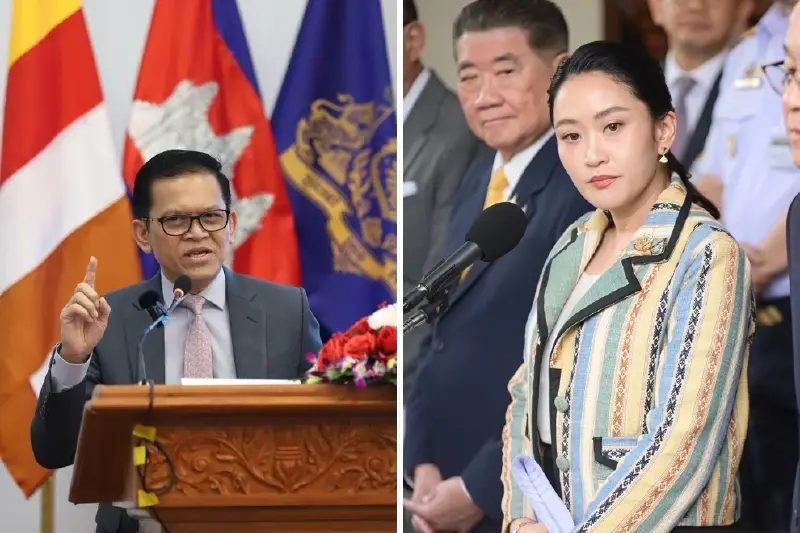


A Cambodian government spokesperson has pointed out “irrational claims” made by Thai Prime Minister Paetongtarn Shinawatra. On June 23, she claimed that Thailand had decided to cut electricity, internet, and oil and gas supplies to Cambodia, when in fact, Cambodia had already shut down these supplies itself.
On June 23, Paetongtarn stated that her government had done so to combat cross-border crimes, citing a UNODC report that labelled Cambodia a “global scam hub”.
She said the measures implemented included border closures, cutting internet and electricity, and freezing over 680,000 bank accounts linked to illegal activities. Thailand has now closed border gates in the seven Thai provinces bordering Cambodia, with restrictions on vehicle and human crossings, albeit with exceptions for special cases, like students and medical patients.
“Foreign tourists are prohibited from travelling to gamble in border areas, and stricter controls have been imposed on flights to Siem Reap for gambling purposes,” she said, adding that she had halted the export of products which could be used to support cross-border criminal operations, including fuel.
Her actions follow a letter by UN Special Rapporteurs on contemporary forms of slavery and human trafficking, particularly women and children, in which the authors urged Bangkok to clarify its efforts to crack down on online scams, as reported by The Nation Thailand.
“The UN letter highlights Thailand’s key role as a transit hub for victims travelling to scam centres in neighbouring countries, particularly near Myanmar’s Karen State,” said the newspaper.
Similar letters were sent to Myanmar, China, Cambodia, Laos, Malaysia, the Philippines, Vietnam and the ASEAN secretary-general, raising regional concerns.
Today, June 24, Cambodian government spokesperson Pen Bona noted that Cambodia acknowledges the existence of online scams and has taken stringent measures to suppress them. Recently, a committee led by the prime minister was established to coordinate these efforts, which he said demonstrated Cambodia’s firm commitment to tackling these crimes.
“Cambodia has never denied the presence of online scams. We acknowledge that our country has been exploited by perpetrators. Cambodia is one of many victimised countries in the region, including Thailand,” he said.
He added that Cambodia, however, must protest Thailand’s tendency to shift blame for its issues onto Cambodia, with the evidence of those crimes happening in Thailand, such as crackdowns on scams that Thailand itself recently addressed.
Yesterday, Thai Prime Minister Paetongtarn Shinawatra said Thailand cut internet and electricity serving cross-border criminal networks. It’s laughable. I don’t know if the prime minister is unaware or has forgotten due to intense domestic political pressure demanding her resignation. Cambodia already announced that it cut Thai internet and electricity long ago, Madam Prime Minister,” said Bona.
Cambodia stopped using Thai internet and electricity supplies on the night of June 12. On June 17, Cambodia banned the import of fruit and vegetables from Thailand, and on June 22, Cambodia prohibited oil and gas imports from the neighbouring Kingdom.
Niem Chheng
The Phnom Penh Post
Asia News Network
