
Pata Zoo unveils latest photo of Auntie Bua, Thailand’s legendary gorilla
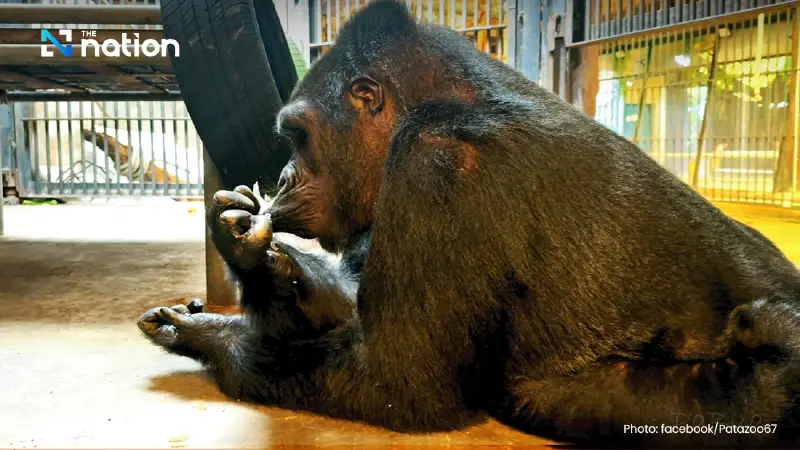


Pata Zoo has reopened Auntie Bua’s enclosure for limited public viewing, as animal rights groups press for the release of Thailand’s last gorilla, long described as “the world’s loneliest gorilla.”
- Pata Zoo released a new, close-up photograph of its gorilla, Auntie Bua, the first to be shared in over four years.
- The zoo stated the photo was the result of a long-term trust-building process with caretakers, intended to show she is healthy and comfortable.
- Coinciding with the photo's release, the zoo announced it will reopen her enclosure to the public on a limited viewing schedule.
- Auntie Bua, also known as Bua Noi, is Thailand's last gorilla and has been the subject of a long-running campaign by animal rights groups for her relocation from the zoo.
Bangkok’s Pata Zoo posted on October 1, 2025, a rare photo of its female gorilla, affectionately known as “Auntie Bua”, saying it was the closest image ever taken of her in recent years.
The zoo explained that for more than four years, its management team had strictly followed policies to improve Bua’s quality of life and maintain careful public communications.
During this time, the zoo had not shared any photos of her. Instead, keepers and staff worked daily with “Uncle Sompong,” Bua’s longtime caretaker, to gently adjust her behaviour, especially her protectiveness over her home and food. This gradual process built trust, allowing staff to approach her enclosure more closely than ever before.
The photo posted on Wednesday showed Auntie Bua lying down and nibbling on her favourite treat, a bag of mixed nuts, as proof that she was healthy and comfortable after more than a month of quiet rest.
The zoo also announced that starting October 1, Bua’s enclosure would reopen to visitors on a limited schedule:
Tuesday–Friday: one viewing session at 3pm
Saturday, Sunday & public holidays: two sessions at 1pm and 3pm
Zoo officials said the restricted schedule is designed to give Auntie Bua more time to rest while still allowing the public to see her.
“Thank you to everyone who has reached out and sent love to Auntie,” the post read. “We believe she misses you just as much.”
Bua Noi: Thailand’s last gorilla remains at Pata Zoo despite years of calls for her release
Bua Noi, also known simply as “Auntie Bua”, is a female Western Lowland Gorilla who has drawn widespread media attention and public debate in Thailand.
She was the first gorilla displayed in the country, arriving from Germany at the age of three in 1992 for a reported cost of over 3 million baht. Bua Noi was brought to Bangkok’s Pata Zoo, located inside the Pata Pinklao Department Store, where she has lived ever since. After the death of the male gorilla that once shared her enclosure, Bua Noi became the last remaining gorilla in Thailand.
Her status is also shaped by international law. Since Thailand joined the Convention on International Trade in Endangered Species of Wild Fauna and Flora (CITES), it has been impossible to import gorillas into the country, making Bua Noi the only one left.
The campaign and controversy
Animal rights groups, including PETA Asia, Free The Wild, and Wildlife Friends Foundation Thailand (WFFT), together with global celebrities such as Cher, have campaigned for years to have Bua Noi relocated to a sanctuary. She is frequently described as “the world’s loneliest gorilla” after spending decades alone in a concrete enclosure, especially following her mate’s death.
In Thailand, animal welfare advocates have repeatedly petitioned the Department of National Parks, Wildlife and Plant Conservation to find a more suitable home for her. Many activists have followed her case for decades, arguing that she deserves to spend her remaining years in a natural environment.
Pata Zoo’s stance
Despite the mounting campaigns, Pata Zoo has resisted moving her. The management has transferred other animals out of the facility over the years, but insists that Bua Noi should remain, citing her potential difficulty in adjusting to new surroundings and risk of infection in unfamiliar environments. The zoo has repeatedly stressed that she is well cared for under current conditions.
The zoo also considers her private property, having been acquired before certain wildlife laws came into effect. As a result, the Thai government has faced legal obstacles in forcing her relocation.
