
Thailand’s technology hub ambitions face energy and power cost pressures



BOI says investment applications have jumped nearly 70%, led by foreign inflows into data centres, PCBs and EVs, even as Middle East tensions drive up energy costs.
- Thailand is experiencing a surge in foreign investment, with applications up nearly 70%, to become a regional technology hub focused on data centers, semiconductors, and electric vehicles.
- The country's tech ambitions face a significant challenge from rising energy and electricity costs, which are being exacerbated by geopolitical instability in the Middle East.
- These increased energy prices are already impacting industries, causing some operators to delay production and prompting the government to create a task force to address the issue.
- Despite cost pressures, Thailand aims to maintain investor confidence through a stable investment policy and incentives for businesses that adopt renewable energy or improve energy efficiency.
The Office of the Board of Investment (BOI) said investment promotion applications had surged by nearly 70%, reflecting continued confidence among foreign investors, who have kept flowing into Thailand without pause.
Even as the world faces economic and geopolitical headwinds, Thailand remains a key strategic production base in the region, particularly in advanced technology and green industries.

Historic figures unveiled as FDI keeps flowing in
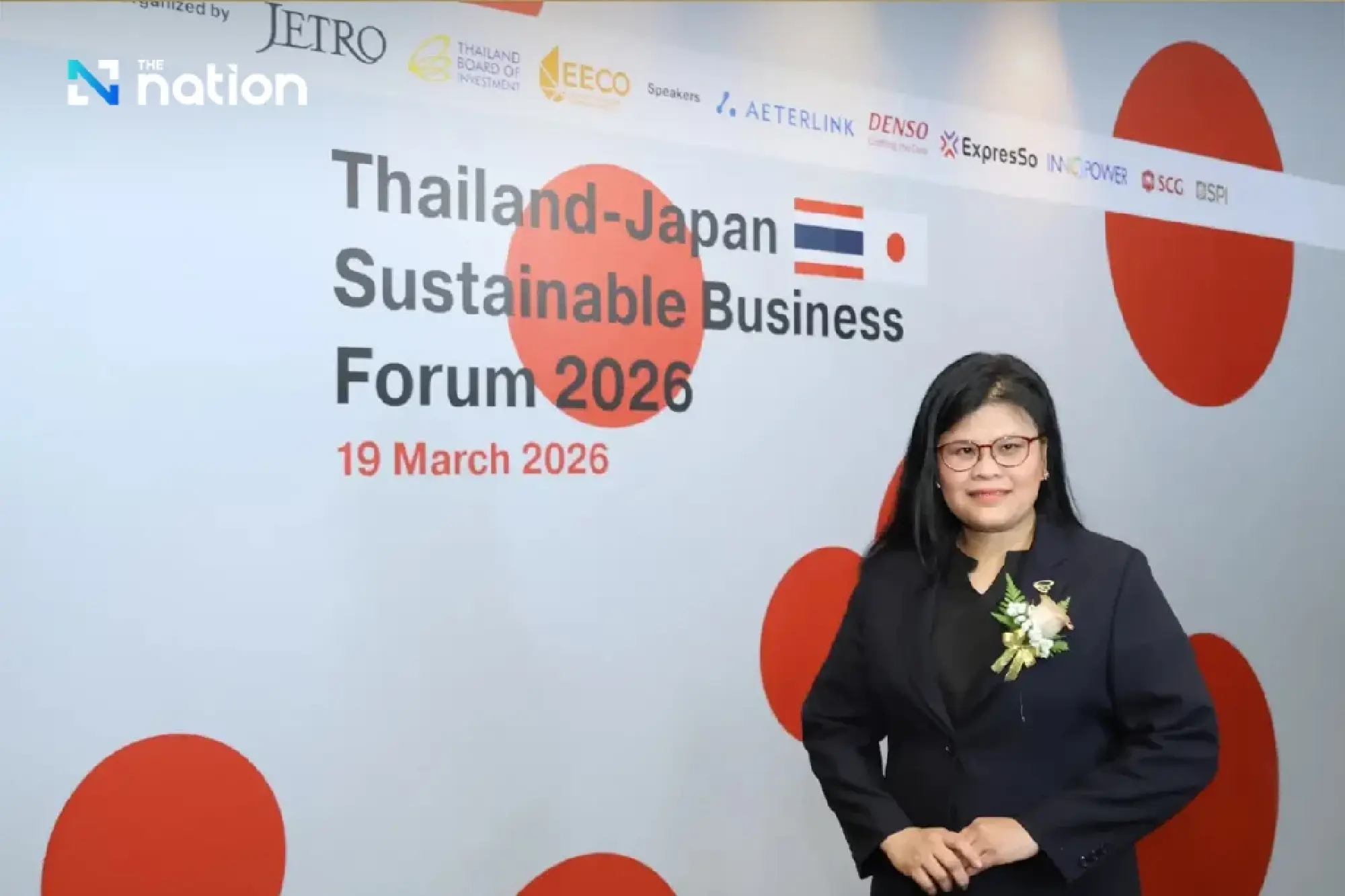
Sudhasinee Smitra, BOI Deputy Secretary General, said in an interview at the Thailand–Japan Sustainable Business Forum 2026 that investment promotion applications have grown significantly, rising by nearly 70% to a total value of more than THB186 billion.
A closer look at foreign direct investment (FDI) shows a value of about THB1.3 trillion.
The main heavy-spending investors at present are Singapore, much of it involving production base expansion by parent companies from China, followed by the United States, Hong Kong and China, respectively.
Data centres and PCBs lead a new digital-economy drive
Industries that have emerged as rising stars and have seen strong investment over the past two to three years are data centres and semiconductors, particularly printed circuit boards (PCBs), with many major global manufacturers setting up production bases in Thailand.
In addition, the BOI is focusing on promoting industries linked to the technology ecosystem, such as:
Energy Storage: energy storage systems for electricity security
Electronics & Power Electronics: advanced electronic components used across a wide range of industries
EVs and the mission towards net zero
Thailand is moving decisively towards becoming the region’s EV hub.
Government support measures have driven domestic electric vehicle registrations up severalfold, in line with the global trend towards green business.
Thailand has also set clear targets to achieve carbon neutrality and net-zero greenhouse gas emissions.
In addition, the BOI has measures to help existing businesses transform by offering financial and tax incentives to those making additional investments to save energy, use renewable energy, or reduce environmental impact, including improvements to production processes aimed at cutting greenhouse gas emissions.
Managing risk factors: the Middle East crisis and energy costs
Although the overall investment picture remains bright, there are still factors that need close monitoring, especially the unrest in the Middle East.
While it has not yet directly affected investment decisions, it has begun to affect energy costs and electricity prices.
The petrochemical industry is the first to feel the impact, as it relies on upstream raw materials from the Middle East, prompting some operators to delay production.
However, the government has recognised business concerns over energy prices and has set up a dedicated task force to urgently develop measures to ease the impact on both the public and the business sector.
A stable future: policy continuity despite a change in government
In response to investor questions about the transition to a new government, the BOI Deputy Secretary General said Thailand’s investment promotion policy remains stable and continuous.
The core strategy will continue to focus on three key areas:
- Sustainability: investment for sustainability
- Digital & Green Transformation: transition to a digital and green economy
- High-Tech Industries: promoting advanced-technology industries such as biotechnology in agriculture to enhance the country’s long-term competitiveness
Although volatility stemming from global developments and the energy price crisis remains a major challenge that must be addressed urgently, Thailand’s stable investment policy and its clear drive towards Green & Digital Transformation will remain key forces in keeping the country a strong and sustainable destination for global investors amid the changing landscape of the modern economy.
