
Thailand Steps Up Support for Thai Workers in the Middle East with 24/7 Hotlines and Evacuation Readiness
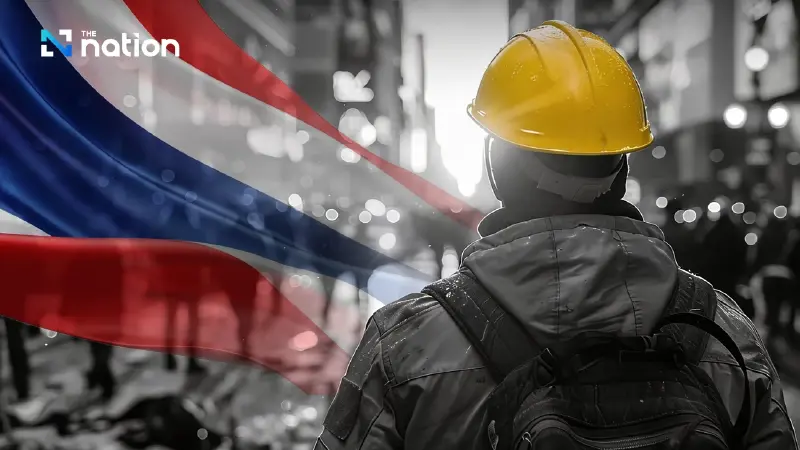


As rising tensions in the Middle East create uncertainty, Thailand has activated a tightly coordinated support system for Thai workers in the Middle East—combining 24/7 hotlines, embassy-and-labour teams on the ground, and ready-to-go evacuation routes.
When events move fast, what matters most is knowing someone is there—ready, reachable, and prepared to act. In recent days, Thailand has put that principle into practice for Thai workers across the Middle East, rolling out a clear, coordinated set of measures designed to keep people informed, supported and connected to help at any hour.
The Ministry of Foreign Affairs estimates there are around 110,000 Thais in the Middle East: Israel 65,000; United Arab Emirates 20,163; Saudi Arabia 7,342; Bahrain 6,500; Qatar 4,750; Egypt 3,700; Oman 1,116; Kuwait 1,019; Jordan 723; Iraq 237; Iran 250; Yemen 120; Lebanon 118; and Syria 40.

A safety net that answers 24/7
At the centre of Thailand’s response is something simple but powerful: access. The Ministry of Labour and the Ministry of Foreign Affairs have published round-the-clock contact channels so Thai nationals can reach assistance quickly, whether they are seeking advice, needing documentation support, or simply wanting reassurance.
Key channels include the Ministry of Labour’s hotline 1506 (press 2) and the Foreign Ministry’s Consular Affairs call centre 02 572 8442, alongside the Thai Consular application—creating multiple routes to the same destination: real-time support.
Crucially, Thailand has also reinforced a network of country-and-region points of contact—embassies and labour sections that can coordinate directly with local authorities. That includes dedicated lines for Tel Aviv and Tehran, and labour offices with wider regional coverage, such as the labour office in Abu Dhabi (covering the UAE, Qatar, Oman and Iran) and the labour office in Saudi Arabia (covering multiple countries across the Gulf and neighbouring states).

A plan with four gears—ready to match the moment
Preparedness is not just about phone numbers; it is also about structure. The Ministry of Labour has set out a four-tier contingency plan, designed to scale support to conditions in each country—moving from monitoring and coordination to longer-term management and post-incident assistance.
Officials have said they are monitoring the situation closely and coordinating with the Ministry of Foreign Affairs and labour attachés overseas, with evacuation routes, methods and assembly points already prepared should they ever be needed.
The plan has also been paired with practical, people-first steps. The ministry has surveyed worker intentions, maintained communications with Thai communities, and—where contact is difficult—mobilised provincial labour officials in Thailand to reach families and confirm the status of loved ones, easing concerns with verified updates.

On-the-ground teams, with clear guidance
Thailand’s response has also been defined by visible leadership and direct instruction to frontline support units.
Minister of Labour Treenuch Thienthong has directed labour offices in Tel Aviv and Abu Dhabi to closely monitor developments and be ready to assist Thai workers, including support that can move quickly if conditions change.
In one of the clearest signals of readiness, she underlined that plans are not theoretical: “If the situation escalates to the point where evacuation is necessary, it can be carried out immediately,” she said.
Just as importantly, her message to families has been steady and supportive: “I ask relatives of Thai workers abroad not to panic yet.”
When logistics matter, details are already in place
For Thai nationals in Iran, Thailand’s embassy in Tehran has published a concrete plan—two organised road evacuations to Türkiye via the Razi-Kapıköy border crossing, scheduled for 7 and 10 March 2026, with clear registration deadlines.
The notice includes practical guidance that helps people prepare calmly and confidently: departure time from the embassy, estimated arrival at the border, luggage limits (one suitcase, up to 20kg), and advice to dress for winter conditions.
It is the sort of operational detail that turns reassurance into action—and shows that Thailand is not improvising, but executing a plan.
Regional guidance that prioritises choice and safety
Thailand’s embassies have also issued timely public guidance elsewhere in the region. For Thai nationals in Lebanon, the Royal Thai Embassy in Riyadh has advised those without urgent reasons to remain to consider travelling out while commercial flights are still operating, and to register their details to support emergency coordination.
This approach—inform early, keep channels open, and help people plan—reflects a consistent theme across Thailand’s measures: support is proactive, not reactive.
A reassuring picture of Thai care abroad
Taken together, these steps paint a clear picture of Thailand’s posture amid uncertainty: organised, responsive and centred on people. Hotlines and apps provide immediate access. Labour and consular teams offer local coordination. Tiered planning gives structure. And where necessary, routes and schedules are already mapped.
For Thai workers and their families, the message is quietly confident: Thailand is present, prepared, and ready to help—wherever its people may be.
Hotline for Thai nationals residing in Middle East countries
- Department of Consular Affairs: 0-2572-8442 (24 hours)
- Protection Division, Department of Consular Affairs: 096-216-1837, 096-183-6736, 064-564-7573
- Royal Thai Embassy, Tehran: (+98) 912 159 8699, (+98) 912 500 7933
- Royal Thai Embassy, Amman: (+962) 777 555 050
- Royal Thai Embassy, Tel Aviv: (+972) 54 636 8150
- Royal Thai Embassy, Kuwait: (+965) 60 719 888
- Royal Thai Embassy, Muscat: (+968) 9927 3440, (+968) 9807 8801
- Royal Thai Embassy, Riyadh: (+966) 55 462 2005
- Royal Thai Embassy, Abu Dhabi: (+971) 50 211 0345
- Royal Thai Embassy, Manama: (+973) 3362 2445
- Royal Thai Embassy, Doha: (+974) 3380 9062
- Royal Thai Consulate-General, Jeddah: (+966) 56 808 1224
- Royal Thai Consulate-General, Dubai: (+971) 50 652 5945
SOURCE: www.thailand.go.th
