
PM Anutin unveils relief measures as energy crisis intensifies
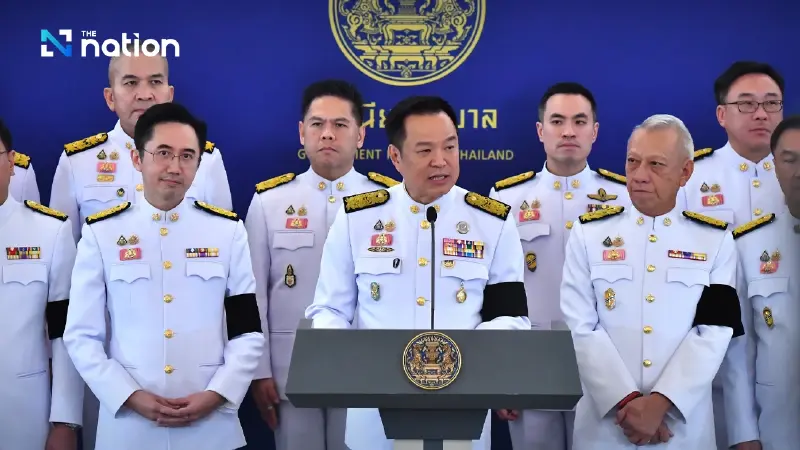


After a special Cabinet meeting, Prime Minister Anutin Charnvirakul pledged swift action on oil and electricity prices as Thailand confronts a worsening energy crisis.
- The government will reduce parts of its budget to reallocate funds for public relief from the energy crisis.
- Energy prices, including oil and electricity tariffs, will be restructured to lower costs for the public.
- Financial relief measures will be introduced, including the "Let's Go Halves Plus" scheme and low-interest loans for farmers and businesses.
- The government is also considering cutting the excise tax on oil and may invoke an emergency decree on fuel shortages if necessary.
Prime Minister Anutin Charnvirakul announced the outcome of the special Cabinet meeting held on April 6, 2026, at Government House, saying that the fighting in the Middle East, a key global source of oil and natural gas, has caused the prices of oil and natural gas, as well as by-products of oil and gas production such as fertiliser and plastic pellets, to rise rapidly on world markets.
The impact is being felt worldwide, including in Thailand, which imports around 50% of its energy from the Middle East.
He said the conflict in the Middle East has escalated steadily and expanded into attacks on production sites, refineries, oil depots, and oil and natural gas transport systems across the region.
Even if the conflict ends in the future, the infrastructure used to produce oil and natural gas in the Middle East will still need time to recover before normal output can resume.

As a result, high energy prices and shortages of petrochemical products are expected to persist for some time.
Anutin said the government had chosen to present these facts to the public so that people could understand the situation and be ready to adjust their way of life in response.
He stressed that the Prime Minister and all Cabinet ministers would work hard to solve the problems, provide assistance, and safeguard the interests of people in every sector so they could get through this difficult period.
The government’s measures will include:
- Reducing parts of the government budget so that the funds can be used first to help ease the impact on the public.
- Restructuring energy prices, including both oil prices and electricity tariffs, as quickly as possible to reduce people’s energy costs.
- Introducing relief measures to ease hardship, such as the Let's Go Halves Plus scheme, the Thai Help Thai programme, and low-interest loans for farmers, industrial operators in all sectors, and SMEs.

“We are facing a crisis with global repercussions. We must accept the truth and adapt together if we are to get through this crisis. National unity is our most important social capital at this moment. I believe the cooperation of all citizens will help us overcome this crisis and live with the changes that will arise in the future,” the Prime Minister said.
On energy measures, particularly the possible use of the Emergency Decree on Remedy and Prevention of Shortage of Fuel Oils 1973, Anutin said he had instructed Deputy Prime Minister and Finance Minister Ekniti Nitithanprapas and Energy Minister Akanat Promphan to notify him first if it became necessary to invoke the Prime Minister’s powers under the decree.
If needed, he said, he was ready to act within the scope of his authority to reduce public hardship.
As for whether the Cabinet meeting had discussed cutting the excise tax on oil, Anutin acknowledged that Ekniti was considering the matter.
Once everything became concrete after the government had delivered its policy statement, the measures would be implemented as quickly as possible.
