
Royal Gazette publishes order banning fuel and LPG exports
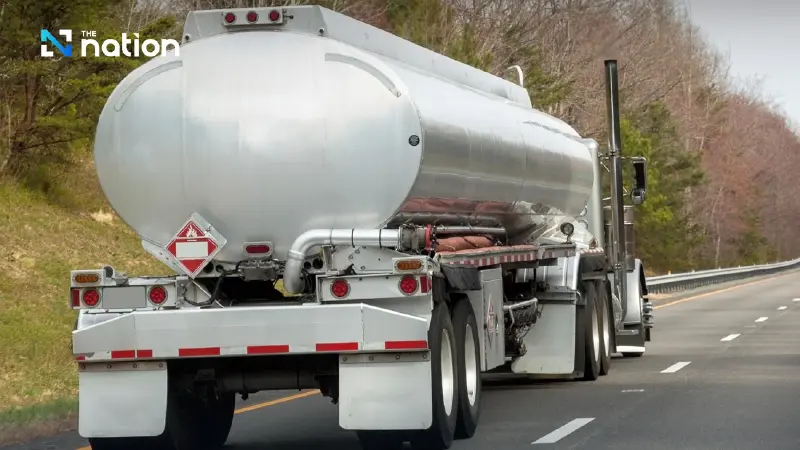


The Royal Gazette on March 6, 2026 published a Prime Minister’s Order setting out measures to prevent and address a fuel shortage in Thailand, with the order taking effect immediately upon publication.
The Royal Gazette has published a Prime Minister’s Order setting out measures to address and prevent a fuel shortage, citing escalating tensions in the conflict involving the United States, Israel and Iran.
The order states that the situation has intensified into severe retaliation, including air strikes on several strategic locations in the Middle East, as well as tighter restrictions on shipping routes in the Persian Gulf and the Strait of Hormuz, which are key transport corridors.
It says this will affect Thailand’s fuel supply and that it remains impossible to predict when the situation will end.
To prevent and resolve a fuel shortage, the Prime Minister issued the order under Section 3 of the Emergency Decree on Remedying and Preventing Fuel Shortage, 1973. The order takes effect from the date of its publication in the Royal Gazette.
Under the order, oil traders governed by the law on fuel trade must temporarily suspend exports outside the Kingdom of the following fuels until further notice: refined petroleum products, namely gasoline, gasohol or base gasoline, high-speed diesel, and Jet A-1 aviation fuel, as well as liquefied petroleum gas.
The export ban does not apply to exports to the Lao People’s Democratic Republic and the Republic of the Union of Myanmar; fuel imported for re-export and stored in bonded warehouses or free zones under customs law; or fuel whose characteristics and quality do not comply with the Department of Energy Business notification on fuel specifications and quality and therefore cannot be sold in the Kingdom.
The order also requires oil traders under Section 7 of the Fuel Trade Act, 2000, to maintain reserves of domestically produced fuel under the refined petroleum category at a rate of 1.5% from March 31, 2026, and 3% from April 30, 2026.
The calculation of reserve volumes, approval of storage locations, conditions for approved operators, delegation of reserve storage to other parties, and other related actions must comply with the criteria, procedures and conditions set out under the fuel trade law.
It further states that if a Section 7 oil trader can provide written evidence showing circumstances that prevent a Section 9 oil trader from maintaining reserves at the required rate under the order, or if such reserves would cause excessive damage, the Director-General of the Department of Energy Business, with the approval of the Energy Minister, has the authority to grant temporary relief.
This may include exempting the trader from the reserve requirement or reducing the amount of fuel to be reserved for a period deemed appropriate.
Conditions may also be attached to such relief.
The order was issued on March 6, 2026, by Prime Minister Anutin Charnvirakul.
