
Admire genuine Japanese sakura in full bloom in Chiang Mai
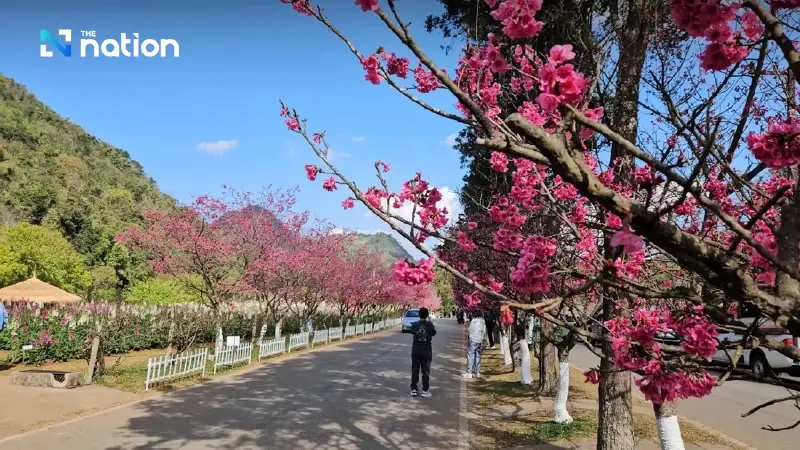


Hundreds of vivid pink blossoms have returned with cold snap, as visitors head to a royal agricultural station to see rare Japanese and Taiwanese sakura trees at peak flowering.
- Genuine Japanese sakura are in full bloom at the Ang Khang Royal Agricultural Station on Doi Ang Khang in Chiang Mai, reportedly the only place in Thailand to see them.
- The station is home to over 5,000 Japanese and Taiwanese sakura trees, which originated from a Royal Project Foundation research initiative that began planting saplings from Japan in 1997.
- These imported sakura are distinct from Thailand's native variety (nang phaya suea khrong), featuring fuller blossoms and a more vivid pink color.
A reporter described the atmosphere on January 16 at Doi Ang Khang in Fang district, Chiang Mai, where this winter has been particularly lively, as genuine Japanese sakura trees inside the Ang Khang Royal Agricultural Station are now in full bloom in the cold weather.
Bright and pale pink blossoms line various spots, becoming a major highlight that draws tourists from across the country.
It is regarded as the only place in Thailand where genuine Japanese sakura can be seen tangibly.

These sakura are the result of research by the Royal Project Foundation, which brought saplings from Japan for trial planting in 1997 and later expanded planting with stock from Taiwan in 2008.
At present, there are more than 5,000 trees in total, comprising Japanese sakura and Taiwanese sakura varieties, spread across key areas such as the 80 Garden opposite the Ang Khang Clubhouse building, beside the English Rose Garden, and along the outbound route near the vegetable germplasm collection greenhouses.

Japanese sakura have relatively fuller blossoms and a vivid pink colour, differing from nang phaya suea khrong, often called Thailand’s sakura, which is native to Thailand.
The beauty of the sakura at Doi Ang Khang reflects the success of cold-climate plant research under the Ang Khang Royal Agricultural Station, regarded as the beginning of Thailand’s Royal Project.
The station was established in 1969 under the royal initiative of King Rama IX to encourage hill-tribe communities to stop growing opium and practising shifting cultivation, alongside restoring watershed forests.
This led to the promotion of occupations, income generation, and the development of Ang Khang into a key national centre for learning and tourism to this day.

