
Free entry New Year scheme draws 111,269 visitors to wildlife reserves and sanctuaries in five days
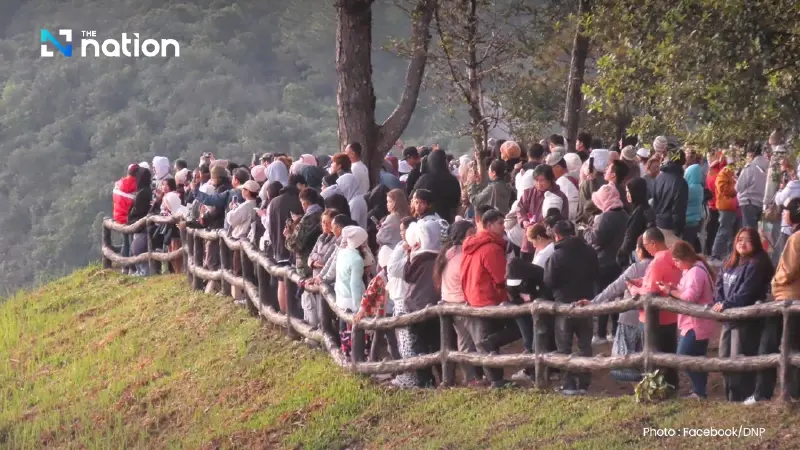


Thailand’s five-day New Year free-entry scheme at DNP sites drew 111,269 visitors, mostly Thais, with peak traffic on January 2 and top demand at Tham Prathun in Uthai Thani.
The Department of National Parks, Wildlife and Plant Conservation (DNP) says its five-day free entry scheme over the New Year 2026 holiday period was a major success, attracting more than 111,000 visitors nationwide.
Under the Natural Resources and Environment Ministry’s New Year gift policy, all DNP units offered free entry for five days from December 31, 2025 to January 4, 2026, drawing large crowds across the country.

Sukhee Boonsang, director of the Wildlife Conservation Office, said visitors travelled to 37 wildlife sanctuaries and 12 non-hunting areas, totalling 111,269 people.
Thai visitors made up the vast majority at 106,711 (95.9%), spanning all age groups: 20,887 children, 79,951 adults, 5,581 older people, and 292 people with disabilities, the DNP said, describing the policy as expanding equal access to nature.
Foreign visitors totalled 4,558, including 4,165 adults and 379 children, indicating that Thailand’s wildlife conservation areas can attract both domestic and international tourists, Sukhee said.
Visitor numbers remained strong throughout the five days. The busiest day was January 2, 2026, with 31,407 visitors, followed by January 1 with 28,201, and December 31 with 23,008. Visitor numbers on January 3 and January 4 were 16,971 and 9,490, respectively.

The DNP reported total revenue from service fees of 3,689,870 baht, and said the waived entry fees for Thai visitors amounted to 2,398,530 baht. It added that the holiday period also generated income from other services such as vehicle fees, equipment rentals and other charges, helping create revenue for DNP units and nearby communities.
Among all sites, the most popular was Tham Prathun Non-Hunting Area in Uthai Thani, with 16,954 visitors, cited for its natural highlights and ease of access. Next were:
- Ton Nga Chang Wildlife Sanctuary, Songkhla: 9,732
- Bueng Chawak Non-Hunting Area, Suphan Buri: 9,320
- Buntharik–Yodmon Wildlife Sanctuary, Ubon Ratchathani: 8,769
- Khao Pra–Bang Khram Wildlife Sanctuary, Krabi: 8,629

The DNP said the policy did more than provide a holiday gift, particularly for families with young children and older people, by widening access to Thailand’s natural beauty and biodiversity. It also highlighted the value of wildlife conservation areas as high-potential tourism assets.
The department said the eco-tourism boost helped distribute income and create economic opportunities for communities around protected areas — from shops and accommodation to community-led guiding services — while also fostering conservation awareness. It highlighted that more than 20,000 children and young people took part, gaining first-hand exposure to the importance of protecting natural resources and wildlife, helping lay the groundwork for a new generation with stronger conservation values.
