
Japanese groups unite for nuclear abolition
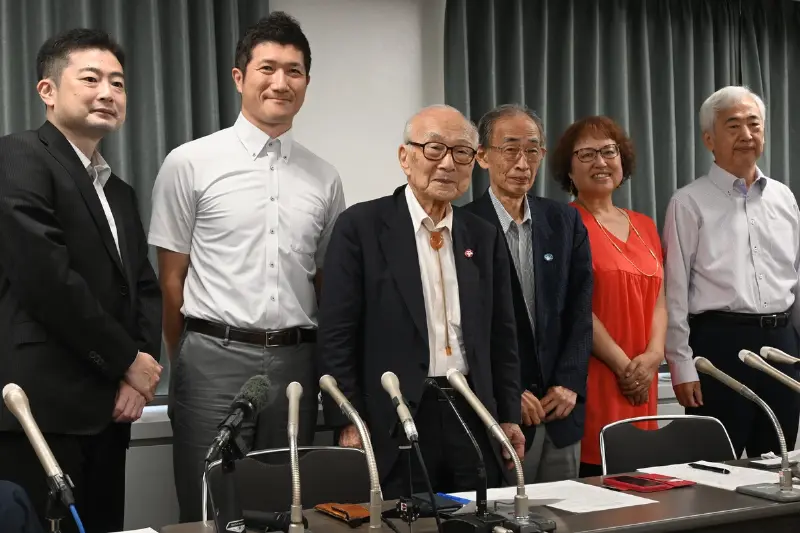


Three Japanese organisations working for the abolition of nuclear weapons issued a joint appeal in Tokyo on Wednesday, calling for spreading across the country the reality of atomic bombings.
It was the first time for the groups to come together for such a unified statement, which was unveiled ahead of the 80th anniversary next month of the 1945 US atomic bombings of Hiroshima and Nagasaki in the closing days of World War II.
The Japan Council against Atomic and Hydrogen Bombs, also known as Gensuikyo, and the Japan Congress against Atomic and Hydrogen Bombs, or Gensuikin, partnered with the Japan Confederation of A- and H-Bomb Sufferers Organisation, or Nihon Hidankyo, to issue the appeal.
The antinuclear movement gained momentum in 1954 after the 23-member crew of Fukuryu Maru No. 5, a Japanese fishing boat, was exposed to radioactive fallout from a US hydrogen bomb test.
Gensuikyo and Nihon Hidankyo were established in response to the intensifying public sentiment. Gensuikin was established in 1965, following the split from Gensuikyo.
"I'm deeply moved by the cooperation of large organisations on the 80th anniversary of the atomic bombings," Terumi Tanaka, 93, co-chair of Nihon Hidankyo, said at a press conference. He expressed hopes that the collaboration will encourage hibakusha, atomic bomb survivors who have yet to share their experiences, to testify.
"The task of spreading the reality of atomic bombings is a challenge for all humanity," Yayoi Tsuchida, 68, a senior Gensuikyo official, said.
Masashi Tani, 45, secretary-general of Gensuikin, said, "We urge the government to take action, such as by ratifying the Treaty on the Prohibition of Nuclear Weapons," noting that "the international community is watching how Japan marks the 80th anniversary."
"As the danger of nuclear weapons use grows, Japan's role is becoming increasingly important," the joint appeal said. "It is important to appeal against the inhumanity of nuclear weapons in Japan and globally by transcending differences in position."
[Copyright The Jiji Press, Ltd.]
