
80 Years On: Japan-US alliance shifts from shield-spear arrangement
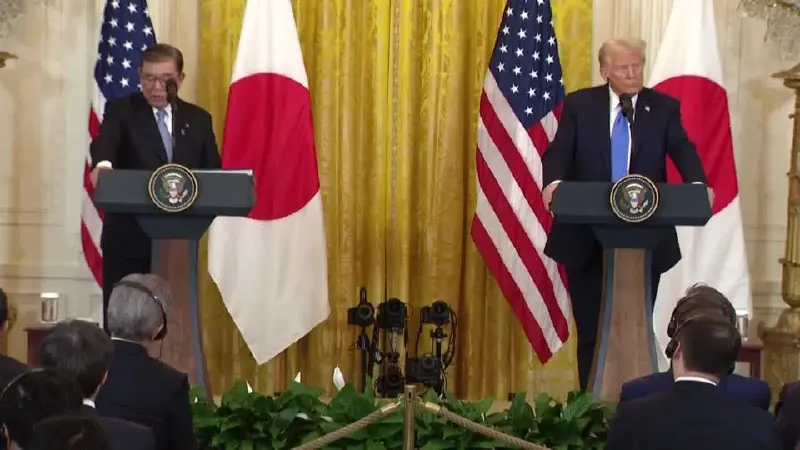


The Japan-US alliance has shifted from the traditional shield and spear post-World War II security arrangement, Kent Calder, director of the Edwin O. Reischauer Centre for East Asian Studies at the Johns Hopkins School of Advanced International Studies, said in a recent interview with Jiji Press.
"Increasingly, I think they are coming to have...complementary roles," Calder said, after decades when Japan acted as the defensive "shield" and the United States as the offensive "spear."
Following the enactment of security legislation in Japan in 2015 that allows the country to exercise its right to collective self-defence, Calder said, "Now, we are in a very different, different era."
A key turning point in the alliance's history was the 1960 revision of the bilateral security treaty, Calder noted, saying that the changes "reduced the kind of colonial sense (the United States had over Japan) of the original treaty."
Yasuhiro Nakasone, Junichiro Koizumi and Shinzo Abe "significantly strengthened" the alliance during their long spells as prime ministers of Japan, he said.
Other major achievements were made by former Japanese Prime Minister Fumio Kishida, who pledged to boost Japan's defence budget to 2 per cent of gross domestic product and possess counterstrike capabilities, Calder said.
Asked about US President Donald Trump's criticism of the alliance as being "one-sided" in Japan's favour, Calder said, "The free rider argument is overstated."
Saying that Tokyo covers "very high" spending to host US troops in Japan, Caldera added that the country has "very generously contributed...more than almost any country in the world."
On a proposed boost in Japan's defence spending to 5 pct of GDP, Calder said there is "logic" in calls to increase it given China's military threat. But he described some of the Trump administration's demands as "pretty extreme."
The important thing is not the amount of spending that will be involved, but the direction of the defence spending policy, he added.
Calder also urged Japan and the United States to shift the focus of their alliance from military to other fields, such as semiconductors and shipbuilding. "Japan is very strong in... dual-use technology," he said.
Asked whether the alliance would be shaken by Trump's steep tariffs, Calder said that while he "pushes the boundaries to get the best deal that he can," the president has "a more thoughtful, strategic side."
If Trump's way of thinking has not changed since the 1980s, when trade tensions between Japan and the United States escalated, he will have "a sense that Japan is important," Calder said.
"He'll get the best deal he can," Calder added.

