
Mexico celebrates independence with colour, music and pride
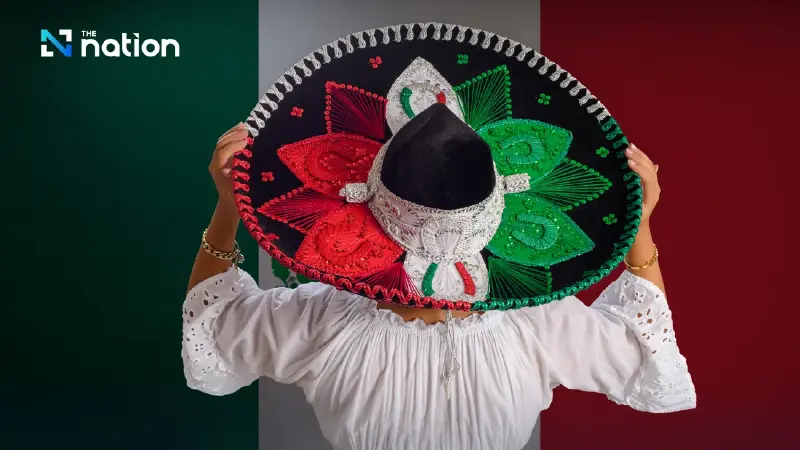


Mexico’s National Day, observed on September 16, commemorates the country’s liberation from Spanish rule in 1810.
For three centuries, Mexico endured Spanish colonial domination, with its wealth exploited and its indigenous peoples and mestizos (those of mixed Spanish and indigenous heritage) oppressed.
The pivotal moment came with the “Grito de Dolores,” when Miguel Hidalgo, a Catholic priest and leader of the independence movement—now honoured as the Father of the Nation—issued a fiery call to rebellion. His cry ignited the Mexican War of Independence against Spain. Today, this historic event is remembered every year on September 16.
Traditionally, on the night of September 15, the President of Mexico rings a bell and proclaims patriotic phrases such as “¡Viva México!” at El Zócalo in Mexico City. This solemn ritual recalls Hidalgo’s call to arms in 1810.
Following the Grito ceremony, fireworks light up cities across the country, with Mexico City hosting the grandest displays in green, white and red. Music fills the air, mariachi bands play, and people dance late into the night.
Families gather to share meals and enjoy traditional music, while decorations in the colours of the Mexican flag adorn homes and public spaces.
On September 16 itself, parades are held in towns and cities nationwide, with the largest taking place in Mexico City. Soldiers march alongside colourful floats and performers, celebrating national pride and paying tribute to Mexico’s struggle for independence.

Mexico at a glance
Mexico is located in the southern part of North America and is considered part of Latin America. It borders the United States to the north, Guatemala and Belize to the south, the Gulf of Mexico and the Caribbean Sea to the east, and the Pacific Ocean and the Gulf of California to the west.
Covering an area of 1.97 million square kilometres—four times the size of Thailand—Mexico is the third largest country in Latin America and the 15th largest in the world. Its geography is diverse, with some regions lying at high altitudes above sea level. The estimated population in 2025 is 131.94 million. The official language is Spanish.
The national currency is the peso, divided into 100 centavos. Banknotes are issued in denominations of 20, 50, 100, 200 and 500 pesos, while coins are available in 10, 20 and 50 centavos, as well as 1, 2, 10 and 20 pesos.
Mexico is a developing country with the 12th largest economy in the world, measured by gross domestic product (GDP) and purchasing power parity (PPP). Its largest economic partner is the United States.
With its sizeable economy and large population, Mexico is regarded as a regional power and a middle power globally, often identified as an emerging power and a newly industrialised state.

Where to travel in Mexico?
According to Traveloka, Mexico is a destination that can be enjoyed all year round, but the best time to visit is during the dry season from November to April, when the weather is pleasant with only light showers.
In Mexico City, the capital, transport is convenient thanks to an extensive public network of buses and a well-developed metro system. Taxis and ride-hailing services such as Uber are also widely available. For longer journeys, domestic flights are plentiful, while long-distance buses provide a comfortable alternative.
Mexican cuisine is world-famous for its variety and rich flavours. Must-try dishes include tacos, tamales, enchiladas, guacamole, mole and churros, each offering a taste of the country’s culinary heritage.
Among the highlights, Mexico City blends a lively urban atmosphere with deep-rooted history. Key landmarks include the Templo Mayor, the National Palace and Chapultepec Park, a favourite green escape for both locals and visitors.

For sun and sea, Cancún is one of Mexico’s most popular destinations. Famous for its pristine beaches, crystal-clear waters and vibrant nightlife, Cancún and the Riviera Maya attract travellers seeking relaxation, water sports and explorations of ancient sites such as Chichen Itzá.
Just south of Cancún, Playa del Carmen offers a lively beachfront promenade lined with restaurants, boutiques and souvenir shops. It is also close to attractions such as Xcaret Park and Cozumel Island, making it a perfect base for adventure.
For something different, San Miguel de Allende is a charming small town renowned for its colonial architecture, colourful streets and photogenic corners. It is also known for its local arts scene, vibrant markets and cultural heritage, making it a favourite among both tourists and locals.

Relationship with Thailand
According to the Thai Foreign Ministry, Thailand and Mexico established diplomatic relations in 1975. The Royal Thai Embassy in Mexico City opened in 1978, while the Mexican Embassy in Thailand was inaugurated in 1989.
Mexico is Thailand’s second-largest trading partner in Latin America. In 2023, bilateral trade totalled US$4.62 billion, an increase of 11.13% from 2022. This included Thai exports worth US$3.58 billion and imports from Mexico valued at US$1.03 billion, giving Thailand a trade surplus of US$2.55 billion.
Thailand’s major exports to Mexico include automobiles and parts, computers and components, telephones and accessories, facsimile machines, electrical transformers, and machinery.
Imports from Mexico consist mainly of electrical machinery and parts, automotive components, scientific and medical instruments, industrial machinery, and household electrical appliances.

To strengthen economic ties, the Thai-Mexican Chamber of Commerce was established on June 8, 2015, as a mechanism for promoting private-sector cooperation.
Mexico is also the first Latin American country to join the Organisation for Economic Co-operation and Development (OECD). In addition, it is a member of frameworks such as the Asia-Pacific Economic Cooperation (APEC), G-20, Trans-Pacific Partnership (TPP), and the Pacific Alliance.
On academic cooperation, the Thailand International Cooperation Agency (TICA) and the Mexican Agency for International Development Cooperation (AMEXCID) signed a memorandum of understanding on June 28, 2018, to enhance bilateral academic collaboration.
Between 2015 and 2023, 48 Mexican participants attended Thailand’s Annual International Training Courses (AITC).

Cultural and social cooperation is also flourishing. Mexican youth have shown strong interest in Thai culture.
The Thai Embassy in Mexico has organised several activities, such as inviting lead actors from the popular Thai series 2gether—hugely popular in Mexico and across Latin America—to engage fans through writing campaigns about their impressions of Thailand.
The project attracted tens of thousands of participants and boosted the popularity of Thai products featured in the series.
In December 2021, the Thai Embassy in Mexico partnered with Thai T-Pop band 4MIX to organise events including a Thai singing contest, fan meetings, and concerts in Mexico City.
Other initiatives include online Thai language classes and a Thai cooking competition under the programme “Charm Thai: Thai Flavours in Mexico”, held in February 2023.
