
Venezuela to export $2 billion worth of oil to US in deal with Washington
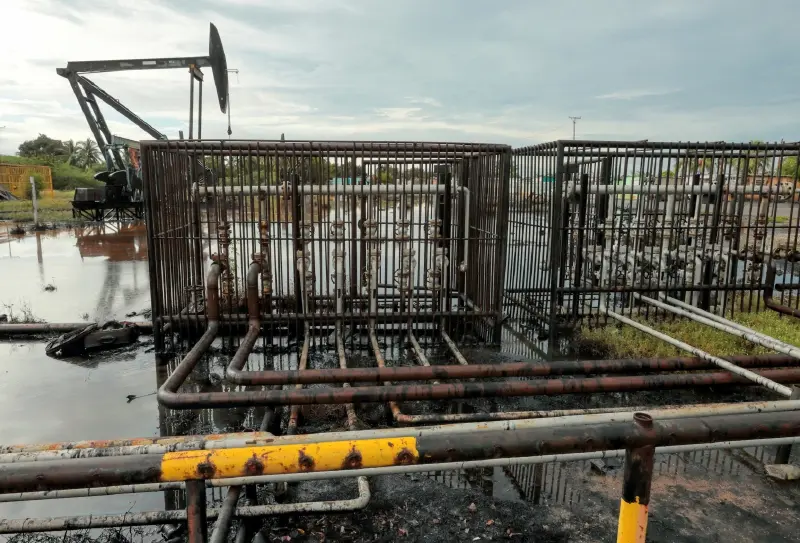


Venezuela and the United States have agreed on a deal that could allow up to US$2 billion of Venezuelan crude to be shipped to the US, President Donald Trump said on Tuesday (January 6), in a move that would reroute some barrels away from China and ease pressure on Venezuela’s output cuts.
Trump portrayed the accord as evidence that Caracas is yielding to his demand for greater access for US oil companies, after he warned of tougher action if it did not open its industry.
He said interim President Delcy Rodriguez should grant the United States and private firms “total access” to Venezuela’s oil sector.
The announcement follows a US export blockade imposed since mid-December that has left Venezuela with large volumes of crude stuck on tankers and in storage.
The blockade formed part of a broader US push against President Nicolas Maduro’s government that culminated in US forces capturing Maduro over the weekend.
Senior Venezuelan officials have called the capture a kidnapping and accused Washington of seeking to seize Venezuela’s oil wealth.
In a social media post, Trump said Venezuela would hand over between 30 million and 50 million barrels of what he described as sanctioned oil.
He said the crude would be sold at market prices and that proceeds would be controlled by him to ensure the money benefits both Venezuelans and Americans.
Trump said Energy Secretary Chris Wright would oversee the implementation, with oil taken from vessels and delivered directly to US ports.
Two people familiar with the matter said the initial deliveries could require redirecting cargoes that were originally headed to China, Venezuela’s biggest customer over the past decade, particularly since US sanctions were imposed in 2020 on companies involved in trading Venezuelan crude.
One oil industry source said Trump wanted the arrangement in place quickly so he could present it as a major win.
Venezuelan officials and state company PDVSA did not comment.
US crude prices fell more than 1.5% after Trump’s statement, as traders anticipated increased Venezuelan supply into the US market.
Currently, Venezuelan crude exports to the US are effectively managed through Chevron, PDVSA’s key joint-venture partner operating under US authorisation.
Chevron has been shipping roughly 100,000 to 150,000 barrels per day to the US and has been the only firm able to keep lifting crude without disruption in recent weeks despite the blockade.
It remained unclear whether Venezuela would be able to access any revenues from the shipments.
Sanctions have cut PDVSA off from the global financial system, freezing accounts and restricting dollar transactions.
Venezuela has been selling its main Merey grade at about US$22 a barrel below Brent for deliveries at Venezuelan ports, implying a deal value of up to about US$1.9 billion.
Rodriguez, sworn in as interim president on Monday, is under US sanctions imposed in 2018 over allegations of undermining democracy.
Two sources said officials from both countries have discussed possible ways to sell the crude, including auctions allowing US buyers to bid for cargoes, and the issuance of US licences for PDVSA partners that could lead to supply contracts.
Similar licences previously enabled PDVSA’s joint-venture partners and customers, including Chevron, India’s Reliance, China’s CNPC, and Europe’s Eni and Repsol, to lift Venezuelan oil for refining or resale.
Two separate sources said some companies have already started preparing to receive Venezuelan cargoes again.
One source said the sides have also discussed whether Venezuelan crude could, in the future, be used for the US Strategic Petroleum Reserve, though Trump did not mention that possibility.
Interior Secretary Doug Burgum said on Tuesday that higher volumes of Venezuelan heavy crude flowing to the US Gulf Coast would be “great news” for job security, future petrol prices and Venezuela, arguing the country could attract investment and rebuild with US technology and partnerships.
US Gulf Coast refineries are configured to process Venezuela’s heavy grades and were importing around 500,000 barrels per day before Washington first imposed energy sanctions.
PDVSA has already cut production because storage is filling up, and one source said deeper reductions would be needed if exports do not resume soon.
In trading, differentials for some heavy crude grades in the US Gulf eased by about 50 cents a barrel on Tuesday on expectations of more Venezuelan supply.
