
Why Korean cities are competing to host nuclear reactors
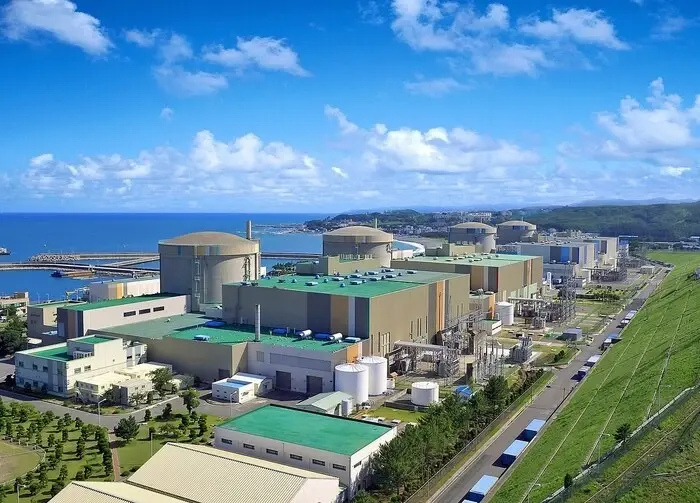


Once-shunned facilities gain renewed appeal for regional towns confronting population decline
As the South Korean government has decided to continue new nuclear power plant construction, competition is heating up among local governments to host facilities once avoided due to safety concerns.
The Ministry of Climate, Energy and Environment announced on Jan. 26 that it would restart plans to build two large nuclear reactors with a capacity of 1.4 gigawatts each, along with one 700-megawatt small modular reactor.
It continued the policy directives set under the previous Yoon Suk Yeol administration.
Although concrete support measures for host communities have yet to be finalised, local governments are already mobilising.
Residents in Yeongdeok, North Gyeongsang Province, and Ulju in Ulsan are stepping up efforts to attract the two large reactors.
For the pilot small modular reactor project, Gyeongju, North Gyeongsang Province, and Gijang in Busan have emerged as leading contenders.
This marks a significant reversal from the past, when such facilities were widely viewed as classic "not in my backyard" projects.
Now, the reactors are regarded as a way to address shrinking and ageing populations in cities outside the Seoul metropolitan area.
Nuclear reactors become a hot commodity.
Despite lingering safety concerns, particularly in regions that already form Korea's densely concentrated nuclear belt, communities hope that hosting additional reactors will bring long-term government support and revenue from power generation, helping to counter local extinction risks.
On Thursday, residents living near an existing nuclear power plant in Ulju held a press conference to urge the government to designate the area for additional reactors.
"Our neighbourhood meets the government's key requirements for new reactor sites, including geological safety, sufficient cooling water and access to the existing power grid," a representative of the residents said.
"No policy can gain 100 % approval, but we have lived alongside nuclear reactors for decades, developing a mature perspective that soberly weighs risks and benefits."
Yeongdeok, where a previous plan to build two reactors was scrapped in 2021, is also reentering the competition as Korea Hydro and Nuclear Power Co. began accepting applications for new projects last week.
The county plans to survey about 1,400 residents, roughly 5 % of its population, in mid-February to gauge local sentiment.
Interest is also growing in the SMR project, although competition has narrowed. Because KNHP requires coastal access for cooling, only Gyeongju and Gijang, both of which already host large-scale nuclear plants, are seen as viable candidates.
Gyeongju Mayor Joo Nak-young said the city's proximity to industrial complexes and its ongoing SMR-related industry projects give it a competitive edge, calling Gyeongju "the most practical and well-prepared candidate."
Gijang, citing strong support from residents near its existing nuclear facilities, said it will seek to build a broader consensus across the county.
The designation of nuclear plant sites has long stirred intense opposition across Korea, and previous projects have faced high rejection rates in public polls.
However, attitudes appear to be shifting as concerns over economic decline deepen, particularly ahead of the June 3 local elections, as the issue could affect incumbent mayors' support.
KNHP said details of compensation and support programs for host regions are still under discussion.
Industry estimates suggest that the two large reactors, with a combined capacity of 2.8 gigawatts, could generate nearly 4 trillion won ($2.77 billion) in economic benefits for surrounding areas over 70 years, including construction spending and legally mandated power generation contributions.
Although SMRs generate less electricity, they are also expected to deliver substantial economic effects.
"Beyond attracting related industries and creating jobs, the SMR could provide around 780 billion won in legally guaranteed support over eight decades," a Gyeongju city official told local media.
Hopes to revitalize aging, shrinking regions
Residents hope that long-term financial support, along with an influx of workers for power plants and related industries, will help revive regional economies.
Yeongdeok is among Korea's most demographically vulnerable counties, with its population shrinking from about 91,000 in the 1980s to 32,698 as of December.
The local economy was further hit by a large wildfire in 2025 that caused an estimated 317 billion won in damage.
Gyeongju is also under monitoring by the Ministry of the Interior and Safety for population decline, while Ulju and Gijang are experiencing rapid ageing.
Opposition voices remain strong. Critics point to safety concerns and inefficiencies in power transmission from reactor-heavy eastern regions to other parts of the country.
"The Busan-Ulsan-South Gyeongsang region has more than 20 nuclear reactors, making it one of the most densely concentrated nuclear areas in the world," said Rep. Yoon Jong-o of the minor Progressive Party. "While Seoul's power self-sufficiency rate is below 10 %, some regions exceed 200 %. This adds another layer of energy injustice."
Environmental groups in Ulsan also held a press conference on Jan. 27, urging the ministry to reverse the nuclear expansion plans.
KNHP allocated resident acceptance as one of the most critical factors in selecting project sites, while local governments said they would continue efforts to build public consensus.
Lim Jae-seong
The Korea Herald
Asia News Network
