
Decoding why Western allies are turning away from Trump over Iran
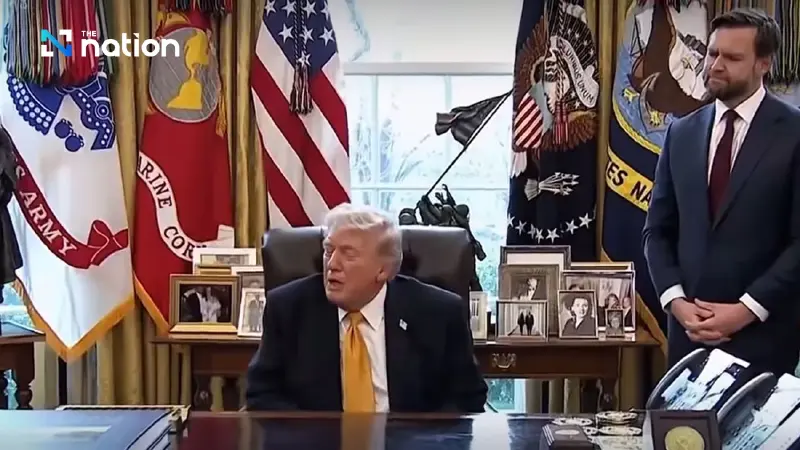


As Washington pushes for backing in the Strait of Hormuz, key Western partners are choosing caution over confrontation, wary of a wider war and fresh turmoil in global energy markets.
- Western allies, particularly in the European Union, are refusing to join a US-led military operation in the Strait of Hormuz because they fear it will escalate into a larger war.
- European countries favor diplomatic efforts to resolve the crisis and are cautious about military involvement, viewing the US approach as too aggressive and risky for global stability.
- Allies like Germany, France, and Italy have expressed a strategic difference with the Trump administration, insisting that any potential mission must be strictly defensive rather than an offensive military operation.
- Despite US pressure, the EU decided not to expand its existing naval mission, Operation Aspides, to include the military action requested by Washington, highlighting a growing divide in foreign policy.
The conflict in the Middle East was laying bare growing cracks in relations between the United States and its Western allies on Tuesday (March 17), after several countries refused to join a military operation requested by President Donald Trump to address the crisis in the Strait of Hormuz.
The Trump administration has asked several countries to send naval forces to join a security operation in the Strait of Hormuz, a vital global oil shipping route that accounts for around 20% of the world's oil supply.
However, so far, no country has made a clear commitment to join such an operation.
Most recently, Euronews reported that a meeting of European Union, or EU, foreign ministers had decided not to expand the bloc’s naval mission to safeguard maritime security in the Strait of Hormuz, despite pressure from US President Donald Trump for European allies to send military forces to join the operation.
That decision reflects the position of European countries, which want to avoid becoming directly involved in the military conflict in the Middle East amid fears that the crisis could escalate further and affect global energy stability.
Reports also said that Donald Trump had warned NATO member states that, if allies failed to support the United States in its mission to protect oil shipping routes in the Middle East, they could face a “very bad” future.
Europe hits the brakes on military action, choosing a cautious path
Pressure from Washington has mounted amid concern that tensions in the region could disrupt oil exports through the Strait of Hormuz, one of the world’s most important energy corridors.
Kaja Kallas, the European Union’s foreign policy chief, said after the meeting that member states had no desire to widen the scope of the EU naval mission to cover additional operations in the Strait of Hormuz.
Although many countries are worried that any disruption to oil exports could push global oil prices above $100 a barrel, the meeting agreed that no country wanted to jump into a full-scale war.
Several key European member states also made clear that they did not support sending military forces to join the mission.
Germany rejected participation in military operations in the area.
Romania said it needed to prioritise naval capabilities in the Black Sea.
Luxembourg stressed that the EU was not directly involved in this war, adding that it could help with technology or communications, but was not prepared to send troops or military equipment.
Operation Aspides, the European Union’s naval mission, was established in February 2024 with the aim of protecting commercial vessels from attacks by Houthi militants.
Its operational area covers several strategic locations, including:
- Red Sea
- Gulf of Aden
- Arabian Sea
- Gulf of Oman
- Persian Gulf
Although the mission already monitors developments in the Strait of Hormuz, the European Union has stressed that it is only a defensive operation, not an offensive military mission.
Europe’s latest decision highlights the differing approaches of the United States and its European allies in handling the Middle East crisis, which is now affecting both global energy stability and the world economy.
Trump lashes out at allies over lack of support after Europe declines to join the Iran conflict
A Reuters report said US President Donald Trump had voiced frustration with several allied countries after they declined Washington’s request to send forces to join an operation to protect shipping through the Strait of Hormuz, a route that carries nearly one-fifth of the world’s oil.
Trump rebuked some allies for what he portrayed as a lack of support for the United States, after Washington had played a major role in maintaining global security for decades, yet was receiving little cooperation in helping protect one of the world’s most important energy routes at a time of rising tensions.
However, many European countries remain cautious about becoming militarily involved, preferring diplomatic efforts to defuse the conflict rather than expanding military operations in the region.
The positions of several key European countries point in the same direction: avoiding direct involvement in the war. Several countries have stated their positions as follows:
- Italy supports international negotiations and does not see any need at present to expand Europe’s military operations.
- France supports future efforts to protect shipping lanes, but says any move must remain a defensive mission within an international cooperation framework.
- The United Kingdom has not yet decided whether to join the operation, but says that if any action is taken, it must be part of a clear multilateral plan.
- Spain has criticised the use of military force and warned that attacking Iran could further destabilise the region.
Analysts say Europe’s stance reflects concern that the war in the Middle East could widen into a much larger conflict and hurt the global economy, particularly energy markets, because the Strait of Hormuz is a vital route for transporting oil and natural gas.
As the United States tries to rally allies to secure the world’s energy routes, the hesitation of European countries is creating resistance to Washington’s effort from some of its own key partners and reflecting a strategic divide between the United States and Europe over how to manage this Middle East crisis.
