
Trump delays Xi summit, blasts NATO over Hormuz crisis
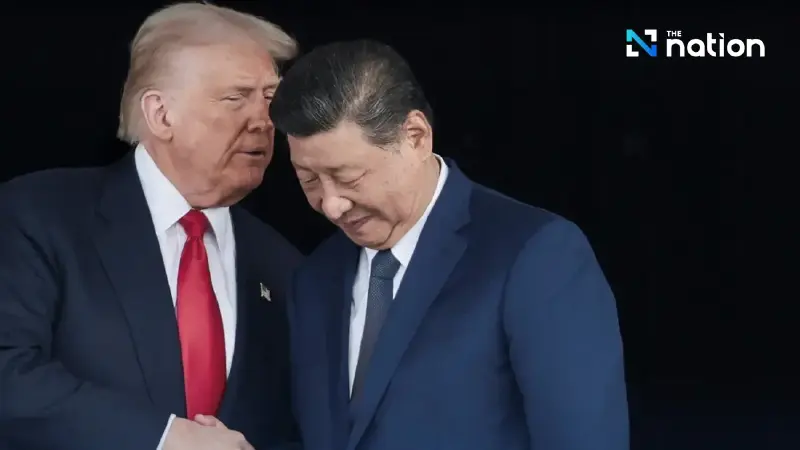


Trump delays Xi meeting by a month and criticises NATO allies for refusing to secure Hormuz as Middle East conflict disrupts oil flows and shipping
US President Donald Trump has postponed a planned summit with Chinese President Xi Jinping by about one month, as he steps up calls for international support to secure shipping through the Strait of Hormuz amid escalating conflict in the Middle East.
According to Bloomberg, Trump renewed his appeal for countries to help protect maritime traffic through the critical energy corridor, claiming Iran’s capabilities had been largely degraded, even as the war continues to disrupt global oil markets and shipping.
Summit delayed as war takes priority
Speaking at the White House on Monday (March 16, 2026), Trump said he had asked China to delay the high-level meeting in order to remain in Washington and oversee the conflict with Iran.
“We’re working on that right now. We’re speaking to China. I’d love to, but because of the war, I want to be here,” he said.
“I feel I have to be here, so we asked to delay it by about a month. I look forward to meeting them — we have a very good relationship. But because of the war, it’s very simple.”
The summit between the leaders of the world’s two largest economies had been scheduled for late March, following recent talks between delegations in Paris on issues including Chinese investment in the US and American semiconductor exports to China.
Trump criticises NATO and allies
Trump also criticised NATO and other allied nations, accusing them of relying on US security support worth “tens of billions of dollars” while failing to assist when called upon.
He reiterated his demand for international cooperation to ensure safe passage for commercial vessels through the Strait of Hormuz, where shipping has been severely disrupted.
Strait disruption shakes global energy flows
The effective closure of the Strait of Hormuz — which carries roughly one-fifth of global oil shipments — has forced countries such as the United Arab Emirates and Kuwait to scale back production.
However, some vessels have begun cautiously navigating the route again as security conditions evolve.
Trump said US forces had targeted Iran’s ability to threaten shipping, claiming more than 30 mine-laying vessels had been destroyed.
“We’re hammering their capacity to threaten commercial shipping in the Strait of Hormuz,” he said, warning that any attempt by Iran to deploy naval mines would be “a form of suicide”.
Escalation and threats against Iran
The US president said more than 7,000 targets had been struck, adding that Iran’s air defence systems had been “completely obliterated”.
He also warned of further strikes on Iran’s Kharg Island — the country’s main oil export hub — saying such an attack could be carried out “within five minutes” if necessary.
Conflict spreads across the Gulf
As the war entered its 17th day, Iran launched new attacks across the Gulf, including strikes affecting key oil infrastructure in the United Arab Emirates.
Oil exports at Fujairah were temporarily suspended following a drone attack, marking the second strike in two days. Dubai also briefly halted flights at its main airport after a fuel depot fire believed to have been caused by an Iranian drone.
Israel continued air strikes targeting infrastructure in Tehran, while Saudi Arabia increased oil flows through pipelines to its Red Sea port of Yanbu to bypass the Strait of Hormuz for part of its exports.
Rising risks for global shipping
Since the conflict began, at least 16 attacks on vessels have been reported in and around the Strait of Hormuz, according to the UK Maritime Trade Operations.
Despite some signs of partial recovery in shipping, risks remain elevated, with the conflict continuing to threaten global energy supply chains and maritime security.
