
Resource Nationalism: Global Export Crunches Threaten to Derail EV and High-Tech Supply Chains
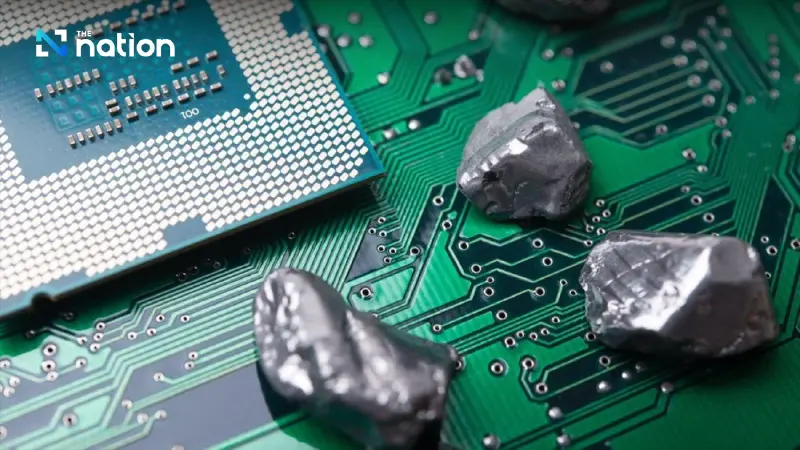


A fivefold increase in trade restrictions since 2009 has left industrialised nations facing a "systemic challenge" as producer countries tighten their grip on the minerals essential for the green transition
- A fivefold increase in export restrictions on critical raw materials since 2009, driven by "resource nationalism," is creating a systemic challenge for global high-tech and EV supply chains.
- The battery sector is severely impacted, with state controls now affecting a large share of global exports for key minerals like cobalt and manganese (70%), graphite (47%), and rare earth elements (45%).
- A small number of nations, including China and India, account for over half of all restrictions, leaving import-dependent manufacturing hubs like the UK, South Korea, and Japan vulnerable to supply shortages.
- This trend of state-led hoarding creates price volatility and stalls investment, threatening to delay the green transition by inflating the cost of essential components for EVs and other technologies.
A fivefold increase in trade restrictions since 2009 has left industrialised nations facing a "systemic challenge" as producer countries tighten their grip on the minerals essential for the green transition.
The global race for technological supremacy and net-zero emissions is hitting a formidable trade barrier. According to the OECD’s 2026 Inventory of Export Restrictions on Critical Raw Materials, the number of measures limiting the export of essential minerals has surged fivefold since 2009, creating a volatile "resource war" that threatens the stability of the electric vehicle (EV) and semiconductor industries.
The report highlights a growing trend of "resource nationalism," where mineral-rich nations utilise export taxes, licensing requirements, and outright prohibitions to secure domestic supply or force international firms to build processing plants within their borders.
The Battery Bottleneck
The data paints a stark picture for the green energy transition. Upstream raw materials—those that have not yet been processed—are being restricted at twice the rate of downstream products.
This "stranglehold" is most visible in the battery sector:
Cobalt and Manganese: Approximately 70% of global exports are now subject to at least one restrictive measure.
Graphite: Nearly half (47%) of the world’s trade volume is under state-mandated controls.
Rare Earth Elements: 45% of global supply is restricted, a critical concern given that China currently produces 70% of the world's supply.
While the growth of new restrictions slowed to 0.6% in 2024, the cumulative effect of existing measures has reached a historic peak. In a significant shift, Myanmar emerged as the most active regulator in 2024, accounting for over 21% of new restrictions on nickel, tin, and rare earths.
Winners and Losers
The geopolitical map of mineral control is highly concentrated. Over the last 15 years, five nations—China, India, Argentina, Vietnam, and Burundi—have accounted for more than half of all global export restrictions.
Conversely, the "losers" in this landscape are high-tech manufacturing hubs that lack domestic mineral wealth.
The OECD warns that the United Kingdom (22.7%), South Korea (21.8%), and Japan (18.4%) face exposure levels well above the global average.
These nations are now highly vulnerable to price shocks and supply shortages that could cripple their automotive and electronics sectors.

An Obstacle to the 'Green Transition'
The OECD argues that these trade-distorting interventions create a "vicious cycle." When major producers restrict supply, global prices spike, often triggering retaliatory restrictions from other nations.
This volatility has stalled investment in new mining and refining projects, as the market remains wary of geopolitical instability.
"Converting consumer intent into sustained EV adoption depends on removing friction points," the report implies.
Without multilateral cooperation to diversify supply chains and ensure transparency, the "Green Transition" envisioned by Western economies may be delayed by years, if not decades, as the cost of essential components remains artificially inflated by state-led hoarding.
To counter this, OECD members are reportedly fast-tracking new policy initiatives, including internationally agreed export credit rules and recycling partnerships, in a desperate bid to level a playing field that is increasingly tilted in favour of resource-rich exporters.
