
Thailand Races Ahead as Southeast Asia’s Premier EV Hub Despite Infrastructure Hurdles
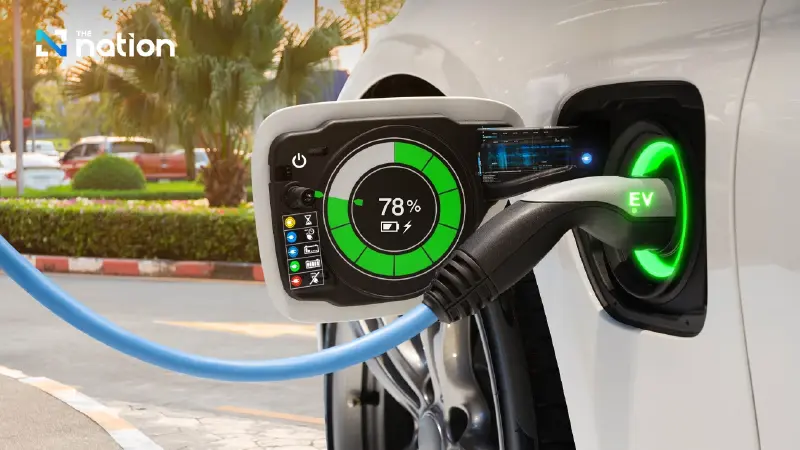


Deloitte report reveals 58% of Thai motorists are eyeing electric or hybrid models, though a significant "charging gap" threatens to stall mass adoption
- Thailand leads Southeast Asia in consumer readiness for electric vehicles, with 58% of motorists intending to purchase a hybrid or battery-electric model.
- A significant "charging gap" is a major infrastructure hurdle, as 75% of prospective buyers expect to charge at home, but only 36% currently have access.
- Despite high interest, converting it to sales depends on bridging this infrastructure gap, with a majority of consumers (51%) preferring the integration of EV chargers into existing fuel stations.
- The Thai market shows low brand loyalty (64% willing to switch), creating opportunities for new EV manufacturers, yet consumers still overwhelmingly trust and use traditional dealerships for purchasing and service.
Deloitte report reveals 58% of Thai motorists are eyeing electric or hybrid models, though a significant "charging gap" threatens to stall mass adoption.
Thailand is firmly establishing itself as the regional frontrunner for the electric vehicle (EV) revolution, outpacing its Southeast Asian neighbours in consumer readiness.
According to Deloitte’s 2026 Global Automotive Consumer Study, 58% of Thai consumers intend to opt for a hybrid or battery electric vehicle (BEV) for their next purchase—significantly higher than the regional average of 42.8%.
However, the report warns that while the appetite for "New Energy Vehicles" (NEVs) is high, the practicalities of ownership remain a challenge.
A stark disparity exists between charging expectations and reality: while 75% of prospective buyers expect to charge their vehicles at home, only 36% currently have access to residential charging points.
The Infrastructure Bottleneck
The study highlights that for Thailand to convert interest into actual sales, the "charging gap" must be bridged.
When charging away from home, 51% of Thai motorists prefer traditional fuel stations equipped with EV chargers, suggesting that the most successful transition will integrate new technology into familiar, existing infrastructure.
"Thailand is well-positioned to lead NEV adoption in the region," noted Lee Seong Jin, Automotive Sector Leader at Deloitte Southeast Asia. "However, conversion depends on removing friction points—particularly around charging access and cost. Automotive players must collaborate with energy providers and property developers to deliver ecosystem-level solutions."

Fluid Brand Loyalty and the Dealer Factor
The Thai market is becoming increasingly volatile, with brand loyalty at a historic low. Deloitte found that 64% of Thai consumers intend to switch brands for their next purchase, driven by a hunt for superior product quality, advanced technology, and better performance.
Despite this openness to new manufacturers—particularly the influx of NEV brands—Thai consumers remain traditional in their purchasing habits.
Only 53% expressed interest in direct-to-consumer online models, the lowest in the region. Instead, the authorised dealer remains king; 81% of respondents continue to use official dealerships for servicing, with "trust" cited as the most critical factor in their choice of provider.

Data and Connectivity
Thailand is also leading the charge in software-enabled transport. Approximately 67% of consumers expressed a desire for AI-enabled customisation, and a vast majority are willing to pay for connected services such as anti-theft tracking (84%) and emergency assistance (80%).
Interestingly, Thai motorists showed a surprisingly low level of concern regarding data sharing—including vehicle location and in-cabin monitoring—compared to their regional peers.
"Success will depend on navigating this complexity," said Juntira Juntrachaichoat, Consumer Industry Leader at Deloitte Thailand. "Consumers are more willing to switch brands and embrace new tech, yet they remain anchored in trust-based relationships with dealers. Companies that adopt an integrated transformation approach will win this next phase."
