
Thai auto industry sees uneven recovery in 2026
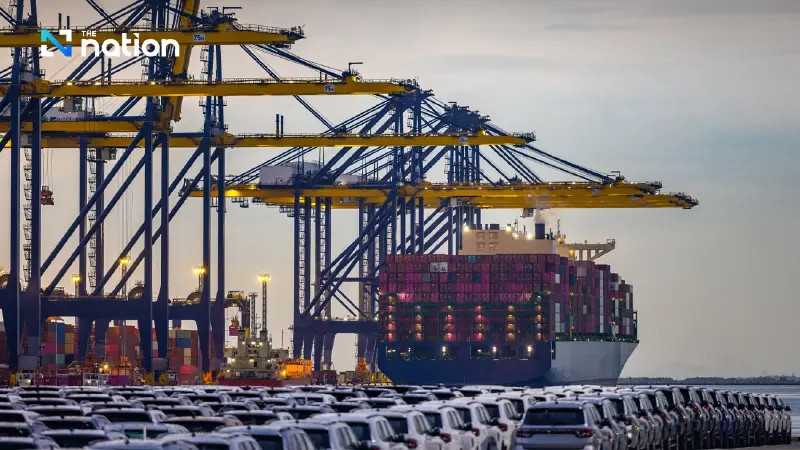


Thailand’s automotive sector is showing early gains in production and exports, but weak domestic demand, slowing EV sales and Middle East risks are clouding the outlook.
Thailand’s automotive industry is entering 2026 in an uneven recovery, with production and exports beginning to improve while weak domestic demand, slowing EV sales and geopolitical tensions continue to weigh on the sector.
Surapong Paisitpatanapong, adviser to the chairman and spokesperson for the Automotive Industry Club of the Federation of Thai Industries (FTI), said the industry had started to recover on the production and export fronts in February, but remained under pressure from soft purchasing power at home and external risks, particularly tensions in the Middle East.
Production and exports show early recovery
Thailand produced 117,952 vehicles in February 2026, up 3.43% from a year earlier, although output slipped slightly from the previous month. The increase was driven mainly by a 22.83% rise in passenger cars produced for export and a 55.98% jump in pickup trucks made for domestic sale.

One-tonne pickup trucks remained the backbone of Thai vehicle production, accounting for more than 66% of total output.
In the first two months of 2026, total vehicle production reached 236,338 units, up 6.87% from the same period a year earlier.
Electric vehicle production also continued to expand strongly. Output of battery electric passenger cars rose to 3,846 units, up 71.54%, while electric pickup truck production doubled to 460 units.
Surapong said the figures reflected accelerating EV investment by carmakers in Thailand, although the EV production base remained small compared with internal combustion engine and hybrid vehicles.

Vehicle exports in February stood at 81,195 units, down just 0.05% from a year earlier, effectively holding steady. A key signal came from the Middle East, where demand was still growing but risks had begun to emerge, with some shipments having to be delayed around the Strait of Hormuz.
In 2025, Thailand exported 200,001 vehicles to the Middle East, making it the country’s third-largest auto export market and accounting for 21.17% of total vehicle exports. Pickup trucks represented 63.39% of shipments to the region, while EV exports were beginning to emerge, including 907 battery electric passenger cars and 52 battery electric pickups.
The total value of automotive exports stood at 78.155 billion baht, down 5.90%.
Domestic demand and EV sales remain under pressure
Despite improvements in production, the domestic market remained weak. Vehicle sales in Thailand totalled 48,242 units in February, down 2.17% from a year earlier.
Surapong said the weakness reflected several factors, including low economic growth, with GDP forecast at 1.2%, tighter lending by financial institutions, consumers delaying purchases while awaiting greater political clarity, and inflationary pressure from energy prices.
The domestic EV market also lost momentum after the expiry of support measures. Battery electric vehicle sales fell 18.56% to 6,168 units, mainly due to the end of the EV 3.0 incentive scheme.
By contrast, hybrid electric vehicle sales continued to grow, rising 18.98%, while plug-in hybrid electric vehicle sales plunged 55.33%, suggesting consumers still favoured hybrids over fully electric models during the policy transition period.
Pickup trucks also remained under pressure, despite signs of partial recovery. Sales of pickups fell 1.41% to 12,998 units, although electric pickups rose 168.57% from a low base. That trend suggested that business activity, especially among SMEs and in the agricultural sector, had yet to recover fully.
The industry’s production structure also underlined Thailand’s continued reliance on exports. Vehicles built for export accounted for 68.68% of total production, compared with just 31.32% for domestic sale.
Middle East tensions add fresh risks
Surapong said one of the biggest risks facing the industry was the conflict stemming from United States support for Israel in its fighting with Iran, which was pushing up oil and energy prices, transport and insurance costs, and undermining confidence in global markets.
The Strait of Hormuz, in particular, remained a strategic trade route whose disruption could further affect shipments and costs.
He said Thailand’s automotive sector was now in a phase of uneven recovery. While production had started to improve, EV manufacturing was growing strongly and exports were holding up, the domestic market remained weak, EV sales had faltered after state support ended, and geopolitical risks were intensifying.
That, he said, made 2026 a turning-point year for the industry, caught between the transition to EVs and mounting pressure from the global economy.
