
BOJ holds rates as expected, warns Iran war could stoke Japan inflation
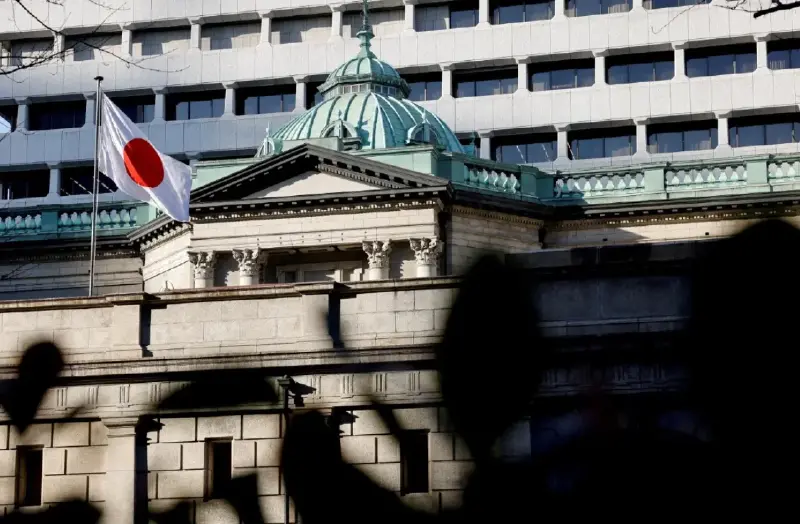


The Bank of Japan left its benchmark interest rate unchanged on Thursday, but made clear it is watching the inflationary risks stemming from the Middle East conflict, particularly the rise in crude oil prices, as concern grows over renewed pressure on consumer prices.
After its two-day policy meeting, the central bank kept the short-term policy rate at 0.75%.
In its statement, the BOJ said global markets had become more unstable amid escalating tensions in the Middle East and warned that higher oil prices were likely to push up consumer inflation.
It said the effect of rising crude costs on the outlook for underlying inflation required close monitoring.
Even so, the decision revealed a more hawkish mood among some board members.
Hajime Takata repeated the proposal he first made in January to lift rates to 1.0%, maintaining that Japan had already reached the point where inflation was sustainable at 2%.
Naoki Tamura also took a more aggressive view than the majority, arguing that the BOJ’s inflation target could be achieved on a lasting basis as early as April, rather than from October as projected by the bank.
The BOJ’s move came during a heavy week of central bank decisions, as policymakers assessed how to respond to the oil shock triggered by the conflict in the Middle East.
On Wednesday, both the Federal Reserve and the Bank of Canada left rates unchanged, though each adopted a hawkish stance amid concern that rising energy prices could reignite inflation.
Markets are now awaiting Governor Kazuo Ueda’s post-meeting remarks for guidance on how the BOJ will weigh the need to support an economy hit by external shocks against the risk of falling behind the curve on inflation.
Despite uncertainty linked to the Iran war, investors still see around a 60% chance of another BOJ rate increase in April.
Analysts say that if Ueda strikes a dovish tone, the yen could come under further pressure after sliding towards 160 against the dollar, a level widely viewed as a trigger point for possible intervention by the authorities.
Masato Koike, senior economist at Sompo Institute Plus in Tokyo, said a sharp drop in the yen could increase the likelihood of earlier action.
However, he added that without such an external trigger, there was little reason to think the BOJ would move sooner on its next rate rise.
Given the high degree of uncertainty, he said Ueda was likely to avoid making remarks that would tie the bank to any firm policy commitment.
Finance Minister Satsuki Katayama also warned market participants against driving the yen too low, saying the authorities stood ready to respond to excessive volatility.
Speaking at a news conference on Thursday, she said the combination of Ueda’s press briefing, a Japan-US summit and continued uncertainty over the Middle East meant speculative players could be particularly active.
The BOJ raised rates to 0.75% in December, marking the highest level in 30 years, and has indicated that it is prepared to continue tightening if Japan makes steady progress towards durably meeting its 2% inflation target with support from wage growth.
For now, economic conditions remain relatively firm.
Exports rose for a sixth straight month in February, while major companies agreed to sizeable pay increases in annual wage talks, reinforcing the BOJ’s assessment that a cycle of wage and price growth is beginning to take hold.
Still, the surge in oil prices caused by the Iran war has compounded the rise in import costs driven by the weak yen, keeping core inflation above the BOJ’s target for nearly four years.
Japan’s dependence on Middle East oil also means higher fuel costs could further squeeze company profits and weigh on the wider economy, giving Prime Minister Sanae Takaichi’s administration another reason to resist an early rate hike.
Asked on Thursday whether the government would support or oppose a possible April increase, Chief Cabinet Secretary Minoru Kihara said the administration continued to maintain that monetary policy remained the responsibility of the BOJ, even during the Iran war.
