
ASEAN criticised as too slow in Thai-Cambodia border crisis
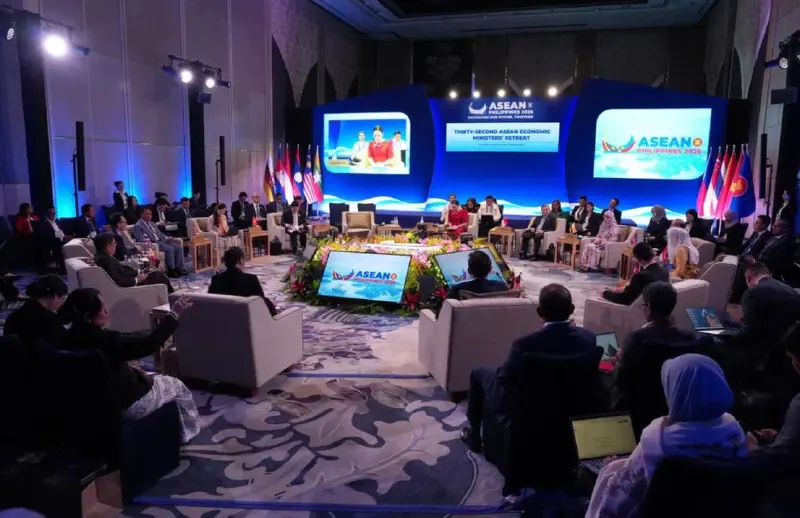


ISEAS survey shows many South-east Asians said ASEAN tried to mediate the Thailand-Cambodia conflict, but still viewed the bloc as slow and ineffective.
- A 2026 regional survey found that a primary concern among Southeast Asians (34.7% of respondents) is that ASEAN is "slow and ineffective," a criticism highlighted by its response to the Thai-Cambodia border conflict.
- The bloc's perceived slowness is often attributed to its core principles of consensus-based decision-making and non-interference in the internal affairs of member states.
- Further criticism noted that the involvement of outside powers in securing a ceasefire and ASEAN's failure to use all its available tools raised questions about its ability to resolve regional crises independently.
A new regional survey has found that while many Southeast Asians believed ASEAN took active steps to help contain the Thailand-Cambodia border conflict, the bloc continued to face criticism for being too slow and ineffective.
According to The State of South-east Asia 2026 report by the ISEAS – Yusof Ishak Institute, 38.9 per cent of respondents said ASEAN had actively mediated to stop the dispute through diplomacy and ministerial meetings. Another 28.1 per cent felt the grouping had done its best within its institutional limits in dealing with the conflict.
The fighting first erupted in a five-day clash in July 2025 before flaring again in December in a more destructive round of violence. More than one million civilians were displaced before Thailand and Cambodia signed a ceasefire on December 27, 2025, following a special meeting of ASEAN foreign ministers in Kuala Lumpur on December 22.
Even so, concerns over ASEAN’s effectiveness remained strong. Asked about their biggest concern regarding the bloc, 34.7 per cent of respondents said ASEAN was “slow and ineffective, and thus cannot cope with fluid political and economic developments”. That was little changed from the 2025 survey, when 35 per cent expressed the same view.
The 2026 online poll was conducted from January 5 to February 20 among 2,008 respondents from academia, business, government and regional organisations across South-east Asia.
ASEAN’s long-standing adherence to consensus-based decision-making and non-interference in members’ internal affairs has often drawn questions about its relevance and ability to act decisively.
Speaking at a webinar launching the report on April 7, ISEAS senior fellow Joanne Lin, one of the report’s authors, said the results pointed to rising awareness of ASEAN’s internal limitations, “whether in implementing plans or addressing development disparities, or even doubts about its ability to respond effectively to crises like the Cambodia-Thailand border conflict”.
She said the grouping needed greater unity “to have better implementation capacity and a great willingness to use all the tools that it already has – ASEAN has many tools, but it doesn’t mean that all of them are being utilised”.
The report also showed that 13.5 per cent of respondents believed ASEAN had failed to use all the mechanisms available to it, including the High Council under the Treaty of Amity and Cooperation, in responding to the Cambodia-Thailand conflict. Another 11.2 per cent said the role of outside powers in securing the ceasefire “raises questions about ASEAN’s ability to address issues on its own terms”.
Washington had stepped in to help push for a truce in October 2025, while Beijing supported the ceasefire reached in December that year.
When asked which country contributed most to tackling the region’s challenges, 31.3 per cent named Singapore, followed by Indonesia at 22.2 per cent and Malaysia at 21.3 per cent. Respondents cited Singapore’s economic leadership, Indonesia’s consensus-building role within ASEAN, and Malaysia’s leadership as ASEAN chair in 2025.
The Thailand-Cambodia border conflict ranked fourth among the top geopolitical concerns identified in the survey, with 40.5 per cent of respondents naming it. It trailed concerns over US leadership under President Donald Trump, global scam operations and tensions in the South China Sea.
Myanmar’s crisis came fifth at 28 per cent. On that issue, 40.4 per cent said the best way forward would be independent dialogue involving all key stakeholders, including Myanmar’s shadow National Unity Government. That was up from 33.9 per cent in 2025.
The Straits Times
