
Thai banks foresee larger role in Myanmar
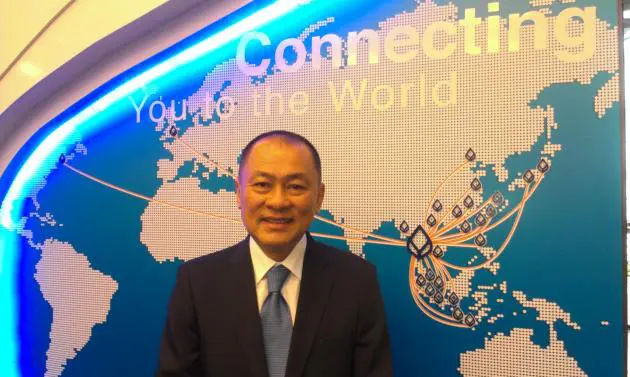


With Myanmar liberalising its financial sector, Thai banks especially Bangkok Bank are hopeful that they would get a sizable share of business in the country. For Bangkok Bank, it hopes that the 17 years of experience in that country will raise its profi
For decades, no foreign bank has been able to obtain a full-branch licence in Myanmar, a country where 80 per cent of the population does not have a bank account amid the virtual absence of any electronic-payment system. Most transactions in the cash-based country are entirely in the hands of local banks, led by the state-owned Myanmar Foreign Trade Bank.
Aside from BBL, three banks from Thailand – Krung Thai Bank, Siam Commercial Bank and Kasikornbank – have received licences to operate representative offices. Both BBL and SCB, which plans to open its office next month, were lead sponsors of last week’s series of “Euromoney” conferences in the capital Nay Pyi Taw, along with Standard Chartered Bank.
As of July 31, Thailand, Singapore and Japan had four foreign banks each representing them, while there were two apiece from Indonesia, Bangladesh and India, and one from Vietnam.
“Banking on our 17-year presence here, once we get a branch licence we can facilitate all clients in Thailand and those referred by overseas branches. Many foreign clients have approached us for information, knowing that we understand the culture here,” Chansak said on the sidelines of the conferences, themed the “Myanmar Global Investment Forum”.
For BBL, which is Thailand’s biggest commercial bank, Myanmar – which has sparked huge demand for export-related letters of credit – will enlarge its Asean network. Still, although the banking sector is the key to boosting intra-regional trade and investment, Chansak said it would take a while for further deregulation and for foreign companies’ entry, pending amendments to Myanmar’s Foreign Investment Law.
One amended clause would allow 50:50 joint ventures in all sectors, including banking, but both BBL and SCB prefer to have branch licences.
According to the Asian Development Bank, a weak macroeconomic management framework devoid of market mechanisms, insufficient fiscal resources and inefficient domestic fund mobilisation, and limited access to finance are key constraints to Myanmar’s economic prosperity.
REFORMS
To address this, the government has come up with reforms, having the Finance Ministry issue bonds to tackle deficits. The Central Bank of Myanmar is also drafting a financial-sector road map, which will outline short-to-long-term goals along with improvement of the institution’s autonomy.
The central bank has so far set lending and deposit rates, which results in an underdeveloped financial sector. While the deposit rate stands at 10 per cent, the lending rate is 15 per cent.
Moreover, the number of commercial bank branches per 1,000 square kilometres was only 0.85 in 2010, with some areas having no branches at all, compared with 11.6 in Thailand. Credit provision to the private sector, meanwhile, remains below 25 per cent of the country’s gross domestic product.
Only recently did the central bank allow private banks to set their savings interest rates within a limited range. Previously, only two of the four state banks were involved in trade financing – Myanmar Foreign Trade Bank and Myanmar Investment and Commercial Bank. Now, some of the 11 private banks can offer remittance services and letters of credit.
Meanwhile, it was only last week that debit cards made their debut in Myanmar, allowing 17 local banks’ clients to pay for goods at about a dozen businesses signed up to the scheme in Yangon, Mandalay and Nay Pyi Taw. Finance and Revenue Minister Win Shein said at the Euromoney conferences that much had been done to improve the financial sector, including currency unification, which narrows the official and unofficial rates of the kyat, with the aim of tripling GDP in five years.
Maung Maung Win, deputy governor of the Central Bank of Myanmar, outlined the three phases for banking-sector development – promoting local banks’ competitiveness, allowing foreign banks to have 100-per-cent-owned subsidiaries, and granting branch licences to foreign banks.
In a panel discussion on banking-sector development and market opening, Chansak said the key pillar in developing the banking sector was to rebuild trust and confidence, particularly after three rounds of sudden cancellation of certain banknote denominations, which encouraged people to save cash at home and spend on land and other investments, particularly gold.
According to BBL, 80 per cent of Myanmar’s population does not have a bank account, which could pose obstacles in launching such new services as debit cards, automated-teller-machine cards and other e-payment platforms.
THREE COMPONENTS
“There are three components for building trust – through economic reform, modernisation of the banking sector, and close collaboration between the central bank and local banks,” Chansak said. “Modernisation is important as foreign banks [that work with local banks] would look at local banks’ credit-risk supervision and quality of management.”
Sutapa Amornvivat, SCB chief economist, stressed the importance of the central bank’s independence and the granting of permission to operate a bank branch. The proposed joint-venture model is not the answer, she said, as local banks themselves would see a conflict of interest – whether to focus on their own businesses or on the joint venture.
Ahead of the country’s planned stock-market opening in 2015, Sutapa also called for convertibility of the kyat to other currencies aside from the US dollar.
In a group interview on the sidelines of the conferences, Thanit Sirichote, BBL’s executive vice president, said he saw huge opportunities for his bank to do business in the country.
Starting from remittance services for millions of Myanmar’s migrant workers in Thailand, Singapore and Malaysia in partnership with three private banks in those countries, BBL now provides training to help local banks offer exchange rates that are competitive with those offered on the black market.
Local banks are also advised on how to reach out to migrant workers’ relatives, who usually use black-market transferors. Currently, they are alerted of money transfers by phone and then have to go to the nearest bank, which could be 100 kilometres away. With a bank account, they need only travel to a bank when they need to withdraw the money, he said.
“The situation is better now. It will improve further, if the amended Foreign Investment Law comes into practice, as that would facilitate money transfers,” Thanit said.
“There are encouraging signs. Banks here are enthusiastic about upgrading themselves. They push us and banks from Singapore and Malaysia for knowledge in this and that, with the desire to achieve something.
“In the next step, it would help if the central bank allowed us to open a branch here. It doesn’t need to give us a full banking licence, but can cherry-pick the areas in which the branch can operate. We don’t want to establish a joint venture, given the associated risks from the partners,” he said.
Next: Hot discussions on Myanmar’s Foreign Investment Law.
