
Rate cut 'may not tame baht'


Play
BOT also not keen on capital controls
The Bank of Thailand apparently prefers macro-prudential measures to a cut in interest rates or capital controls, as have been suggested by some policy-makers and business operators, as a way of keeping the baht’s appreciation under control.
BOT Governor Prasarn Trairatvorakul yesterday insisted that the benchmark interest rate was not the only factor attracting capital inflows. A cut in the policy rate may not therefore deter inflows, as in the case of Hong Kong, he said, adding that rate cuts could also have negative repercussions, including a reduced incentive to save.
Late last year, the Hong Kong dollar came under speculative attack and the authorities there were expected in some quarters to end a 29-year-old peg to the US dollar, even though the benchmark interest rate at the time was as low as 0.50 per cent.
The Thai policy rate has stood at 2.75 per cent since October 17.
“The policy rate is a tool towards financial stabilisation. The Monetary Policy Committee takes into consideration many factors in deciding the policy rate,” Prasarn said, pointing out that the central bank also had other tools to manage the foreign-exchange rate.
The challenge now is how to exercise the right policy at the right time, he added.
Global funds have poured more than US$4 billion (about Bt120 billion) into Thai bonds and stocks this month, boosting the local currency to a 17-month high on January 21.
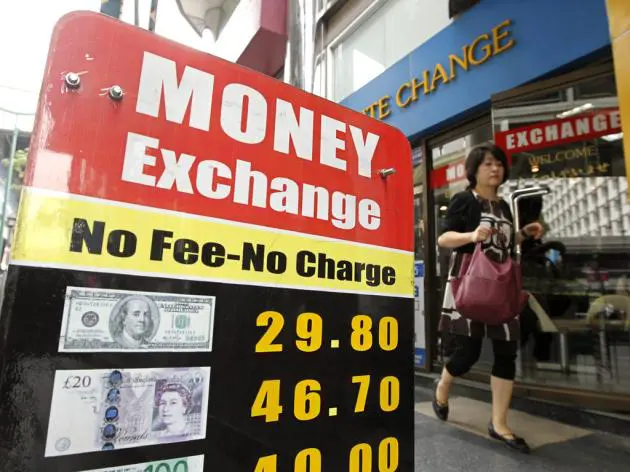
Thanks to Bt15 billion worth of foreign net buys, the SET Index hit a 16-year high at 1,472 points, while the baht weakened to 29.97 per US dollar at 3.08pm yesterday, on intervention speculation.
The unit weakened in line with a report of lower exports, with the Commerce Ministry estimating last year’s export growth in dollar terms at only 3.12 per cent.
Despite yesterday’s move in the other direction, the baht has advanced 2 per cent so far this year, the biggest rise apart from the Indian rupee among Asia’s 11 major currencies, according to Bloomberg.
Prasarn insisted there had been no speculation on the baht in the past few weeks.
Finance Minister Kittiratt Na-Ranong said Thailand’s trade and balance-of-payments surpluses naturally attracted capital inflows, and that nobody had heeded his advice on the perils of a high interest rate on the foreign-exchange rate.
He said he did not, however, want to say any more on the issue, as it could be interpreted as intervening in the central bank’s operations.
He has sympathy with business operators, but in this situation there are also winners, namely those who have to spend less on imports, he added.
Meanwhile, Prasarn refrained from commenting on whether the BOT might impose capital controls akin to the measures taken in 2006.
He merely insisted that the central bank would continue to monitor the situation closely to maintain financial stability.
During a period of great uncertainty, the implementation of tools must be flexible and correspond to the prevailing circumstances. Importantly, it must benefit the country, he added.
The BOT chief also insisted that the central bank was ready to relax as many rules as possible to mitigate the negative impacts of the baht’s appreciation.
The Federation of Thai Industries (FTI) earlier urged the central bank to lengthen the period exporters can hold on to their foreign-currency income. With the recent baht surge, converting foreign currency now for fewer baht means making a loss.
“We have relaxed the rules,” Prasarn said. “The holding period, now at one year, could be extended if they want. We’re ready to discuss this. Some of our neighbours are experimenting with an unlimited holding period, but this could be too risky. Fixing a period on the holding should be more appropriate.”
The FTI has also urged the government to speed up foreign-loan repayments among public and private organisations, hasten machinery imports for infrastructure projects, and maintain the baht’s movement in line with its regional peers.
FTI secretary-general Tanit Sorat is optimistic that the baht’s appreciation will be brief and that it should be less worrisome when the government’s Bt2.27-trillion infrastructure investment kicks off and sparks the need for machinery imports.
In the short term, he said, the government should come up with relief measures for small and medium-sized enterprises, particularly those in the canned-food, textiles and garments industries, which rely on high local content.
Prasarn urged exporters to trade in currencies that are less volatile than the US dollar, or to engage in more currency hedging and forward contracts.
