
Bamboo proves a hit with Lampang community


Play
The Pa Pang Community Enterprise in Lampang sets a good example for the village by making substantial income from turning bamboo trees into many products and using the leftover to fuel its power plant.
The community switched to planting bamboo many years ago from corn and cassava. Virat Srikong, chairman of the com-munity enterprise, said last week the community was attracted to bamboo because it serves as a raw material, grows quickly and can help prevent soil erosion.
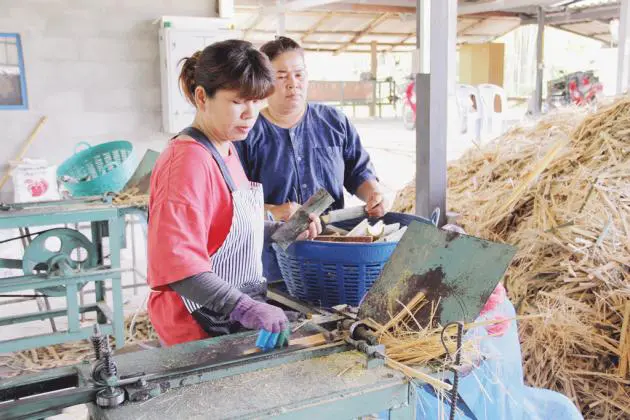
The merchandise ranges from chopsticks to handicrafts. The production waste can be converted into charcoal briquettes for household use and for sale.
The community has added 100 rai of land a year to its existing bamboo plantation of 3,500 rai.
The plantation earns the enterprise Bt200,000-300,000 a month and creates jobs for the community.
The enterprise uses two tonnes of bamboo waste a day to generate 70 kilowatts from the plant, which is on a trial run. A power purchase contract already been signed with the Provincial Electricity Authority, but the plant is still waiting for a permit from the Industrial Works Department to commence commercial operations.
This time-consuming permit process is an obstacle to the plan of the community to forge ahead with the power plant project.
The enterprise is not interested in developing a power plant that burns Napier grass. Some experts say such a plant requires a huge investment in machinery and is expensive to maintain. It is doubtful if it is commercially viable for the community to set up that kind of plant.
The government provides an adder rate for a biomass power plant, like the bamboo-fuelled plant, of 50 satang per unit, which is far lower than the feed-in-tariff of Bt4.50 per unit for Napier plants.
The Energy Ministry should study in greater detail the potential of all communities and provide them appropriate support.
The Pa Pang enterprise’s use of bamboo has paid off. About 10 community enterprises in several provinces are interested in adopting its model of maximising the money-making possibilities of bamboo groves, he added.
