
High hopes for rooftop solar energy programme


Play
Special tariff on offer to households, businesses in sales to power agencies
The Energy Ministry is soliciting bids from households and businesses keen on investing in rooftop solar panels to generate electricity for sale to the government.
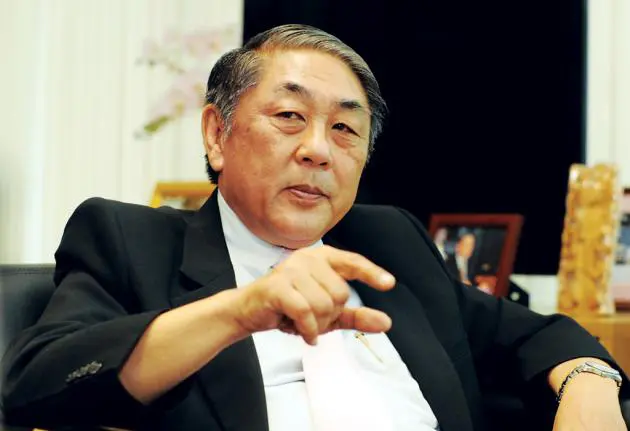
“The government’s rooftop-solar-energy policy is aimed at diversifying the country’s sources of energy by reducing dependence on fossil fuels such as oil and gas and by promoting the use of renewable energies such as sunlight and wind,” said Direk Lavansiri, chairman of the Energy Regulatory Commission.
“Under this policy, renewable energies – which are still expensive – will increasingly substitute for fossil fuels, which will become more expensive. The government is providing incentives to the private sector to invest in rooftop solar panels to generate electricity, which will then be purchased by power agencies at a special tariff so that they can get a return on investment within a reasonable period.
“The Energy Regulatory Commission is tasked with soliciting an initial 200 megawatts of electricity from both households and businesses under this rooftop-solar policy. Of the 200MW, 100MW will come from households while the other 100MW will come from businesses that can install solar panels on their roofs to generate electricity,” he said.
“Of these capacities, Bangkok and its peripheral area will get a 40-per-cent share, while the rest will come from the provinces. We are accepting applications from both households and businesses from September 23 to October 11. The so-called feed-in tariff is Bt6.90 per unit, which is about Bt3 higher than the rate power agencies can charge users.
“A household can install up to 10 kilowatts. Suppose you choose a 5-kilowatt rooftop solar panel, which costs around Bt300,000 and requires a rooftop area of 35 square metres.
The return on investment would be 6,500 units, or about Bt45,000 per year. The break-even period would be about six years and seven months, after which you would continue to get money from selling electricity under an overall 25-year contract with the government,” Direk said.
“In the future, households may use their own generated electricity when the tariffs charged by power agencies rise above Bt6.90 per unit,” he added.
“For small businesses, they can sell between 10 and 200kW to the government, while big industrial firms can sell up to 1MW each to the government.
“In Bangkok and its surrounding area, we expect to have about 8,000 households join the rooftop solar programme, plus another 8,000-10,000 households in the provinces. Home-owners as well as housing-estate developers can apply to join the programme,” said the regulatory chief.
“At present, Thailand has an installed capacity of 33,000MW. At peak, electricity consumption was as high as 26,000MW during April, with natural gas accounting for 70 per cent of the fuel used in electricity generation.
“Renewable energy such as solar and wind can help lessen global warming, which results from the burning of fossil fuels and release of carbon [dioxide].
“Our target is to get 3,000MW from solar energy, comprising 2,000MW from solar farms and communities and another 1,000MW from rooftops and other means,” he said.
Virapan Pulges, managing director of Ticon Industrial Connection, said: “Ticon Industrial is interested in diversifying into the rooftop solar sector because of the good return on investment and the fact that solar energy is clean and environmentally friendly. In the future, we can also use the electricity instead of selling it to the government, especially when the power tariff is much higher.
“We expect to bid for up to 15MW under the rooftop solar programme for big industries, since we have many logistics facilities and warehouses at several locations in Thailand.
“One advantage is that the cost of solar panels has been declining over the past seven or eight years, from around Bt100 million per megawatt to the current Bt60 million,” he said.
“It would cost about Bt1 billion in investment if we were to get all 15MW for separate locations using the rooftops at our facilities. The internal rate of rate return is estimated to be around 11 per cent for 25 years, based on the tariff of more than Bt6 per unit that will be paid by the government for the electricity.
“We may also sell the electricity to some of our tenants in the future, such as Makro and L’Oreal, which are keen to have solar rooftops that help boost their corporate image in terms of environmental friendliness,” he added.
