
Sizzling Temperatures Drive Up Food Costs as Thai Farmers Struggle with Climate Stress
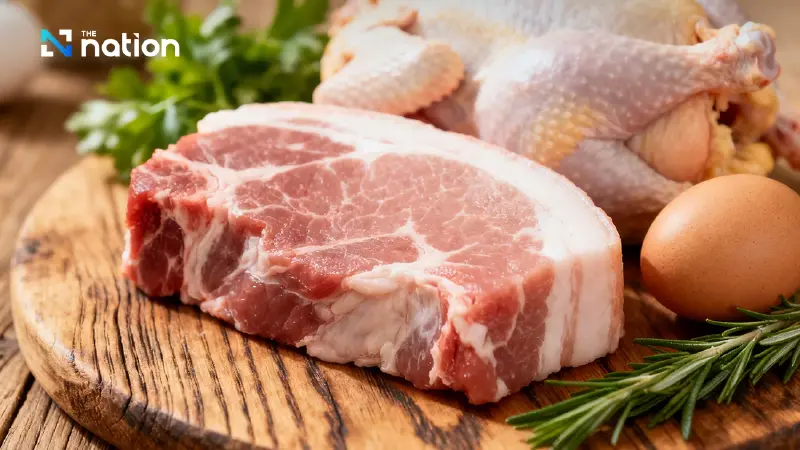


Extreme heatwaves trigger a surge in livestock production costs and a drop in yields, forcing the Department of Internal Trade to intervene to protect consumers
- Record-breaking heat in Thailand is stunting livestock growth and reducing the quantity and size of eggs, leading to a drop in the food supply.
- Farmers are facing soaring operational costs due to the increased use of water and electricity for round-the-clock cooling and ventilation systems.
- The combination of reduced supply and higher farming expenses is driving up consumer prices for staple proteins like meat and eggs.
- The Thai government is intervening to stabilize prices, expanding discount programs, and issuing stern warnings against price gouging.
Extreme heatwaves trigger a surge in livestock production costs and a drop in yields, forcing the Department of Internal Trade to intervene to protect consumers.
Thailand’s agricultural sector is facing a fresh crisis as record-breaking temperatures drive up the cost of staple proteins. According to a report by Chatchayaporn Phongam, a reporter for Thansettakij, the extreme heat has stunted livestock growth and slashed egg production, leaving farmers to grapple with soaring overheads.
The Department of Internal Trade (DIT) has launched urgent consultations with industry titans—including CPF, Betagro, and Cargill Meats—alongside major national livestock associations to stabilise prices.
The move comes as the "double blow" of reduced supply and increased operational costs threatens to hit British and local consumers alike.
Heatwave Cripples Production
Since late February 2026, a persistent heatwave has severely disrupted the biological cycles of livestock. High temperatures have led to a marked decrease in appetite amongst pigs and poultry, slowing their growth rates significantly.
In the poultry sector, the impact is even more visible. Layers are producing fewer eggs, and those that do reach the market are notably smaller in size.
To combat the heat, farmers have been forced to run intensive cooling and ventilation systems around the clock, leading to a sharp spike in water and electricity bills.
A Fragile Recovery for Farmers
Sittiphan Thanakiatpinyo, president of the Thai Swine Raisers Association, noted that while farm-gate prices have recently recovered to approximately 68–72 baht per kg, this follows a prolonged period of heavy losses.
"Current prices are only just meeting production costs," he explained, adding that global tensions in the Middle East have further dampened consumer demand.
Similarly, Somboon Watcharapongphan, president of the Thai Broiler Association, highlighted that while heat-induced losses initially pushed poultry prices up, a softening in international orders may lead to a price correction as production levels eventually normalise with the coming rains.
Government Warnings Against Price Gouging
Jirawuth Suwanna-ard, deputy director-general of the DIT, confirmed that the department is monitoring the situation closely to ensure consumers are not exploited.
The government has expanded its "Blue Flag" discount scheme across Bangkok and the provinces to provide affordable meat and eggs to the public.
The DIT issued a stern warning to traders attempting to profiteer from the climate-driven shortage. Under the Prices of Goods and Services Act, those found guilty of "unreasonably high" pricing face:
- Fines of up to 140,000 baht)
- Prison sentences of up to seven years
- Or both.
Energy and Supply Chain Risks
Industry leaders warned that while heat is the immediate concern, the "indirect" threat of rising global crude oil prices looms large.
Fluctuation in fuel costs is expected to impact the entire supply chain in the coming months, specifically regarding transport logistics and the rising cost of imported animal feed.
As Thailand enters the height of the summer season, the industry's ability to maintain "Value for Money" for the public remains precariously balanced against the literal heat of the farm.
