
Commerce leads Team Thailand through global economic turmoil


Ministry of Commerce joins hands with business groups under Team Thailand to support consumers, strengthen SMEs and help the economy cope with rising global uncertainty.
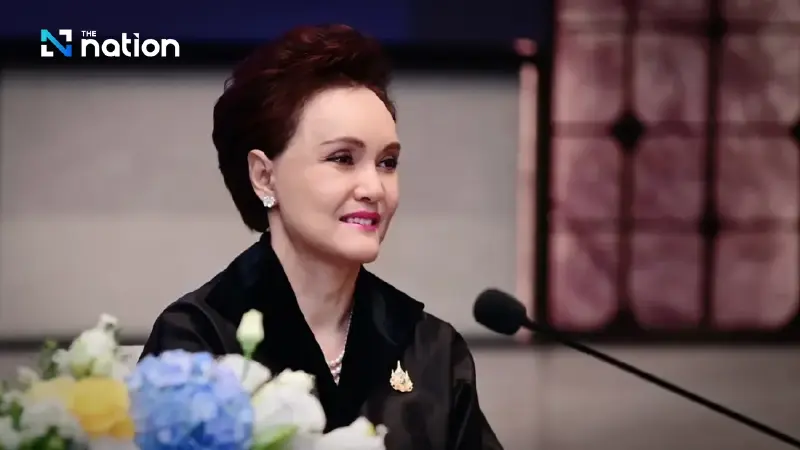
Deputy Prime Minister and Commerce Minister Suphajee Suthumpun said she had held talks with Poj Aramwattananont, chairman of the Thai Chamber of Commerce and the Board of Trade of Thailand, together with private-sector representatives such as Atip Bijanonda, vice chairman of the Thai Chamber of Commerce and the Board of Trade of Thailand; Kulavuth Vanaswas, chairman of the pharmaceuticals, medical supplies, dietary supplements and cosmetics trade association cluster; and Thienprasit Chaiyapatranun, chairman of the tourism, health, MICE and sports trade association cluster and chairman of the 15 Clusters trade association group, to define the direction of cooperation between the public and private sectors as “Team Thailand” to strengthen Thai entrepreneurs and the Thai public amid increasingly complex global economic and geopolitical challenges.
At present, the global economy is facing high uncertainty, making business planning difficult.
The government is placing importance on working closely with the private sector in order to deliver concrete results, with a focus on strengthening Thai businesses, which will be a key mechanism in driving the country’s economic growth forward together.
In the immediate term, the Ministry of Commerce is preparing the “Thai Help Thai” campaign from April 1, 2026, in cooperation with more than 20 major wholesalers, retailers and suppliers, offering discounts on more than 1,000 essential consumer items, with reductions of up to 58%, particularly in House Brand products and quality alternative-brand products brought to market at accessible prices.


It is also preparing to develop community products and SMEs so they can join the “Thai Help Thai” campaign in future and gain more market channels.
In addition, there are measures to help the public and small-scale operators, such as expanding mobile Blue Flag units to distribute low-cost consumer goods to vulnerable groups and help absorb agricultural produce, as well as supporting specially priced agricultural raw materials for ready-cooked food shops (curry-and-rice shops), beginning with a pilot scheme in Bangkok and the surrounding metropolitan area.
Suphajee said that, in terms of long-term economic mobilisation, Thailand must urgently adjust to a changing global context, including geopolitical conflict, economic polarisation (Extreme Polarisation) and international trade measures, particularly from key trading partners such as the United States and China, while Thai exports are still concentrated in core markets.
Thailand is also facing structural challenges, including economic inequality, a decline in the number of SMEs over recent years, and an ageing population structure, all of which are affecting domestic purchasing power.
It is therefore necessary to accelerate workforce skill development through up-skilling and re-skilling, while expanding overseas markets in parallel.
The Ministry of Commerce is accelerating negotiations on the Thailand-European Union Free Trade Agreement (FTA), which is now in its eighth round, and it expects around 20-30% of key issues to remain before the talks can be concluded as quickly as possible.
At the same time, it is stepping up efforts to preserve existing markets and penetrate new strategic markets, including India, Latin America, Africa, the Middle East, Russia and Central Asia.
In addition, it will continue to push for food security, add value to agricultural products through processing, develop future food industries alongside food technology and innovation (Future Food and Food Tech), and support the country’s S-Curve industries.
For the overall policy framework, the Ministry of Commerce has set out Thailand’s trade strategy on four main pillars as follows:
- Competitiveness: enhancing competitiveness and moving towards a high-value economy
- Security & Stability: building economic security and stability
- Inclusive: spreading economic opportunities more broadly, especially to SMEs and communities
- Resilient Agility: adapting rapidly to changes in the world
The ministry will push for an integrated way of working in which all agencies must aim at the same goals and work in coordination.
On the private-sector side, the 15 Clusters trade association group reflected key proposals to the government, including import management, expansion into new markets, promotion of business matching, workforce skills development, responses to technology disruption, and regulatory improvements to facilitate business operations.
This discussion reflects cooperation between the public and private sectors in working in an integrated way as “Team Thailand” to strengthen the Thai economy and sustainably enhance the country’s competitiveness on the global stage.
