
Preparation for AEC stressed
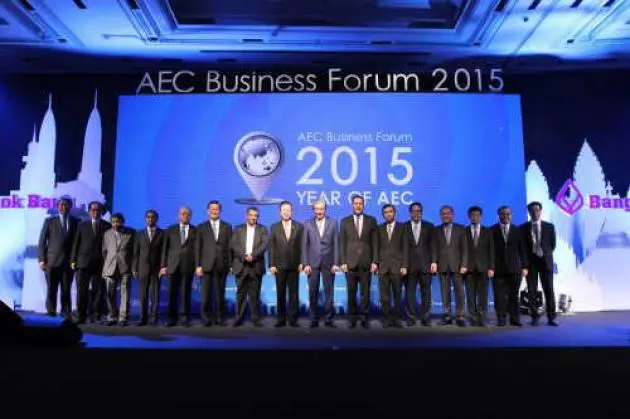


THAILAND MUST put preparation for the Asean Economic Community on the national agenda for small and medium-sized enterprises so they are able to deal with the new competitive landscape, said Somkid Jatusripitak, chairman of the Advisory Board to the Prime
Speaking at a Bangkok Bank AEC business forum, Somkid noted that when the AEC is fully realised at the end of this year, Asean would be an economic and geopolitical powerhouse as the production and supply-chain base of Asia.
In terms of geopolitics, Thailand will be at the centre, but that will not be enough to ensure the country’s ability to attract foreign investment, he said.
Thailand must achieve political stability, as the country has lost opportunities in the past decade from political unrest. The interim military regime has attempted to reform the country in a bid to help restore the confidence of foreign investors, he said.
However, even though the country is preparing to accommodate the AEC with improved infrastructure, its incentives should go beyond tax measures. If it fails to provide sufficient land or labour, and if the private sector is ill-prepared to deal with the AEC, the competitiveness of the country will not improve.
Somkid said SMEs should be worried because many have limited capital and are unable to adjust quickly to new competitive challenges.
Unlike large corporations, SMEs have no exposure to doing business abroad, so under the AEC agenda, the state must help them change their mindsets on doing business outside Thailand. Government agencies should have national campaigns to urge preparation for Asean integration. However, it is very difficult for SMEs to adapt quickly, Somkid said.
Referring to what Japan did to encourage its SMEs to dare to invest abroad, he said the Japan External Trade Organisation took the lead in promoting outbound investment and providing information on destination countries for these companies. Jetro set up offices in those countries to ensure they were appropriate locations for investment.
Japanese banks followed Jetro by establishing footprints in several countries to serve SMEs.
Somkid said Bangkok Bank was doing the right thing in establishing a strong presence in Asean. However, Thai banks should give importance to the role of business development rather than being only lenders.
He said one barrier for SMEs was high interest rates: In Thailand, they are charged 7 per cent per annum, while in Malaysia, the rate is only 3 per cent.
Chartsiri Sophonpanich, president of Bangkok Bank, said on the sidelines of the seminar that some SMEs were interested in expanding in Asean, so the bank fully supported them in the countries where BBL has a presence.
Neighbouring countries are destinations for Thai SMEs because people there are familiar with Thai brands.
The bank in the past few years has attempted to promote Asean to SMEs, especially Myanmar, a strategic country for Thai enterprises as a production base thanks to its rich natural resources and abundant labour.
