
TUF's MW Brands upbeat despite low growth expectations
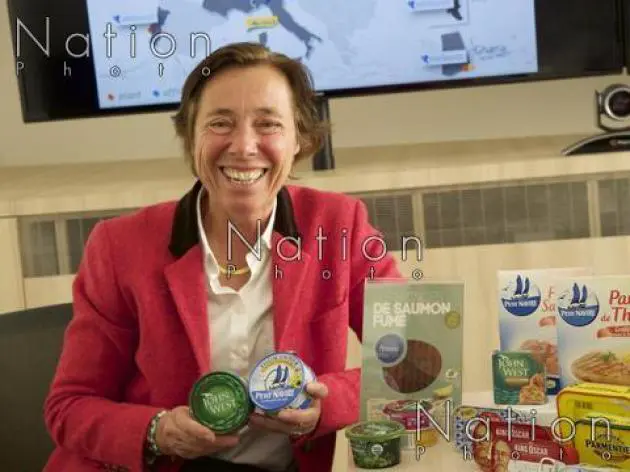


Play
ALTHOUGH MW Brands, a major European seafood company wholly owned by Thai Union Frozen Products (TUF), expects sales growth of only 1-2 per cent this year, partially because of the weakening euro, many European economies are recovering and business prospe
“If there is a strong [tuna] price increase like in 2013, there will be an impact. But so far, we are very confident with the outlook” in the seafood market, chief executive officer Elisabeth Fleuriot said yesterday.
TUF, the world’s largest producer of canned tuna, netted MW Brands – the French owner of John West and other shelf-stable seafood brands – in 2010 from Trilantic Capital, the former buy-out arm of Lehman Brothers, for 680 million euros (Bt25.2 billion).
The price represented 8.2 times MW Brands’ 2010 earnings before interest, tax, depreciation and amortisation (EBITDA).
Fleuriot, who joined MW Brands 18 months ago from Kellogg’s, said there were a lot of promotions due to “big fights” among retailers that had resulted in some price pressures passing on to producers, but the company was doing well so far.
“We have increased our share. We’re happy so far and we expect this to continue,” she said.
With projected sales of 646 million euros (Bt24 billion) this year, MW Brands contributes significantly to Thai Union group, which booked revenues of Bt122.9 billion last year.
MW Brands’ expected sales figure does not include the projected revenues of King Oscar (50 million euros) and MerAlliance (150 million euros) that it acquired last year. Excluding the two new subsidiaries, MW Brands grew its sales by 6 per cent and profit by 10 per cent last year.
MW Brands, which is either the No 1 or No 2 shelf-stable seafood brand in many European countries such as France, Britain, the Netherlands and Italy, had an operating profit margin of more than 15 per cent – higher than its parent TUF.
The company will follow Thai Union group’s target to double sales by 2020, meaning it will have to increase revenue to between 1.1 billion and 1.2 billion euros.
MW Brands considers the goal as challenging and is putting more money into advertising, innovations and product quality, Fleuriot said.
It will also continue to build its business on the sustainability principle, tightening its integration with Thai Union Group’s global operations, as well as making sure it is “absolutely competitive” in terms of supply chains, she said.
The company is collaborating with the parent firm’s global platforms in procurement and supply chains as well as in innovations and research and development.
The recent decision by the European Commission to hand a “yellow card” to Thailand, claiming it failed to combat illegal, unreported and unregulated (IUU) fishing, has had no impact on MW Brands’ business, Fleuriot said.
“This is a process very common in the EU to avoid IUU fishing, which is absolutely important to make sure that fish in the oceans will not be depleted,” she said. “It’s basically a warning to markets that the EU believes they are not doing enough to comply with their regulations. It’s not a punishment, it’s a warning.”
Yellow card woes
MW Brands, which has worked with Ghana’s government to shake off the yellow card successfully, is ready to work closely with TUF to help Thailand overcome the problem, she said.
While declining to comment on plans for mergers and acquisitions, she said the acquisition of King Oscar, a premium canned-sardine producer, came as part of the Thai Union group’s “String of Pearls” strategy to acquire smaller companies. She said the Norwegian subsidiary would be strengthened because of the group’s strong US market network.
MerAlliance, a smoked-salmon producer, will add a chilled-seafood business to MW Brands, which has been in the shelf-stable segment.
The company is also accelerating its innovations drive to help it expand into new markets and segments such as France, where it has introduced its “Pave” product line that enables tuna to penetrate the hot-dishes segment there.
“It’s a strategic move because 80 per cent of canned fish is eaten cold, but 76 per cent of French meals are eaten hot,” Fleuriot said.
