
India seeks bigger presence in Myanmar


Play
TOP INDIAN business houses including Tata Motors and major banks were in Yangon last week, as part of India’s initiative to deepen its trade and investment with Myanmar.
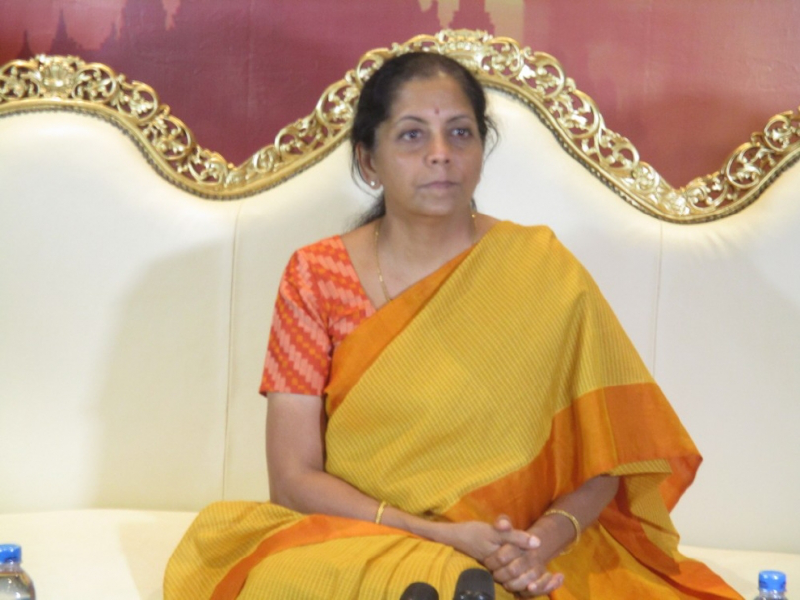
As part of India’s Act East policy, the country’s commerce and industry minister Nirmala Sitharaman led the high-level business delegation. It was the first high-level business interaction at ministerial level by a foreign country after the Htin Kyaw administration took office.
According to the minister, there are many rooms for cooperation in areas such as power and renewable energy, agriculture, livestock, fisheries, timber and pulses trade, education and skills-building, IT and engineering, healthcare, textiles, automobile industry, tourism and hospitality, construction, banking and finance. She invited Myanmar businesses to hold roadshows in key cities of India, and committed to speeding up road and connectivity projects including those in the border areas.
“India gives high priorities for strengthening relations in the neighbourhood, and in that, Myanmar ranks high. We expect greater cooperation and greater business-to-business interactions. There are calls for improving trade between India and Myanmar. But, connectivity has remained as an issue,” she said.
“I expect to have a better working relationship, greater engagement, and deeper participation of Indian businesses with Myanmar… I expect more things to happen between India and Myanmar, based on sea connectivity, air connectivity, etc. I also expect to look at more Indian investment in Myanmar.”
Joining the delegation were 25 businesses from India and during the 3-day visit, they had discussions with more than 40 Myanmar business leaders.
Sitharaman also held talks with Myanmar’s construction minister Win Khaing, commerce minister Than Myint and , industry minister Khin Maung Cho. They discussed issues related to procurement of pulses, easy access to Indian pharmaceutical companies and products, Indian investment in infrastructure, capacity enhancement and upgrading border infrastructure.
“In the discussions, we highlighted that there should be a level-playing field. India should also be given access to the Myanmar market as much as many of the Asean countries have been given. We highlighted some of the goods of which the duty on the Myanmar side is very high. Hopefully all these will be figured out and trade should improve,” she said.
The minister added that both countries are keen on improving trade relations and a lot of efforts have been put to ease the border regulations. India offers zero tariff on 96.4 per cent of items for Myanmar under its Duty Free Tariff Preference scheme besides Asean-India Free Trade Area. A visa fee waiver is now available for Myanmar nationals applying for Indian business and employment visas.
The India Embassy in Myanmar’s data show bilateral trade value was worth $2 billion in the 2014-15 fiscal year, making India the fifth largest trade partner of Myanmar.
India still ranks low in investment in Myanmar. According to the Directorate of Investment and Company Administration, at the end of April, combined investment since 1988 at US$732.65 billion were only 1.15 per cent of total foreign direct investment that Myanmar has received from over 40 countries.
Indian Ambassador to Myanmar Gautam Mukhopadhaya cited the lack of information, connectivity, and financing as the three fundamental obstacles to Indian businesses. The delegation played a pivotal role in re-familiarising India with Myanmar and bringing Indian industries to realise the value of Myanmar as trade and investment partner, he said.
“India is not so well-connected to Myanmar. For example, there are only three flights a week to India while there are 100 flights to Thailand, about 90 flights to China, about 15 flights to Singapore, about 30-40 flights to Malaysia. So if you see trade and investment figures in comparison with connectivity, it is still not bad.”
The information deficit and connectivity will be addressed through more business events and engaging with Union of Myanmar Federation of Chambers of Commerce and Industry. He expects Indian banks can become the engines of trade and foreign investment financing as well as development financing. He sees oil and gas sector as the most promising industry for Indian investment in the near future.
