
Thailand Emerges as ASEAN's Premier Logistics Hub Amid Global Supply Chain Realignment
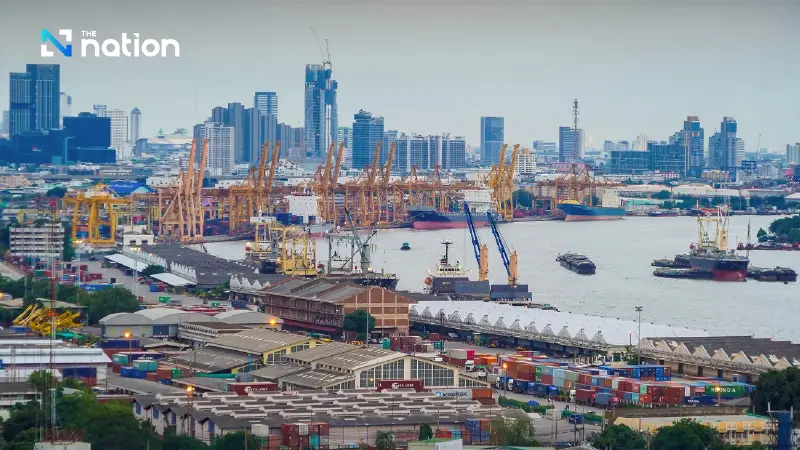


As intra-Asia trade surges and foreign investment climbs 43%, Thailand positions itself as the region's indispensable logistics gateway
- Thailand's rise as a logistics hub is driven by global supply chain diversification (the "China + N" strategy), a 43% surge in foreign investment, and growing intra-Asia trade.
- The country's transformation is supported by massive government investment in strategic infrastructure, including the Eastern Economic Corridor (EEC), the expansion of Laem Chabang Port, and a new land bridge project.
- The EEC is successfully attracting significant foreign investment in high-value manufacturing, particularly from automotive (EVs) and electronics companies like BYD and Toyota.
- In response to this growth, major international logistics providers like FedEx, DHL, and UPS are significantly expanding their facilities, flights, and networks within Thailand.
As intra-Asia trade surges and foreign investment climbs 43%, Thailand positions itself as the region's indispensable logistics gateway.
Thailand is experiencing a remarkable transformation in its logistics landscape, emerging as Southeast Asia's pre-eminent distribution hub as global supply chains undergo their most significant reconfiguration in decades.
Driven by the "China + N" diversification strategy and accelerating intra-regional trade, the Kingdom finds itself at the epicentre of a logistics boom that is reshaping the economic geography of Asia-Pacific.
The numbers tell a compelling story. Foreign investment in Thailand surged 43% in the first four months of 2025, with the Eastern Economic Corridor (EEC) alone attracting $959 million—accounting for 54% of all foreign direct investment into the country.
According to Mordor Intelligence, Thailand's freight and logistics sector, estimated at $53.38 billion in 2025, is projected to reach $72.19 billion by 2030, growing at a compound annual growth rate of 6.22%.
"The 'China + N' strategy reflects a fundamental reconfiguration of global trade," observes Bianca Wong, Vice President of Southeast Asia Operations at FedEx. "Businesses are diversifying their supply chains not only to manage cost, but to strengthen resilience, have flexibility, and access new growth markets. For Thailand, the outlook is positive."

Strategic Infrastructure Fuels Regional Dominance
Thailand's ascent as a logistics powerhouse rests on substantial infrastructure investments that are fundamentally altering the region's trade flows.
Laem Chabang Port, the Kingdom's primary maritime gateway, handled 9.46 million twenty-foot equivalent units (TEUs) in fiscal year 2024, up from 8.67 million in 2023, increasingly functioning as a regional hub for maritime trade.
The government unveiled a 115 billion baht ($3.5 billion) infrastructure stimulus package in early 2025, covering upgrades to roads, logistics hubs, and digital networks designed to buffer against global trade headwinds and support export competitiveness.
The Eastern Economic Corridor, spanning over 1.3 million hectares across Rayong, Chonburi, and Chachoengsao provinces, has attracted cumulative investments exceeding 1.35 trillion baht ($37 billion).
These developments are complemented by ambitious megaprojects.
The land bridge project in Chumphon and Ranong provinces aims to reduce transportation costs by 15-20% and cut transit times by four to five days. High-speed rail projects connecting three major airports—Don Mueang, Suvarnabhumi, and U-Tapao—form key components of regional connectivity enhancement.
Between January and May 2025, 129 foreign investors chose the EEC, representing a 30% increase over 2024 and accounting for 30% of all foreign investors in Thailand.
Japan led contributions with 20% of foreign direct investment, followed by the United States (15%), China (12%), Singapore (12%), and Hong Kong (10%).

Intra-Asia Trade Reshapes Logistics Demand
The momentum in intra-Asia trade continues to expand strongly, fuelled by dispersed and interconnected production networks, rising consumer demand, and trade-facilitating agreements.
This reinforces Southeast Asia's position as a global growth engine and a critical hub for supply chain diversification.
Countries such as Thailand, Vietnam, and Malaysia are strengthening resilience through complementary specialisations—from Thailand's advanced automotive and precision engineering base to Vietnam's high-speed assembly to Malaysia's semiconductor capabilities.
This creates a highly integrated regional manufacturing ecosystem with significant implications for logistics providers.

"We are seeing a growing supplier ecosystem between these markets," Wong notes. "For instance, B2B shipments from suppliers in Malaysia and Vietnam, exporting to manufacturers in Thailand. Enhanced routes connecting Penang, Bangkok, Hanoi, and other hubs reduce transit times and give businesses greater flexibility."
The rapid growth of e-commerce is reshaping the retail landscape across Southeast Asia. According to the Thailand E-Commerce Association, the sector's market value is projected to surge from $26.5 billion in 2023 to $32 billion in 2025, translating to a compound annual growth rate of approximately 10%.
This surge is boosting demand for efficient, reliable logistics solutions capable of handling higher volumes, faster delivery times, and seamless cross-border transactions.

Eastern Economic Corridor Becomes Manufacturing Magnet
The EEC has become particularly attractive for high-value manufacturing investments. Chinese automaker BYD is building a $490 million electric vehicle plant in Rayong, whilst Japan's Toyota plans to invest $700 million in smart manufacturing facilities. Semiconductor firms including Intel and TSMC are exploring EEC-based production hubs to diversify supply chains beyond China.
Thailand's automotive industry continues to anchor the economy, contributing around 10% of GDP and employing more than 800,000 workers. In 2024, the sector produced 1.47 million vehicles, reinforcing its status as ASEAN's top automotive producer and exporter.
The transition to electric vehicles is injecting new momentum, with EV registrations surging 380% in 2023. The Electric Vehicle Association of Thailand predicts the local EV market will see a 40% sales increase in 2025.
Manufacturing remains the backbone of Thailand's economy, contributing 24.91% to GDP. The country excels in sectors including automotive, electronics, and food processing, and the EEC helps strengthen its industrial advantage. Major multinational investments demonstrate growing confidence in Thailand's manufacturing ecosystem and logistics infrastructure.

Sustainability and Technological Innovation
As Thailand's logistics capabilities evolve, sustainability has emerged as a defining competitive advantage. DHL Supply Chain Thailand officially launched the Bangna Sustainable Logistics Centre in November 2025—the first DHL Supply Chain facility globally to be fully powered by renewable energy via on-site solar systems. This 1.39 billion baht (€35 million) investment underscores the sector's commitment to sustainable logistics.
"Thailand stood out to us, thanks to its government's robust renewable energy policies, a highly skilled workforce, deep expertise in sustainability, and impressive manufacturing capabilities," said Hendrik Venter, chief executive officer of DHL Supply Chain. The company has achieved 21% fleet electrification with more than 50 electric vehicles for first and last-mile deliveries.
Digital transformation is equally critical. Technologies including blockchain, the Internet of Things, and artificial intelligence are being increasingly adopted to improve logistics efficiency, enabling real-time tracking and data-driven decision-making.
The government's push for digitalisation forms part of the Thailand Digital Economy and Society Development Plan, which aims to integrate digital technologies across sectors.

Challenges and Regional Competition
Despite robust growth trajectories, Thailand's logistics sector faces considerable challenges. Infrastructure constraints persist in certain regions, with capacity bottlenecks affecting specific transportation modes.
There is a shortage of skilled labour in areas such as customs clearance, logistics technology, and supply chain analytics.
Cybersecurity concerns have intensified as digital adoption accelerates. According to SecurityScorecard, more than 70% of logistics organisations worldwide have faced external cyberattacks, with the average cost of a single incident estimated at $4.3 million.
Environmental pressures are mounting, with increasing awareness of sustainability requiring the industry to adopt greener solutions.
Regional competition remains fierce. Vietnam has emerged as a particularly strong alternative, with its strategic location and competitive labour costs.
According to DHL's Global Connectedness Tracker, Hong Kong SAR, Thailand, Malaysia, and Vietnam were among the top 10 markets that saw the fastest trade value growth, indicating intensifying competition across Southeast Asia.

Multinational Logistics Providers Expand Operations
Major international logistics companies are significantly expanding their Thai operations in response to these trends. FedEx opened a facility in Laem Chabang earlier in 2025 to support growing demand from local businesses in the EEC region.
The company operates 26 weekly flights connecting APAC and Europe, enabling express delivery within 48 hours.
"FedEx complements public investments with strategic private-sector contributions," Wong explains. "Our expanded facilities at Laem Chabang—capable of sorting up to 3,000 packages per hour—are designed to support high-volume, high-speed flows for Thai exporters."
UPS has announced strategic enhancements to its intra-Asia air network, with improvements including increased frequency on routes between its regional hub in Shenzhen and Sydney, now operating five times weekly with four times more capacity than before.
The company has upgraded its Hanoi-Shenzhen route by deploying larger Boeing 747 freighters, doubling weekly cargo capacity to 570 tonnes to support growing demand from Vietnam to China, Hong Kong, Japan, Malaysia, and Thailand.
DHL Express opened a new service centre in Thepharak, Samut Prakarn, in January 2025, marking its 15th facility in Thailand.
Spanning 2,462 square metres, its strategic location near Suvarnabhumi Airport enables shorter transit times to the DHL Bangkok Hub, which operates 85 dedicated flights weekly connecting Thailand to 220 countries and territories worldwide.
Vincent Yong, Managing Director of DHL Global Forwarding Thailand, emphasised the company's commitment: "As Thailand positions itself as ASEAN's key EV manufacturing hub by 2025, our solutions, such as our integrated multimodal network, will help support the nation's ambitions."
DHL maintains over 678,000 square metres of warehouse space across more than 70 facilities in the Eastern Economic Corridor.

Cross-Border Connectivity and Emerging Trade Corridors
Thailand is increasingly central to emerging East-West trade corridors linking Asia with India, the Middle East, and Europe.
Simultaneously, deeper integration within the Mekong subregion, connecting Thailand with Vietnam and Laos, is strengthening regional manufacturing ecosystems.
"FedEx enables Thai businesses to leverage these corridors through multimodal solutions and an expanded intra-Asia network," Wong notes. "Our Laem Chabang facility and enhanced air routes give exporters faster, more reliable access to high-value markets."
FedEx's Asia Road Network (ARN), a 7,000-kilometre pan-Asian, day-definite road network with door-to-door import and export road express services, provides access to over 125 cities connecting all key markets in Southeast Asia and China, from Singapore to Guangzhou.
ARN trucks are equipped with the latest technologies and safety features monitored by the Regional Security Command Centre, operated 24 hours daily in Singapore.

2026 Outlook and Strategic Imperatives
The outlook for Thailand's logistics sector in 2026 remains optimistic despite global uncertainties.
According to FedEx's 2025 Asia-Europe Trade Report, 76% of SMEs in the Asia-Pacific region recorded export growth. Strong expansion is anticipated in high-tech manufacturing, automotive components, and high-value consumer goods.
"Based on my discussions with our customers, who are expressing cautious optimism, this is a trend we expect to continue into 2026," Wong observes. "We anticipate strong expansion in high-tech manufacturing, automotive components, and high-value consumer goods."
However, businesses face mounting complexity. Managing inbound and outbound shipments along new and often unfamiliar lanes places heightened demands on supply chain planning, visibility, and execution.
The ability to deploy new channels, scale operations, and make data-driven decisions quickly will determine competitive positioning.
Thailand climbed to 9th place in the 2025 Agility Emerging Markets Logistics Index, reflecting growing competitiveness.
Yet maintaining this momentum requires continued investment in workforce development, advanced skills training, and innovation.
Building a talent pipeline equipped to handle evolving technologies and production methods will prove essential for attracting new investment and sustaining long-term growth.
For logistics providers, the strategic imperative is clear: support businesses in navigating complexity through data-driven insights, integrated logistics solutions, and local expertise.
As Wong concludes: "We remain committed to ensuring Thai businesses—from large exporters, e-commerce businesses, freight shippers, and fast-growing SMEs—have the tools and global reach they need to thrive in 2026 and beyond."
Thailand's transformation into Southeast Asia's premier logistics hub represents more than infrastructure development—it signals a fundamental restructuring of regional trade flows with implications extending far beyond the Kingdom's borders.
As global supply chains continue their historic realignment, Thailand's strategic investments, geographical advantages, and improving business environment position it to capture an outsized share of Asia-Pacific's logistics growth in the years ahead.
