
Beach trash to high fashion
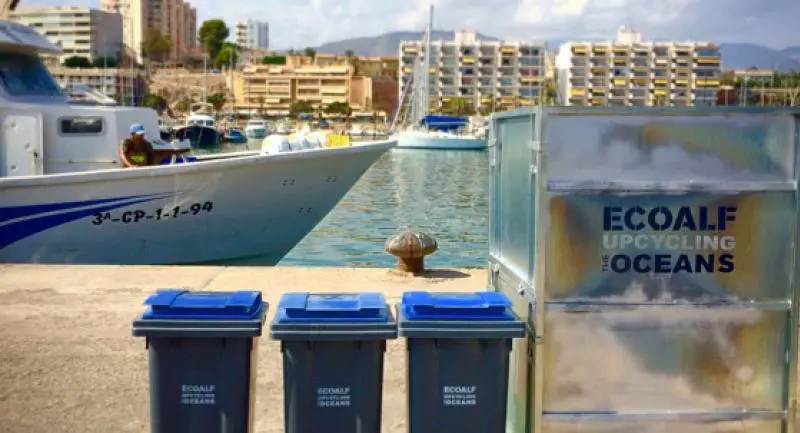


A TOP Spanish designer and producer of recycled clothes and accessories – Ecoalf – plans to debut new collections made out of waste salvaged from the seabed around parts of Thailand.
The authority – in a partnership with PTT Global Chemical – commits Ecoalf to removing waste from the seabeds around Thailand, considered some of the world’s most polluted.
The Ministry of National Resources and Environment has reported the country dumps about 50 tonnes of waste into the sea each year. Only some two tonnes of this debris is cleaned up annually.
The Department of Marine and Coastal Resources frequently cleans up beaches in coastal provinces, but it is not able to handle the huge amount of waste both on the shore and under the sea.
More than 5,600 kilogrammes of rubbish was collected last year. The tourism boom is blamed as a cause for this enormous surge in sea waste. According to the TAT’s statistics, almost 30 million foreigners travelled to Thailand last year.
“When taking a glance at Bangkok which was recently recognised as the world’s top tourism destination -replacing London, according to MasterCard’s Global Destination Cities Index - our capital city now faces an increase of waste from both local and tourism-related activities, said TAT Governor Yuthasak Supasorn.
Yuthasak said that this year Bangkok had to deal with more than 10,000 tonnes of garbage a day, up from 8,000 tonnes in past years.
“When it comes to the environmental performance index 2016, the country was ranked 91st out of 180 nations. This does not seem to be an impressive result,” he said.
Acknowledging the importance of the environment, the TAT governor said helping hands from Ecoalf were needed to co-create a new value for the tourism industry. They planned to replicate “Upcycling The Ocean” here in Thailand, the first initiative outside its home country, Spain.
“The way we work is that everything has to be done locally. It is not about taking the waste out of the beaches or the ocean, sending it to China to process. It is about trying to do all categorising and converting it into pallets, fabric and into final products - all in Thailand,” Ecoalf founder Javier Goyeneche, said.
Goyeneche added that both TAT and PTT Global Chemical would be the strategic partners to roll out this project, which aims to engage local communities.
Besides both strategic partners, Ecoalf is now seeking a local industry partner with top-quality standards in Thailand to help complete the chain of this project.
“But first, we have to investigate the waste under the Thai seabed and then analyse and measure the quality and contamination level of the trash as a part of the pre-planning process,” he said.
In Spain, this project engages local communities such as fishermen to collect garbage, plastic bottles, glass, PET bottles and unused fishing nets from the sea and on the beaches.
“Fishermen go to sea every day. When they find some garbage in their fishing nets, they throw it away into the ocean. But when working with them, we use containers to collect this garbage on their boats and take it back to port,” he explained.
To ensure the stable quality of recycled elements, Ecoalf said it uses a combination of components from the ocean and the land.
“In Spain, we are working between 10 to 20 per cent from the ocean and the rest from the land. For Thailand, it will depend on what we find,” he said.
Asked about a special clothing collection from this project in Thailand, the Ecoalf founder laughed and said Thailand was a hot country so it would not make sense to create a jacket.
“I think we should be making and mixing elements with the recycled cottons and linen. So we can make polo shirts or T-shirts or swimwear or bags, mainly targeting local customers. And some collections are appealing to the worldwide [market],” he suggested.
Also, there was a chance for local designers to join this project to create special collections from Thailand. Currently, 21 staff-members of Ecoalf were working with top fashion brands H&M and Zara to launch new collections.
In terms of turnover, the company’s aim is to double sales to about €6 million (Bt236 million) to €6.5 million this year from 3 million euros last year.
For 2017, the founder of Ecoalf hopes to see another doubling to €12 million.
