
I’m leaving KTB in good shape for successor, says outgoing
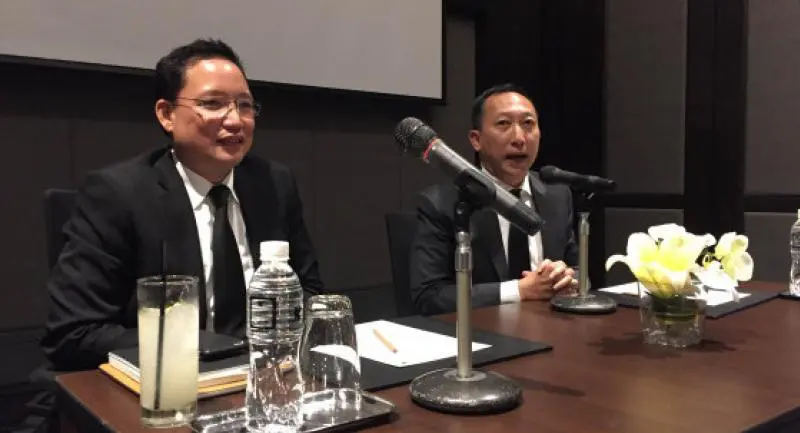


KRUNGTHAI BANK president Vorapak Tanyawong said yesterday that he believed he was leaving KTB in good shape for his successor, Payong Srivanich, to run the bank efficiently when he takes over next week.
Vorapak has implemented KTB’s transformation, including turning it into a performance-driven organisation and making its staff more efficient.
“When I leave, I believe it will be with KTB’s health in good shape, even if the [full] results of our transformation implementation are not yet be tangible because of the economic slowdown,” he said.
Vorapak, who completes his four-year term on Monday, wants to see KTB’s profits coming in close to those of the top-tier banks.
By assets, KTB is the largest Thai bank, but it currently ranks only fourth in terms of earnings, behind Bangkok Bank, Kasikornbank and Siam Commercial Bank, respectively.
During his term, KTB adjusted its loan-portfolio mix by increasing exposure in the retail (individual) and small SME segments, in order to achieve a higher asset yield.
He implemented a “loan factory” for medium-sized enterprises with a credit line of Bt20 million to Bt100 million per business, small enterprises with a credit line of Bt11 million to Bt20 million, and micro-enterprises with a credit line of Bt1 million to Bt10 million.
The loan factory is a central part of KTB’s transformation, which was in fact completed in 2013 but the bank has since had to spend much time helping SME and retail customers affected by the economic slowdown, he said.
The bank, which has an annual loan-loss provision of around Bt10 billion, last year was impacted by having to set aside Bt9 billion in loan-loss provisioning as a result of Sahaviriya Steel Industries’ (SSI) loan restructuring.
The SSI case negatively affected KTB’s net profit, with net earnings dropping to Bt28.49 billion from Bt33.19 billion the year before, while the return on assets fell to 1.27 per cent from 1.52 per cent.
The huge SSI loan-loss provision reduced the bank’s coverage ratio to 104 per cent, well behind the 130 per cent-140 per cent at the top three banks, he said.
Driving asset yield has been his most challenging task, as KTB has to follow a policy of maintaining a balance between dividend payment and coverage ratio, he said.
xxxxxxxxxxxxxxxx
KTB is still burdened by having to set a high provision for what he terms “previous vintage” lending, with most of the debt incurred from loans provided before 2015, but he is confident that new loans issued since the start of last year are of a generally better quality after implementing the loan factory, and that the non-performing loans (NPLs) of retail customers should peak this year.
While KTB has to increase its loan-loss reserve to make the coverage ratio close to the top-tier banks, it is burdened with a policy of paying 40 per cent of its earnings in dividends, which Vorapak said made it a challenge to keep the balance between shareholders’ benefit and the strong status of the institution.
He said that while an improvement in the bank’s NPLs should be seen in the middle of next year, KTB has the highest NPL ratio, at 4.24 per cent, among the top four banks.
A lending drop of 6 per cent in the first nine months was the main cause for its gross NPLs climbing.
“Half of the 6-per-cent drop in outstanding loans was due to state customers making huge repayments. Moreover, the economic slowdown did not support the new investment of corporate customers, which the bank considers can help maintain our loan growth amid concern over the NPLs of retail and SME customers. The slowdown in new investment means the bank cannot expand its lending [very much],” he explained.
However, KTB ranks second in market share for helping corporate clients to raise funds from the debt market.
Vorapak said seasonal loan demand in the current quarter should result in KTB’s lending not falling too much this year.
Payong, currently senior executive vice president and head of KTB’s Global Markets Group, who takes over as president on November 8, said he had sent the first draft of a KTB business plan to the State Enterprise Policy Office for consideration.
He will focus on the execution of what Vorapak has laid down as infrastructure at the bank, he said yesterday.
While data analytics will be a critical tool in running a banking business, he will not run KTB aggressively as the bank should grow sustainably, he stressed.
