
German pet food maker moves in
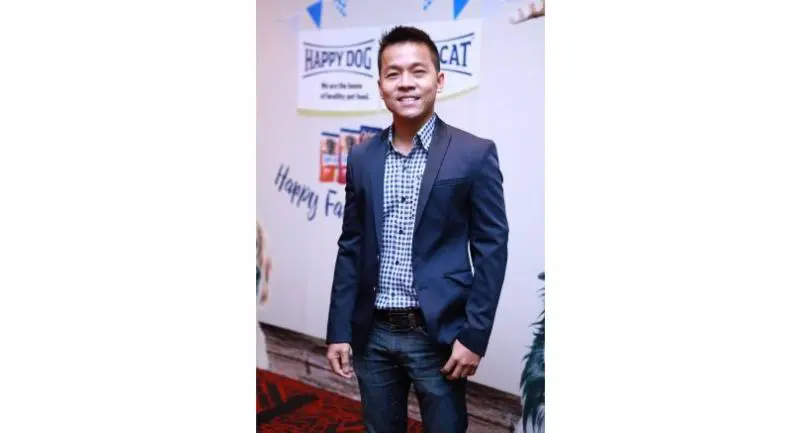


GERMANY’S Interquell has entered the Thai pet food market under a joint venture with a local partner.
Interquell, which focuses on the premium end of the market for dog and cat food, yesterday said it held 49 per cent of the joint venture, Happy Pet (Thailand) Co Ltd, with its partner Technic Pet Holding owning the rest. The new company has Bt2 million in initial registered capital, which will be raised to Bt20 million by the end of this year.
Georg Muller, chief executive and president of Interquell, which owns the Happy Dog and Happy Cat premium pet food brand, said marketing strategies would be devised to appeal to the emotions of pet owners.
The new company will import Happy Dog and Happy Cat products from Germany. The venture partners say the trend for healthy pet food is taking hold in Thailand, and that his segment is growing faster than in Japan and other Asian countries.
Happy Pet (Thailand) said it wants to become established as the leading brand in the premium pet food in Thailand, with products that provide nutrition to pets “holistically” but at affordable prices.
In the future, the company plans to expand into Myanmar, Cambodia and Laos by using Thailand as a base to distribute the products. The products are now available at pet shops in Thailand.
The Muller family began operating their first mill in Weringen, Germany, in 1750 and produced their first dog food product, under the Muller name, in 1960.
Now trading as Interquell, the company’s Happy Dog and Happy Cat brands are sold in 66 countries, including in Europe, Asia, Africa and South America.
“Food for our four-legged friends should be chosen based mainly on the quality and raw ingredients used in the manufacturing process,” Muller said. “Manufacturing resources in particular should come from a trusted source that has the highest level of quality control. “The focus should be on the true needs of pets, what makes them holistically strong and gain complete nutrients. And this can be done by selecting only those foods that makes our dogs and cats happy.”
Kriengsak Athikomvittaya, general manager of Happy Pet (Thailand), said the country’s market for pet products and services is growing rapidly, even in the midst of an economic downturn. This market is growing at about 10-15 per cent a year.
“In the past three to five years, Thai society and the lifestyles of people have changed dramatically,” Kriengsak said. “Families have become smaller, with fewer children, while the numbers of single people and those living alone are increasing and people are living longer.
“These factors contribute to the popularity of dogs or cats as companions. Most importantly, Thailand has become a middle-income country, its people have more purchasing power and with the trend of people living alone and having less children, consumers have more disposal income to spend on their pets - especially on the products that enhance their pets’ health.
“With all of these factors, the pet-related businesses has since become one of the hottest segments in the market.”
The forecast for the pet market this year is estimated to be as high as Bt26 billion, with pet food accounting for Bt12 billion, pet hospital and pet care Bt8 billion and pet-related accessories Bt6 billion.
Reflecting the growing trend for healthy and natural foods for humans and their pets alike, the demand for premium natural pet food with no added chemicals, as with the Happy Dog and Happy Cat brands, has become more popular, the joint venture partners.
The say that even though the premium dry pet food market in Thailand is small compared with that of developed countries, the growth rate in this segment is on track to expand at a faster rate than elsewhere. For now, dogs are the No 1 choice as pets, but cats are gaining in popularity fast, with the proportion of ownership tipped to be split evenly with the next two to three years.
“We expect the super-premium pet food sector, including Happy Dog and Happy Cat, to grow more than 20 per cent. Because nowadays, pet owners value their pets’ health and happiness more and treat pets like a member of their family,” Kriengsak said.
“So, they seek what’s best for their pets especially, quality foods which are made from natural raw materials and ingredients with no chemical substances or any artificial flavours or colors, just like with Happy Dog and Happy Cat. This trend has exploded into a huge market in developed countries, including European countries and the United States. Last year, over 80 per cent of new pet food launched around the world were of a healthy type.” Kriengsak said that Interquell had seen a huge market potential in Asia, especially in Southeast Asia. “With the rapid economic growth rate together with the increasing income of the population and the changes of lifestyles, we definitely see a tremendous potential in Southeast Asia,” he said.
“That's why we have expanded into the region the past couple years. We have operations in four countries in Southeast Asia: Indonesia, Malaysia, Singapore and now Thailand. In the near future, we will use Thailand as a base to expand to the Indochina countries like Vietnam, Cambodia, Laos and Myanmar.”
He said that while the Asean market is relatively new to the company, it was drawn to the growth potential.
“While the Europe market is stagnant, Southeast Asia is picking up steam. We expect the region will play a key role in the company's revenue growth in the next five years,” Kriengsak said.
”At present, the Asean market contributes about 10 per cent of Interquell’s total revenue but it is growing at more than 60 per cent a year.
“We believe that in the next five years, Asean’s annual contribution to the company’s total revenue will double to 20-25 per cent. For Thailand, the company’s sales will reach Bt1 billion annually in the next five years, up from Bt60 million expected by the end of this year. They will be double every year.”
