
SCG Sees on ASEAN as Low-Carbon Economy's Next Hub



SCG's Thammasak Sethaudom says pairing energy security with competitiveness can turn ASEAN into a hub for the low-carbon economy
- SCG's CEO argues that ASEAN can become a low-carbon hub by treating sustainability as a driver of business competitiveness, alongside energy security and economic goals.
- The company is creating a regionally specialized supply chain, with different ASEAN countries serving distinct roles, to support large-scale, automated plants that serve the entire market.
- SCG advocates for making sustainable products competitive on price ("Green Parity"), a strategy that successfully boosted its low-carbon cement to over 80% of its cement sales in Thailand.
- The vision relies on ASEAN governments investing in infrastructure, particularly upgrading national electricity grids, to better exploit the region's underused renewable resources like solar, wind, and biofuels.
SCG's Thammasak Sethaudom says pairing energy security with competitiveness can turn ASEAN into a hub for the low-carbon economy.
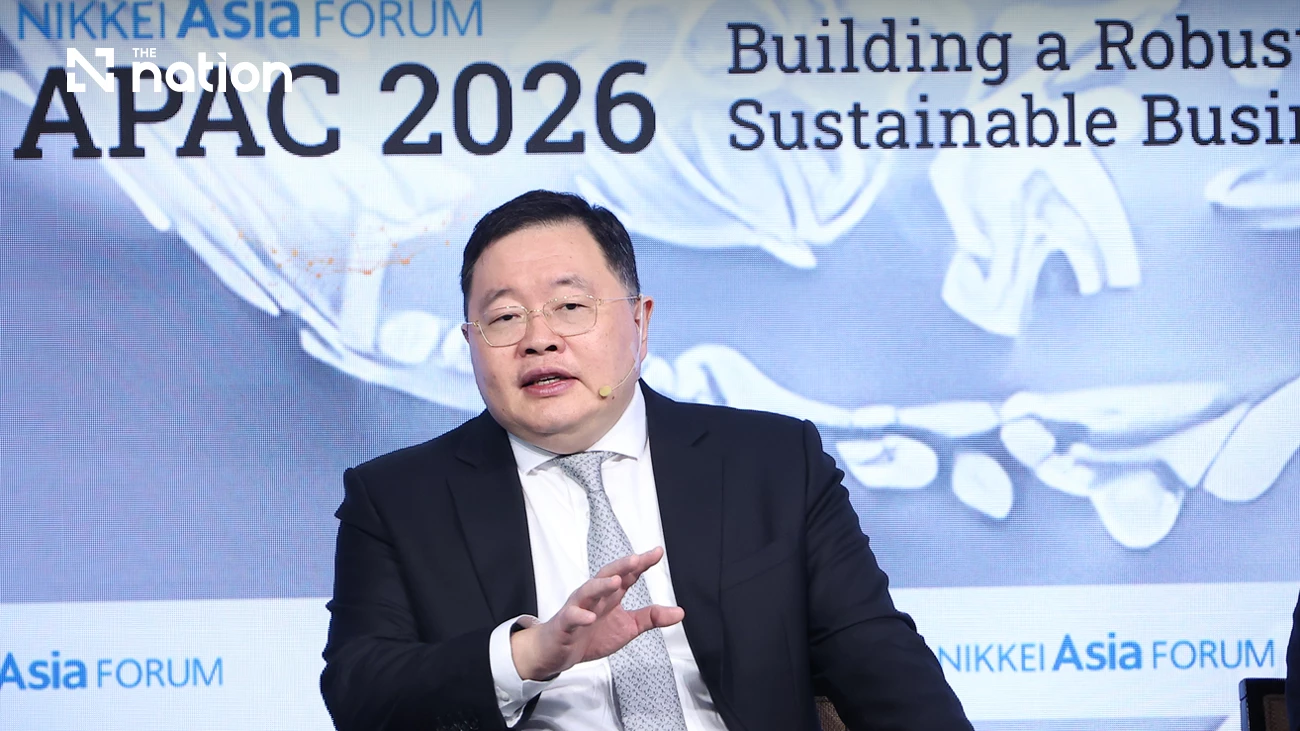
Carbon neutrality should be treated as a driver of business competitiveness rather than a compliance exercise, according to Thammasak Sethaudom, president and CEO of Thai industrial conglomerate SCG, who used a panel at the Nikkei Asia Forum APAC 2026 to explain how the company's strategy is built around three interconnected priorities: energy security, economic competitiveness and sustainability.
Speaking on a panel titled "Future of Mobility and Pathway to Carbon Neutrality" — alongside Joanne Xu of DiDi Global, Louis Liu of GAC International Thailand, and Masahiko Maeda, Toyota's CEO for the Asia region — Thammasak argued that recent disruption to global shipping routes, including the Strait of Hormuz crisis and Red Sea attacks, was not a temporary shock but a structural shift with implications stretching well beyond this decade.
"In our opinion, this is going to be a change that will have a lasting effect for the next 10 to 20 years," he said. "If you look at that kind of horizon, you take advantage of it, align all the policy, investment, and align by that."
He said businesses could no longer weigh economic and security considerations in isolation.
"When you look at the medium to long term, you really have to think not only about the economics, but also about the security," he said. "Economics is very important, security is also very important — but I just want to add sustainability. Don't forget about it."
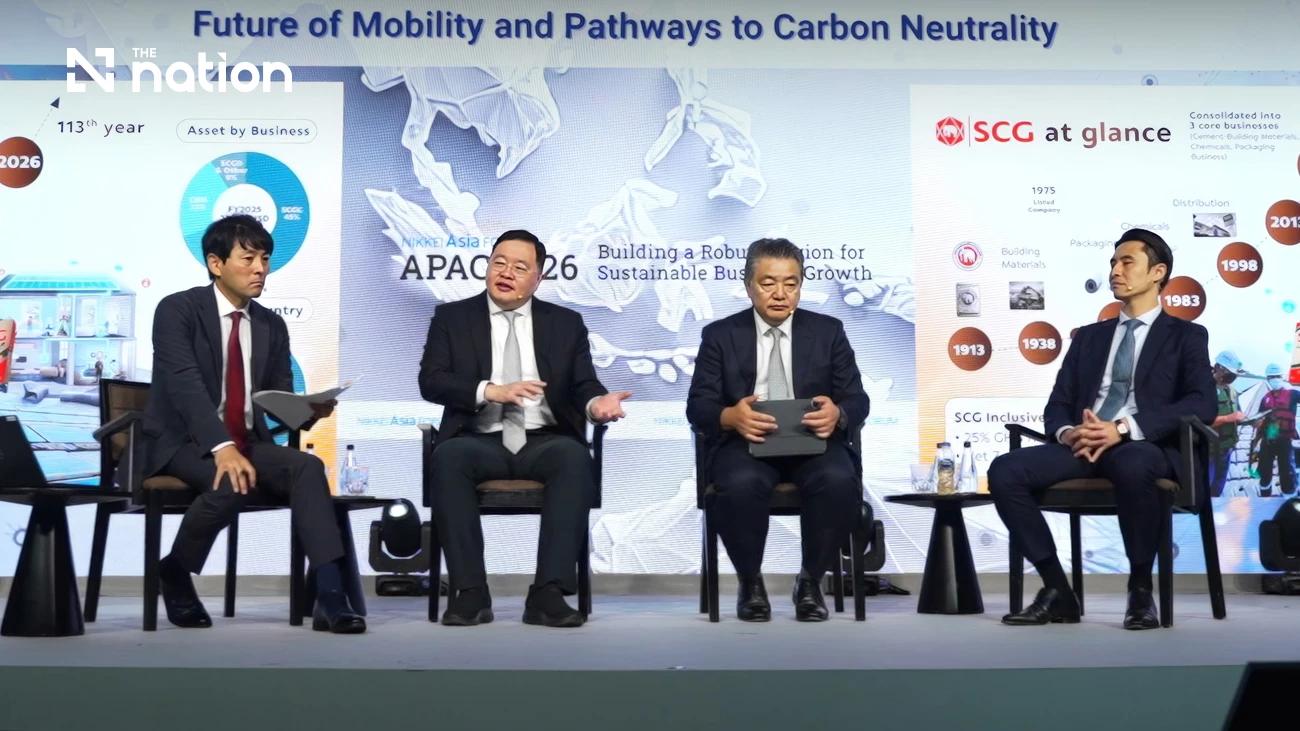
Underpinning this, he added, is SCG's wider "Inclusive Green Growth" approach, which frames environmental investment as a route to balanced economic, social and environmental returns rather than a cost centre.
A regionally specialised supply chain
SCG's ASEAN footprint, Thammasak said, is organised so that different markets play distinct roles: Thailand functions as the group's hub for innovation and product development, Vietnam serves as its main manufacturing and export base, and Indonesia provides both energy resources and access to a large consumer market. That specialisation, he argued, is what allows SCG to manage a genuinely regional supply chain rather than a patchwork of national operations.
It is this structure that underpins the group's response to overcapacity from Chinese exporters — abandoning small, country-specific factories in favour of consolidated, highly automated plants built to serve the entire ASEAN market.
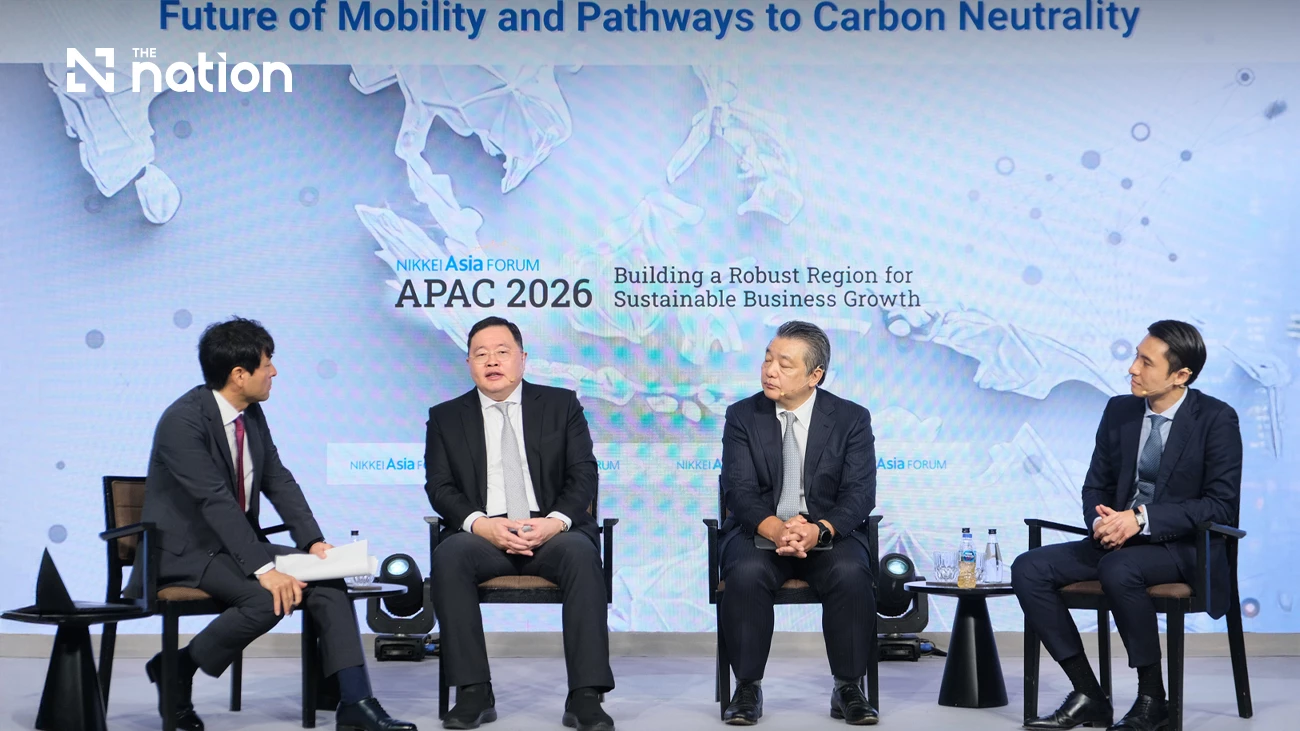
"From now on, we design the production facility based on the whole of Asia," he said. "The small plant in an individual corner of Asia — it doesn't work any more. Close it down, build a new one. When you build a big one at Asian scale to serve the whole of Asia, you can put robotics and AI in it in a much bigger way."
He cited the effect on plant staffing as one measure of the shift.
SCG has significantly improved manufacturing efficiency through AI and automation, enabling highly automated operations, greater productivity and round-the-clock production. The company is also collaborating with regional technology partners, including Vietnam's FPT and Microsoft, to further accelerate industrial automation.
Making green products compete on price
Responding to audience skepticism, drawn from a live poll, over whether consumers genuinely pay a premium for sustainability, Thammasak said SCG's own cement business showed that removing price as a barrier — rather than relying on green branding — was what shifted volume.
"We benefit from green priority because we sell ordinary Portland cement and green cement at the same price," he said. "In Thailand, we have successfully increased the share of low-carbon cement to more than 80% of our cement sales. This demonstrates that when sustainable products deliver comparable quality and competitive pricing, customers are willing to make the transition."
He added that a small premium still existed in some Asian markets, but that price parity — what SCG terms "Green Parity" — was the decisive factor.
"If everything else is in the same range, green will go first," he said. "However, you need to convince, you need to communicate."
A call for government-backed infrastructure
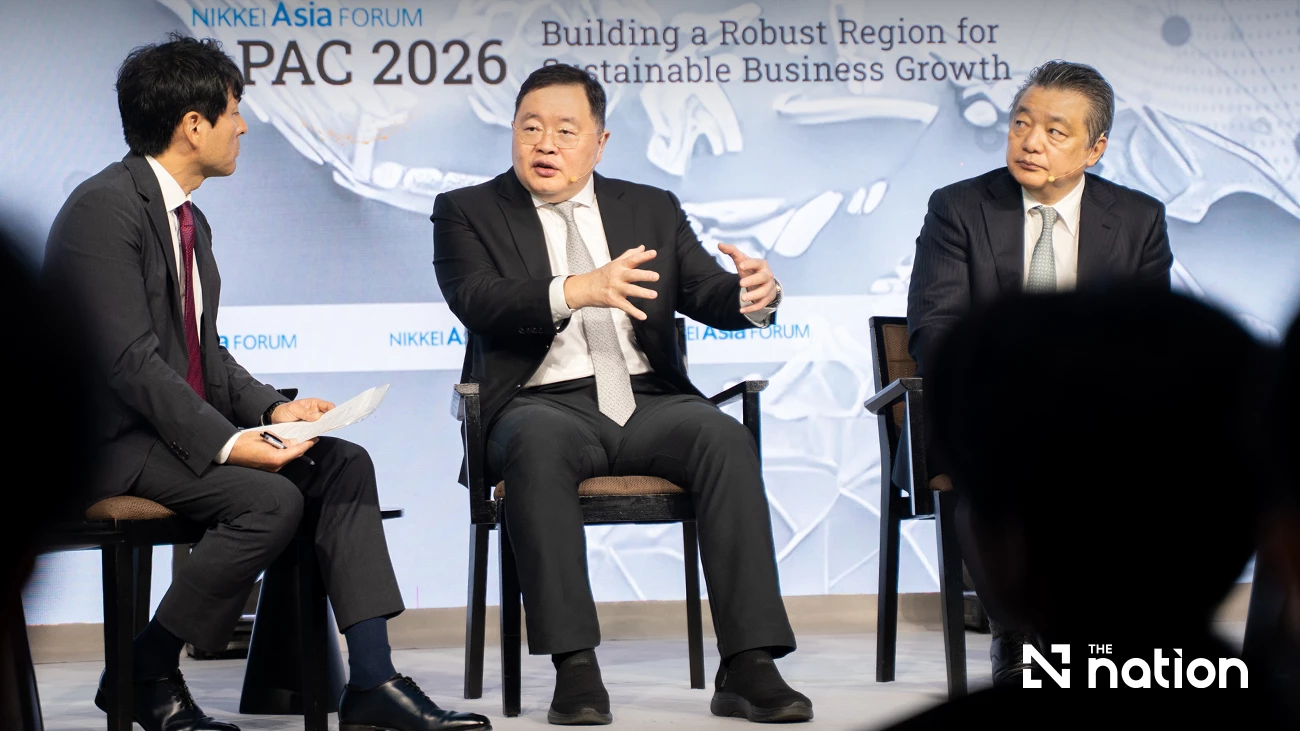
Thammasak pointed to biofuels, solar and wind as underused regional resources and urged ASEAN governments to invest in the infrastructure needed to exploit them, particularly national electricity grids.
"Bio is the strength of ASEAN in my opinion, and we should take advantage of that bio base," he said. "Apart from bio, solar and wind are also strengths of ASEAN — we have sun all the time here, and we waste it."
Much of this ambition runs through SCG Cleanergy, the group's clean-energy subsidiary, which offers industrial clients solar installations, battery energy storage systems and energy management software designed to cut both costs and emissions.
But Thammasak argued that scaling such solutions further depends on regulatory change, specifically rules granting third-party access to national grids, which would allow clean power generated in remote solar or wind sites to be routed directly to industrial zones and data centres.
"Government should invest in upgrading the national grid," he said. "This is something with a very high payback, in my opinion."
Thammasak's remarks positioned SCG's restructuring — spanning regional specialisation, automation and green product pricing — as a template for how industrial groups in the region might respond to a period he described as defined by prolonged geopolitical and energy-market uncertainty, rather than a short-term disruption to be waited out.
