
SCG Wages "Daily War" to Tame a Volatile World
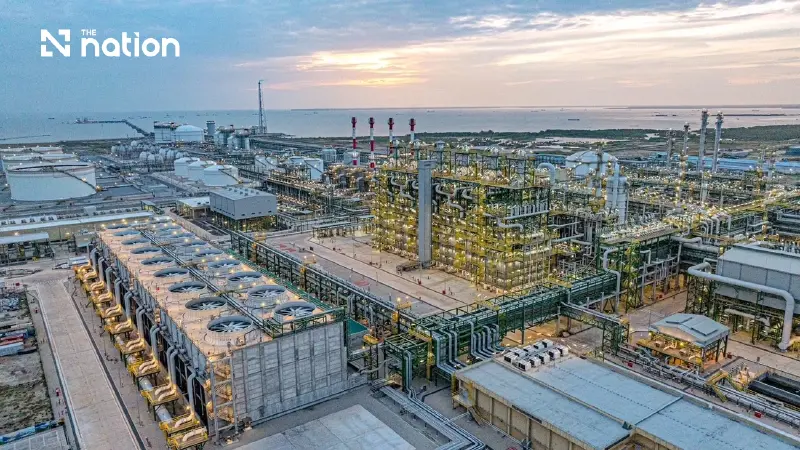


As Middle East turmoil rattled supply chains, SCG's daily crisis management and two-year "Super Core" plan delivered a stronger-than-expected H1
- SCG implemented a "Daily War" strategy, a system of daily and weekly recalibration, to manage supply chain disruptions from Middle East turmoil, which contributed to a stronger-than-expected first half.
- The company is executing a two-year "Super Core" plan to build long-term resilience by consolidating business units, expanding its regional ASEAN production base, and focusing on low-carbon innovation.
- This multi-faceted approach has improved financial performance, resulting in a 35% year-on-year rise in Adjusted Cash EBITDA and a significant reduction in its net debt-to-EBITDA ratio.
- SCG is also leveraging technology through an "AI Re-imagination" program to accelerate processes like marketing and investing in workforce reskilling to enhance adaptability.
As Middle East turmoil rattled supply chains, SCG's daily crisis management and two-year "Super Core" plan delivered a stronger-than-expected H1.
When tensions in the Strait of Hormuz and the Red Sea began disrupting roughly half of its feedstock supply earlier this year, Siam Cement Group (SCG) did not wait for the storm to pass. Instead, the conglomerate adopted what its chief executive calls a "Daily War" approach: a regime of daily and weekly recalibration designed to keep the business moving even when the ground keeps shifting beneath it.
"We've more or less learned how to ride the rollercoaster — when to hold our breath and when to scream," Thammasak Sethaudom, president and chief executive officer of SCG, told reporters at a press conference on Thursday. "But what matters more is building a strong foundation so that SCG can grow gracefully over the long term."
That philosophy, he said, is what allowed the group to turn a turbulent first half of 2026 into a period of resilience rather than retreat, as management rushed to secure feedstock from outside the Houthi-affected corridor, prioritised high-value customers and held the line on spending.
Building a "Super Core"
Beyond the day-to-day firefighting, SCG is roughly midway through a two-year plan to strengthen what Thammasak describes as its "Super Core" — the durable heart of the business — built on three pillars.
The first is structural consolidation.
SCG has merged three previously separate units — cement, building materials and smart living — into a single entity, SCG Cement-Building Materials, aimed at cutting duplication and sharpening operational efficiency.

The reorganised business has already lifted cross-selling beyond its traditional ready-mixed concrete customer base by 15 per cent year-on-year, expanded its dealer network by more than 200 stores, and is targeting over 1 billion baht in cost savings this year.
The second pillar is regional scale. With Chinese manufacturers flooding global markets with oversupply, SCG is consolidating its ASEAN production base to compete on volume, while simultaneously courting capable Chinese partners where collaboration makes more sense than confrontation.
The third is low-carbon innovation. SCG's low-carbon cement now accounts for more than 80 per cent of its domestic sales, and the group is expanding low-carbon production capacity in Vietnam to serve export demand, including into the United States.
From efficiency to reinvention
SCG is also pushing further into artificial intelligence under a programme it calls "AI Re-imagination" — a deliberate step beyond using AI merely to speed up existing workflows. Thammasak pointed to marketing as one example: a process that once took a month and a half to produce a campaign plan can now be completed in two days.
The shift, he said, is enabling SCG to move away from four large annual marketing campaigns towards continuous, narrowly targeted campaigns refreshed on a near-weekly basis.
Alongside the technology rollout, the group says it continues to invest in workforce reskilling, encouraging employees to build the adaptability needed to work alongside AI systems effectively.

A stronger balance sheet
The strategy showed up clearly in the numbers. For the first half of 2026, SCG posted sales revenue of 259.57 billion baht and net profit of 17.76 billion baht; stripping out extraordinary items — largely inventory revaluation gains — core profit stood at 12.65 billion baht.
Adjusted Cash EBITDA, which excludes non-cash inventory and impairment adjustments, rose 35 per cent year-on-year to 42.91 billion baht.
Second-quarter figures told a similar story: sales revenue of 136.24 billion baht, net profit of 11.54 billion baht (10.83 billion baht on a core basis), and Adjusted Cash EBITDA of 27.98 billion baht.
Net debt fell by 39.18 billion baht quarter-on-quarter, pulling the net debt-to-EBITDA ratio down to 3.7 times from 5.0 times in the previous quarter, while cash on hand climbed to 76.78 billion baht by the end of June.
The board approved an interim dividend of 3.5 baht per share, totalling 4.2 billion baht — equivalent to 24 per cent of first-half net profit. The dividend will carry an ex-dividend date of 5 August, a record date of 6 August, and will be paid on 21 August 2026.
Performance across the portfolio
All three of SCG's core businesses improved during the period. The newly merged Cement-Building Materials arm posted a net profit of 5.79 billion baht and Adjusted Cash EBITDA of 11.41 billion baht, supported by Thai government infrastructure spending and growth in Vietnam and Indonesia, even as private domestic demand stayed soft.
The unit is also pushing into higher-value products, such as its SCG DECAAR surface-decoration range, and is testing new export markets, showcasing roofing, insulation and ceiling products at the Sydney Build Expo 2026 in Australia.
Its sister decor business posted Adjusted Cash EBITDA of 1.38 billion baht, helped by overseas revenue growth, particularly in Vietnam, and tighter management of energy costs and inventories, despite restructuring charges and asset write-downs in Thailand.
The unit is expanding glazed porcelain tile capacity in Vietnam, due for completion in 2027, and consolidating higher-value ceramic and porcelain tile production in Thailand with new automated lines by the third quarter of 2027 – a move expected to cut unit production costs by up to 20 per cent. It has also partnered with a leading Chinese sanitary ware components manufacturer to build a smart toilet factory in Thailand with an annual capacity of 96,000 units.
SCG Chemicals (SCGC), the group's petrochemicals arm, posted net profit of 5.90 billion baht and Adjusted Cash EBITDA of 15.6 billion baht, as Middle East supply disruptions tightened global polyethylene and polypropylene markets and pushed up spreads.
The unit completed the sale of its 14.86 per cent stake in Indonesia's PT Chandra Asri Pacific Tbk for around 24.9 billion baht, redirecting proceeds towards deleveraging and funding an ethane feedstock expansion project at its LSP plant in Vietnam, where construction of ethane storage tanks is more than 60 per cent complete ahead of a planned start-up in late 2027.
A proposed olefins and polyolefins joint venture between SCGC and GC in Thailand remains under feasibility study, with an update expected in the third quarter of 2026.
SCG Packaging (SCGP) reported a net profit of 3.87 billion baht and Adjusted Cash EBITDA of 10.47 billion baht as packaging demand recovered even as freight, energy and raw material costs rose amid the Middle East conflict.
Indonesian operations swung into profit on higher domestic sales volumes and better regional pricing, while Vietnam continued to benefit from economic growth and consumption.
The unit is expanding corrugated paper packaging capacity in southern Vietnam and has partnered with Kao Industrial (Thailand) on mono-material flexible packaging designed for easier recycling, alongside wider use of AI, machine learning and collaborative robots to improve production efficiency and quality control.

Bracing for a harder second half
SCG expects the second half of 2026 to be more difficult than the first, citing the risk of escalating geopolitical conflict, intensifying price competition, and inflationary pressure from food and energy costs that could persist into next year.
Even so, Thammasak told the press conference that the group remains confident full-year Adjusted Cash EBITDA will exceed 2025 levels, and that continued execution of its restructuring, regional and low-carbon strategies will deliver a lasting "step change" in competitiveness.
Looking to 2027, SCG expects several of its transformation initiatives to reach completion, including the ethane feedstock project in Vietnam and new strategic partnerships, alongside further restructuring and expanded use of robotics and AI — positioning the group, it says, to handle whatever volatility comes next.
