
Thai auto parts industry revives as pickup and hybrid deals boom
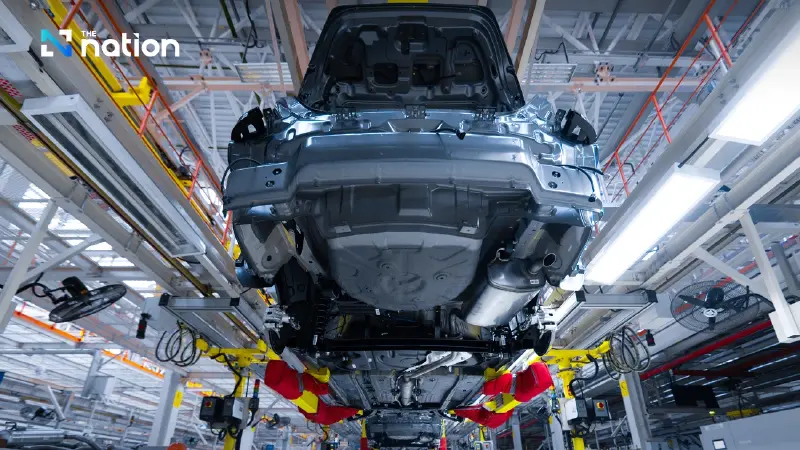


Thailand’s auto parts industry is staging a recovery from its lowest point, fuelled by strong sales campaigns for pickup trucks and hybrid vehicles.
The revival has brought back overtime work and subcontracting to factories, though more than 10 companies were forced to close last year due to poor management and mounting economic pressure.
Suphot Sukphisarn, chair of the Federation of Thai Industries (FTI)’s Autoparts Group, told Krungthep Turakij that the industry began showing signs of recovery in the second quarter of this year, following a severe slump in 2023.
He explained that last year was the toughest for the sector, as high household debt following the pandemic led to stricter financing rules and reduced vehicle sales—particularly for pickup trucks, Thailand’s mainstay market.
Adding to the strain was the ongoing transition to electric vehicles (EVs), dominated by Chinese carmakers that have yet to adopt Thailand’s local supply chain. This forced many firms to adjust drastically.
“The accumulated challenges caused last year’s total vehicle production and sales to fall sharply, dragging the parts industry down by around 30%. Over 10 parts manufacturers had to shut down,” Suphot said.
He added that rising labour costs—from 300 baht to 400 baht daily wages, with a policy target of 600 baht—further pressured Japanese carmakers to consider relocating production to cheaper destinations.
To cope, many firms cut costs by terminating subcontractor contracts and eliminating overtime. Some that tried to keep afloat had to take on heavy debt.
Employment in the parts industry is split into three categories: company staff, subcontractors, and outsourced workers such as security guards, cleaners, and drivers. During 2022–2023, firms first cancelled subcontractor contracts with one month’s notice, before reducing staff and implementing “zero overtime,” often leading to closure.
One clear example is Kitagawa (Thailand), with registered capital of 2.56 billion baht, which manufactured automotive parts and accessories. It shut down operations in 2023, following post-Covid financial strain.
However, since May–June this year, the industry has seen clear positive signals. Production has rebounded thanks to two main drivers:
- Pickup truck sales revival – Car manufacturers launched new models and slashed prices aggressively. For instance, Toyota cut prices from around 600,000 baht to 400,000 baht to compete with Chinese rivals, reviving sales, though modestly.
- Hybrid vehicle boom – Both Toyota and Honda saw hybrid sales exceed expectations. Toyota is now preparing to launch a 1,300cc hybrid engine to complement its existing 1,800cc and 1,500cc models, showing strong consumer acceptance.
These trends have encouraged auto parts makers to restore overtime shifts and rehire subcontractors. While the industry is still recovering from its lowest point, forecasts suggest Thailand’s total car production will reach 1.45 million units this year—slightly below last year’s 1.47 million but still a positive sign of an upward trend.
“In the near future, new industries such as rail transport and medical equipment will strengthen the auto parts sector. Some firms have already secured orders from these industries, contributing 3–5% of total revenue,” Suphot added.
