
Sethaput reflects on five years as Bank of Thailand governor
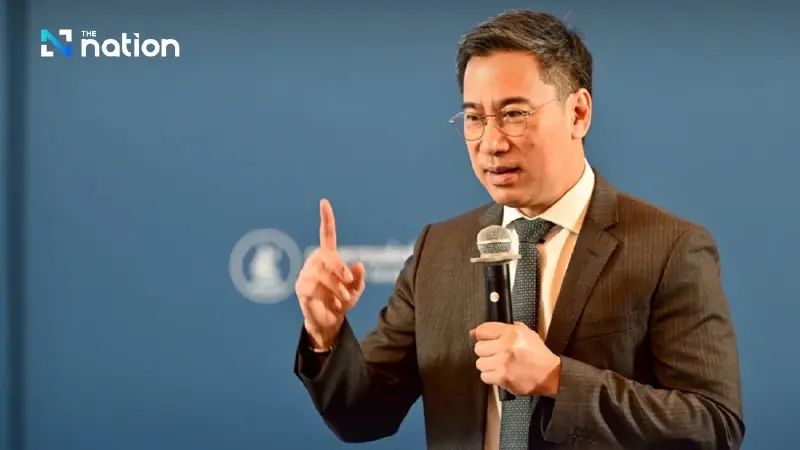


Sethaput Suthiwartnarueput, governor of the Bank of Thailand (BOT), has reflected on his five-year tenure steering the country’s monetary policy through unprecedented crises, while laying financial foundations for the future.
He made the remarks during the BOT’s “Meet the Press” event — the second of the year but his last in office before retirement on September 30.
Sethaput noted that between 2020 and 2025 the Thai economy was confronted with a series of extraordinary challenges, ranging from the global pandemic and geopolitical conflicts to deep-rooted structural problems.
As the institution responsible for safeguarding economic and financial stability, the BOT had to act with caution and flexibility, he said. The task was not only to address short-term disruptions but also to ensure the economy was resilient enough for sustainable growth.
He underlined three core missions pursued during his governorship:
- Macro-financial stability: preserving the overall stability of the economy.
- Financial landscape for the future: building a robust financial sector to support long-term growth.
- Consumer protection: safeguarding the interests of financial service users.
Integrated policy mix: adapting tools to complex challenges
At the heart of the BOT’s approach has been the use of an “integrated policy mix” — a combination of diverse instruments tailored to different situations. The central bank has long recognised that the policy interest rate is a “blunt tool”, with wide-reaching effects that may not always suit every circumstance.
Tackling complex problems, therefore, required complementary measures — from targeted short-term financial interventions to long-term structural reforms.
2020–2021: Confronting the Covid-19 crisis
In 2020, Thailand’s economy was abruptly paralysed by the outbreak of Covid-19, causing GDP to contract by 6.1% and unemployment to surge.
The BOT responded with highly accommodative monetary policies, cutting the policy rate to a historic low of 0.5% while rolling out relief measures such as broad-based debt moratoria for businesses and households.
These measures were continually refined for maximum effectiveness, helping to stabilise the economy and enabling a modest recovery in 2021, when GDP expanded by 1.6%.
2022: Navigating recovery amid inflation
By 2022, the Thai economy was showing signs of a gradual “K-shaped recovery.” However, global headwinds emerged from the Russia–Ukraine war, which sent energy and commodity prices soaring. Thailand’s inflation climbed to a peak of 7.9%, the highest in decades.
The BOT adopted a gradual and measured policy tightening approach, carefully raising interest rates while phasing out some support measures. This strategy ensured that the fragile recovery was not derailed.
Within seven months, inflation had returned to within the target range.
2023–2024: Laying long-term financial foundations
In 2023 and 2024, the central bank shifted its focus to structural issues, particularly Thailand’s high household debt, which had reached 90% of GDP. Efforts were also directed at strengthening the financial sector to prepare for future transformations.
The BOT raised the policy rate to 2.5% to maintain balance between growth and stability, while pushing forward reforms to enhance the resilience and adaptability of the financial system.
2025: Supporting adaptation to a new global order
This year, Thailand has faced fresh challenges from new US trade tariffs that disrupted global trade and investment flows.
To cushion the impact, the BOT pivoted to a more accommodative stance, cutting the policy rate to 1.5%. The move aimed to ease debt burdens and support households and businesses as they adapt to shifting dynamics in the global economy.

Long-term policies for structural challenges
Beyond short-term stabilisation, the BOT has also placed strong emphasis on long-term strategies to address deep-rooted structural issues — particularly high household debt and the need to develop a financial sector capable of supporting the economy’s next phase of transformation. Key initiatives include:
1. Sustainable solutions to household debt
The BOT has elevated its efforts to tackle household debt through the introduction of responsible lending guidelines and a persistent debt resolution scheme.
These measures aim to make penalty interest calculations fairer and adapt debt relief programmes to evolving economic conditions. However, participation in these programmes has so far been lower than expected.
2. Driving a new financial landscape
- Digital innovation: The BOT has promoted responsible financial innovation by authorising the establishment of virtual banks and supporting the expansion of cross-border payment connectivity to enhance convenience and reduce costs.
- Sustainability: The central bank has advanced the transition towards a greener economy by backing the development of standards for classifying environmentally friendly economic activities and by promoting financing the transition initiatives to support lending for sustainability.
3. Supporting adaptation to the new global environment (2025)
In response to ongoing global trade disruptions, the BOT shifted towards a more accommodative monetary stance, cutting the policy rate to 1.5% to ease the debt burden of vulnerable households and businesses.
It also introduced the “You Fight, We Help” programme, aimed at reducing debt pressure while enabling borrowers to retain assets and recover financially.
A parallel priority has been to build trust and security in the digital financial system. Measures have been rolled out to combat financial fraud, alongside the introduction of mandatory standards for mobile banking security to ensure safe and inclusive access for all users.
