
Thai Finance Ministry Poised to Launch Bank-Run 'Bad Debt' Firms
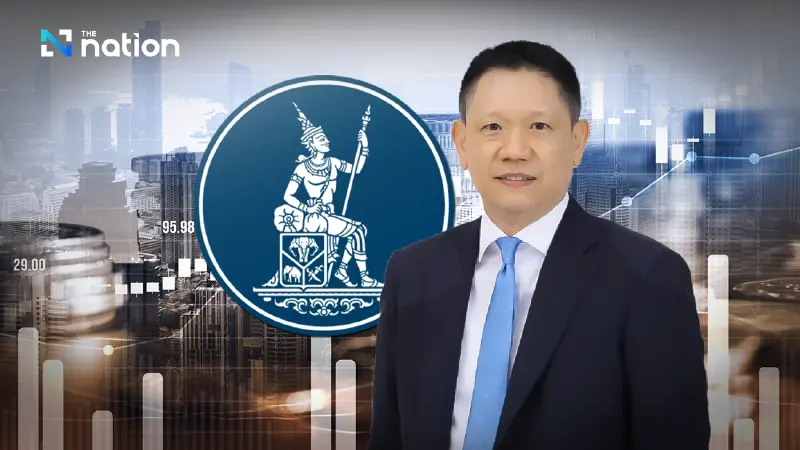


Plan to establish Asset Management Companies (AMCs) by commercial banks is ready for immediate government approval, aiming to manage persistently high household debt
The Ministry of Finance (MOF) has completed preparations for a major financial reform initiative, awaiting final government sign-off to implement a plan that will see large commercial banks establish their own Asset Management Companies (AMCs).
The strategic goal is to systematically manage the nation’s persistently high level of non-performing loans (NPLs), particularly household debt.
By transferring bad debts to dedicated AMCs, the government aims to enable commercial lenders to clean up their balance sheets and efficiently resume lending to stimulate the economy.
Lavaron Sangsnit, Permanent Secretary of the Ministry of Finance, confirmed the readiness of the scheme.
"We are now waiting for final clarity from the government," Lavaron stated, "but I can confirm that the operational processes and procedures, especially the necessary rules and conditions, are almost entirely ready. If the government reviews it, sees the benefit and suitability, and gives the order to proceed, it can be implemented immediately."
The concept has been extensively discussed and endorsed by the Thai Bankers' Association (TBA).
Crucially, the Bank of Thailand (BOT) has already relaxed key regulations that previously presented an obstacle to banks establishing such firms.
Lavaron noted that the plan was thoroughly discussed during Prime Minister Anutin Charnvirakul’s recent visit to the TBA, underscoring the broad political and industry consensus on its utility.
"I still believe that this approach will move forward because it is beneficial," the Permanent Secretary remarked. "We have prepared almost everything—the method, the thinking, and the solutions are virtually complete. Now we are just waiting for the command to act."
The MOF view is that by relieving financial institutions of their NPL concerns and allowing them to better manage their balance sheets, the new AMCs will free up capital and expertise.
This, in turn, will allow banks to act as the "core mechanism" for nurturing the wider economy through more effective credit provision.
