
King Power to Restructure Amidst Shifting Consumer Landscape
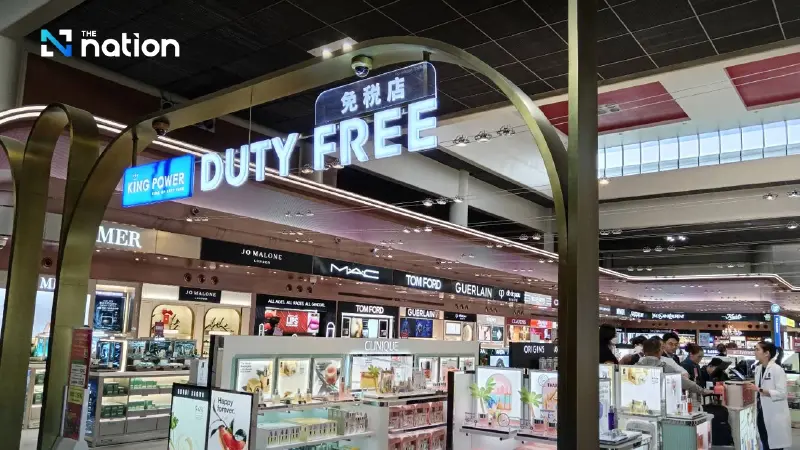


Duty-free giant closes three downtown stores, pivots to China to weather a decline in tour groups and a rise in independent travel
- King Power is undergoing a major restructuring, which includes closing three of its downtown duty-free stores and reducing its workforce.
- The restructuring is a direct response to shifts in the consumer and tourism landscape, particularly the decline in Chinese group tours and the rise of independent, online-savvy travelers.
- As part of its new strategy, the company is diversifying its business by expanding into the Chinese market with new airport-based brands and a focus on e-commerce.
- The company is also seeking a revised, more sustainable payment contract with Airports of Thailand (AOT) for its airport duty-free operations, which are currently unprofitable.
Thailand’s giant duty-free conglomerate, King Power, has announced a major restructuring aimed at diversifying its business and expanding into the Chinese market.
The decision comes as the company awaits the finalisation of a new airport duty-free contract with Airports of Thailand (AOT) and adapts to fundamental shifts in consumer behaviour and the global tourism landscape.
To "stop the bleeding," King Power is closing three of its downtown duty-free branches—King Power Srivaree, King Power Mahanakhon, and King Power Pattaya—on 16 September.
The company is also streamlining its operations and personnel while actively exploring new opportunities in China.

In an interview with Thansettakij, King Power Corporation CEO Nitinai Sirismatthakarn stated that the restructuring is crucial to adapt to the changing tourism and consumer environment.
As the company awaits a decision from AOT—expected in October—it has requested a fair and up-to-date benefits payment structure to ensure its survival in the post-COVID-19 market.
According to Nitinai, the airport duty-free business is a "big wound" due to the current minimum guarantee payment structure.
He hopes that if the minimum guarantee is reduced, the business can recover and move forward with clarity.

Restructuring and Expansion
In addition to closing the three downtown stores, King Power is overhauling its organisation to "shed the fat" and is focusing on expanding its airport duty-free and e-commerce businesses into China.
The company categorises these as "resume" businesses—part of a business cycle with a strong chance of recovery.
This stands in contrast to downtown duty-free stores, which are now considered "reset" businesses due to disruption from online platforms and the significant decline in group tourism, particularly from China.

King Power plans to develop a new, suitable business model to reboot the three vacated locations, potentially adopting a hybrid model.
The goal is to create an "ecosystem" that attracts people by incorporating new activities and brand selections. The three remaining downtown stores are King Power Rangnam, King Power One Bangkok, and King Power Phuket.
The company is also restructuring its 8,000-strong workforce, offering a voluntary resignation program with compensation beyond legal requirements based on years of service. Employee performance will be a key factor in this process, which ends at the end of September.

Focus on China
King Power sees the Chinese market as crucial, citing its massive population and high purchasing power. Sirismatthakarn highlighted the shift in behaviour among younger Chinese generations, who prioritise functionality over luxury brands.
Furthermore, independent travel has replaced tour groups, as travellers from major cities like Beijing and Shanghai use tools like Google Maps to plan their own trips, leading to a significant drop in revenue from downtown duty-free stores.
To diversify its risk, King Power has established Shanghai King Power Commerce Co., Ltd. in Shanghai to launch two new brands at Shanghai Pudong International Airport: TAI HAI TAO, which sells Thai snacks and ready-to-eat meals, and SOMBAT THAI, an authentic Thai restaurant.
The company is also looking to expand its e-commerce business by collaborating with Chinese influencers and KOLs.
Looking ahead, King Power is considering bidding for the duty-free space at Shanghai Pudong International Airport's new Terminal 3, expected to be completed in 2028. This move could pave the way for further expansion into other Chinese and international airports.
